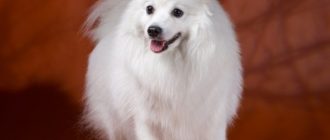
Hortaya Greyhound – a little-known native breed of hunting dogs, distributed in the limited territory of steppe Ukraine and southern Russia. Leading from the middle of the 19th century, Hortaya the greyhound remained without pedigrees for a long time and was used as commercial breed.
Content
- 1. History
- 2. Description of the Hortai Borzoi breed
- 2.1. Quality of coat and colors
- 3. Character
- 4. Training
- 5. Care and health
- 6. Diseases of the breed
- 7. Feeding rules
- 8. Keeping a dog
- 9. Photo by Horta Greyhound
- 10. Video about the Horta Greyhound
- 11. Where to buy a puppy
Story
The first documentary descriptions of horty greyhounds are found in the works of P.M. Machevarianov (1876) and P.M. Gubin (1801). IN steppe hunting required a very special look of a greyhound, working on hares, foxes, saigas. 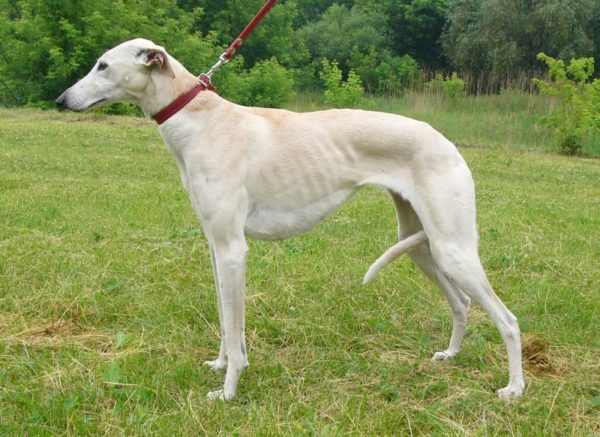
When creating the breed, the dog breeders were not guided by the exterior, and the working qualities of dogs that can tag, catch (get) and take the beast moving at high speed, cunning and careful.
Therefore, most greyhounds were mestizos without a pedigree, but with excellent working qualities. In the middle of the 20th century, K. M. Esmont and A.V. Lerche managed to make a standard Horta greyhound. The efforts enthusiast livestock breeds increased. But after the total the destruction of the greyhounds in 1923 and during the Great Patriotic War remained single instances. Only thanks to the surviving greyhounds managed to save the breed.
Description of the breed Hortaya Borzoi
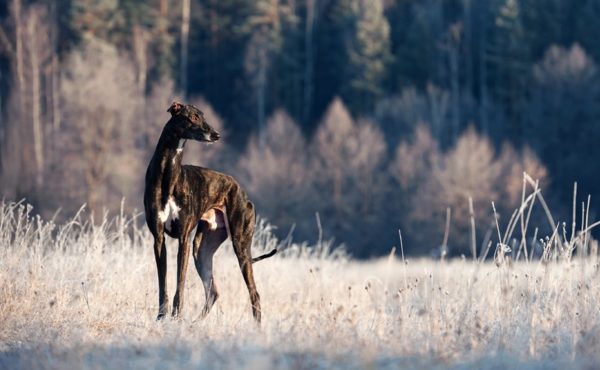
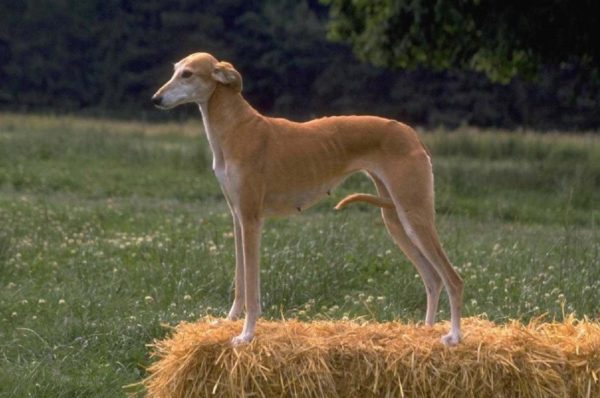
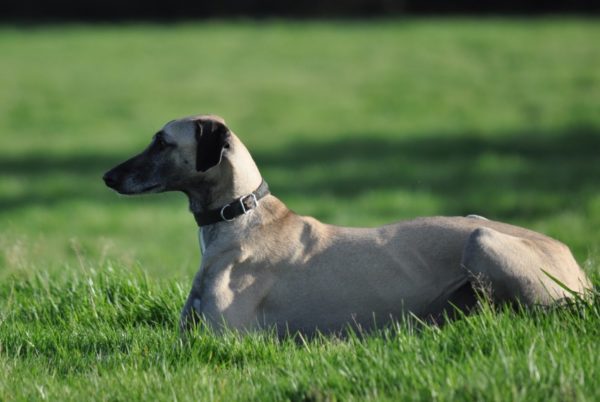
The appearance of a horty greyhound is in many ways similar to a typical exterior greyhounds:
- Strong, moderately narrow body. Height at the withers males 65-75 cm and more, and females – 61-71 by weight body – 25-35 kg and 18-25 kg, respectively.
- Head – relatively small relative to the body, skull with pronounced occipital tubercle – “trowel”, a narrow, dry muzzle. The forehead is sloping, smoothly turning into the nose. The nose is inclined, valid a small hump. The wax (nose) is pigmented dark.
- White teeth, full set, scissor bite.
- The eyes are large, expressive, with an oblique cut, the iris of a different shade of brown.
- The ears are small, low set. Sink thin, ears are located along the neck – tightened. Ear tips soft, even when alert, lean back or in side.
- The neck is long, with pronounced muscles, somewhat compressed with sides.
- The body is elongated, firmly knocked down with an oval deep and spacious breasts.
- Ribs are somewhat convex, form immediately behind the “elbows” barrel-shaped enlargement, which gradually descends to the stomach.
- The back is strong with a pronounced withers, which, falling, forms a small hollow.
- The loin is wide, muscular, with a slight bulge, dropping to the tail.
- Tail (rule) – long, down, tip rolled into a half ring. Suspension or tow is absent or weak expressed.
- The abdomen (sap) is tightly matched.
- The limbs are dry, long, parallel set with pronounced joints. The forearm is longer than the shoulder, and the shin is longer than the thigh. The hind limbs are widely spaced and somewhat pulled back. The forefoot foot is rounded, on rear – elongated. Arched feet, slightly compressed with sides.
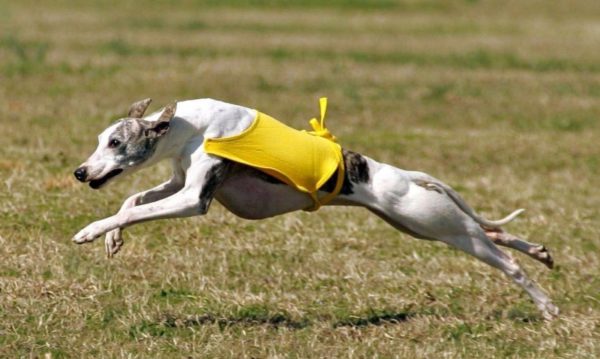
Despite the similarities in common between the Horta greyhound and Greyhounds, the distribution and development of muscle groups is different for them. Also have differences in the structure of the skull, especially the forceps (muzzle). These differences muscle structure determined not only the speed of movement – greyhounds caught up and even got fast-legged saigas, speed which reaches 90 km / h, but also their phenomenal endurance.
Dogs chased prey tirelessly throughout the light of the day. Hunting lasted up to 3-4 weeks, and greyhounds worked good all season. Lightweight skeleton and streamlined body shape allows greyhounds to develop high compared to hounds, speed. Long neck tilts for balance body during a rapid movement.
K.M. Esmont in his article on the Horty Hounds wrote that they have “iron legs and feet” as they can be carried without reducing speed along frozen ground.
Horty greyhounds surpass all other breeds in persistence and agility. They can without hijacking, with one swift throw get prey. Keen vision and instant reaction helped representatives of this breed to distinguish prey on a large – to several kilometers away. Elongated muzzle provides a large field of view.
The scent of greyhounds is not sharp – this was not welcomed in the breed. Keen eyesight, attentiveness, quick visual reaction were appreciated. There are slight differences in the more southerly hounds territories and northern.
So, for example, Greyhounds from Stavropol have a lighter skeleton, graceful, the undercoat is practically absent, and the suspension on the tail and hind limbs are shorter. Rostov greyhounds have more coarse bone, taller, and the coat is slightly longer with a noticeable undercoat. But all the differences fit the breed standards.
Quality of coat and colors
The hair of the horty greyhounds is smooth, tight-fitting to the body. Hair straight, without kinks and crimps, medium length – up to 2.5 cm, elastic. The undercoat is unexpressed, practically during the hot season missing.
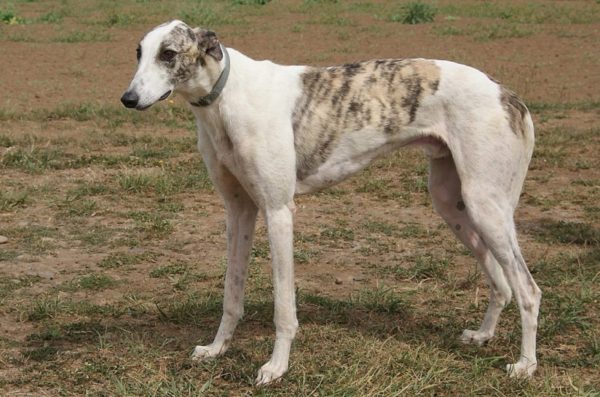
Color is found both solid and zonal. For description color (suit) Horta greyhound there are even special terms. At representatives of this species there is a great variety colors:
- sex or fawn (different shades);
- murugy – red with black tips of awn;
- gray (different shades);
- bluish (brindle);
- the black;
- fawn, gray or red with mazurina (a dark mask on the face and tips of paws);
- white with pezhins (pezhins can be gray, red or fawn color).
In the All-Russian pedigree book are found completely special terms that were used in the description only colors Horty and canine greyhounds. They not only describe shade, but also indicate its localization. For example:
- white half-eared;
- white murugy with zagrivina;
- white breasted;
- black-piebald with a bluish tan and others.
On the skin there may be a speck, which is not very stands out, in harmony with the main color. On the face is permissible dark mask. If the color is solid, then the upper body is colored darker, than the belly and limbs.
Character
Hortaya greyhound, unlike many other breeds of greyhounds, is very smart and independent. These traits were specially selected, since the Horty do not go to the fold, follow 10-15 meters from hunter and pursued prey, a few distance from the rider kilometers, which makes returning teams difficult.
Since they are constantly in close proximity to other dogs, horses and people, then aggressiveness is unacceptable. Previously, with the manifestation of aggression against a person, a dog destroyed, so the hortai greyhound is gullible and anyone can take her away outsider. From birth, representatives of this breed have high sociality, due to their flocking.
Even the dogs living in the city have hunting instincts fully preserved. Hortaya greyhound – reckless, bold, vicious towards to the beast. Therefore, a dog peacefully coexisting with people and representatives of their species, can attack small animals – cats, squirrels and others, as it perceives them as prey.
Moreover, hunting instincts and food needs are divided – infringing on the prey, the dog does not tear it up and does not eat, but waits until its owner pick up. Such behavior, in addition, indicates a good lability (mobility) of the nervous system, due to which the dog able to calm down quickly. 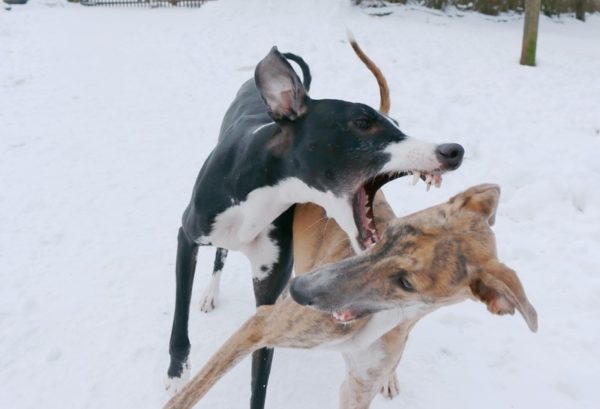
An important criterion for a good greyhound is its “polite” attitude to pets and birds, as in a farm or country houses they often coexist nearby. Adult greyhound sociable, friendly, without affectation (exaggeration manifestations of feelings) – restrained temperament. Young dogs are active maybe a little choleric.
Horty greyhounds have no territorial feeling, but, as a rule, such breeds are not watchmen. However, having a wonderful by sight, the greyhound can even notice the shadow of the intruder and his voice warn the owner. Here are just the guard aspirations of the greyhound directed, rather, on the owner and household than on property. Some dog breeders claim that with proper training representatives from horts come out good security and service dogs.
In addition to excellent hunting qualities, due to the lack of aggression, quick wit, readiness to take independent solutions, hort can be a great companion. Hortaya Greyhound – proud, independent dog. Dog owners note their tendency to shoots, especially if they are limited in free movement.
Training
Horty greyhounds lend themselves well to training. They are showing excellent results in mastering hunting skills, but in puppies, descended from working parents, there may be difficulties in execution of commands not related to hunting. But they have a “congenital” hunting instinct, which they demonstrate from a young one (2-3 months) age.
Care and Health
Hortaya greyhound does not require special care. Her hair is practically not has an undercoat, so it is enough to comb out dead hair a special mitten or brush with a hair pile. After a walk it is necessary to inspect the pet’s skin for fleas or ticks. After the walk you need to wash the paws of a dog living in apartment. You need to bathe rarely 1-2 times a year.
Claws do not need to be trimmed, especially if the dog is actively moves on hard surfaces. Puppies need with teach children to brushing their teeth at an early age, since healthy teeth very important not only for exhibits, but also for workers to dogs.
Horta’s greyhound has good health. With enough physical activity, proper maintenance and a balanced diet representatives of the breed live from 13 to 15 years. Even with intense loads and long work – these are long-livers among dogs.
Breed diseases
The breed combines several “bloods”, which made it possible possess the best qualities of parent breeds. But the Horts are inherent and hereditary borzoi diseases, which include the following:
- dysplasia of the elbow and hip joints;
- liver pathology;
- digestive tract diseases.
Unpretentious to the conditions of detention, food dogs are ill rarely. However, they need regular checkups for prevention. hereditary pathologies. And puppies should be vaccinated, as they complications with enteritis and distemper are characteristic.
Feeding rules
Horty greyhounds genetically high speed metabolism, providing energy to all organs and, in features of muscle tissue. Therefore, nutrition should contain high-calorie foods – carbohydrates in the form of cereals, flour products (bread). Porridge boil well, and coarse – for example, oatmeal, give only crushed. 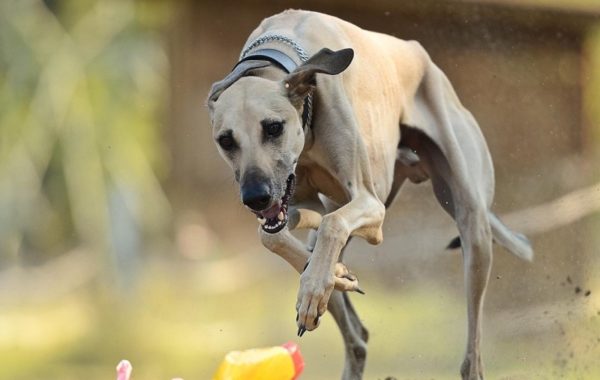
Young dogs and adult dogs need raw meat and meat canned food for plastic processes. Suitable for feeding as carcasses of small animals – gophers, for example, and offal, animal fat. Greyhounds are poorly digested pork, so it quantity should be limited or completely eliminated.
The diet should be supplemented with vegetables – potatoes, carrots, beetroot, cabbage. It is advisable to alternate vegetables. In the feed greens – beet and carrot tops, young scalded nettle. Food should be liquid – porridge is poured with milk, buttermilk, whey. Other dairy products are also given to dogs – cottage cheese, hard cheese.
Strong bones and healthy teeth are formed with sufficient the amount of phosphorus and calcium. Vitamins, micro and macro elements should be included in the diet of a greyhound not only with food (bone meal, fish, bones), but also in the form of mineral and vitamin additives, rock salt. Food should be warm, fresh. At the dog There should always be fresh water.
If the owner does not have the opportunity to cook their own pet, he can feed him ready-made rations. The most optimal premium and super premium feeds are an option. In them balanced composition and no additional feed required vitamins and minerals. The only thing the owner needs is This provides the pet with constant access to water.
Dog keeping
Horty greyhounds can be kept in the apartment, subject to availability free walking in designated areas of parks and squares, outside the city. But the optimal conditions of detention are country houses or estates. Dogs need an aviary, about the size of 20 m2. This enclosure contains no more than 2 individuals.
The territory must be surrounded by a fence not less than 3 m high, since greyhounds are able to take high obstacles. In order to the paws of the pet had rather firm pads and not deformed, the soil in the aviary should be solid. They fall asleep gravel or tamp.
Most of the enclosure is obscured, but it should not be damp. To shelter from the weather, a spacious booth is being built, which for the winter insulate and lay a warm litter of straw or hay. Entrance to the booth curtain with burlap, tarpaulin or felt.
Correct keeping in the enclosure throughout the year tempers dog, and gives her the opportunity to work in all weather conditions. It is impossible to keep horty greyhounds in dark sheds or on a chain – the animal grows nervous, shy, or embittered. Even with the availability of free content for greyhounds is very important physical loads – hunting, training, frisbee and other active games.
Photo Horta Greyhound 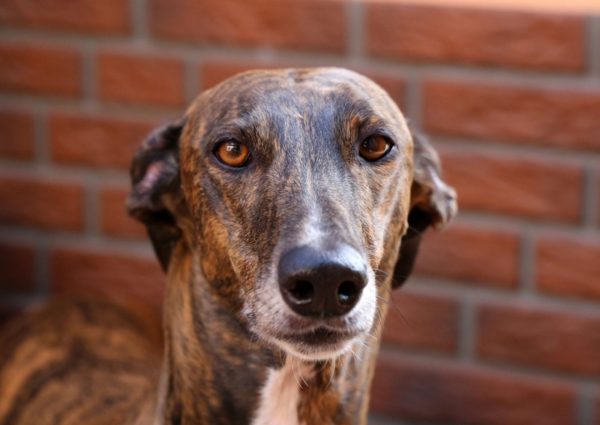
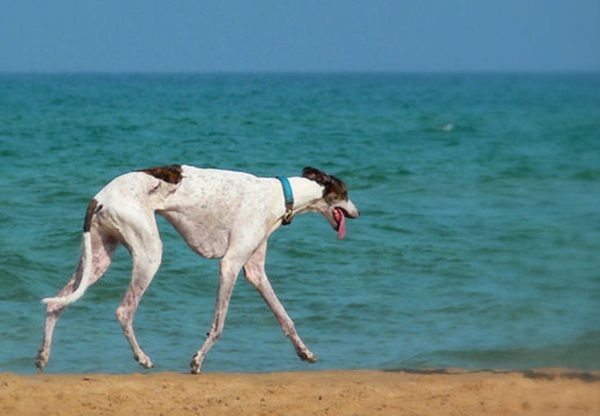
Horta Greyhound Video
Where to buy a puppy
Hortaya greyhound is not a very common dog breed, therefore nurseries professionally engaged in their breeding and sale, not too much. More often you can find ads from small breeders and dog lovers.
There are two nurseries in Russia. Both are in St. Petersburg. The price for a show class puppy is around $ 6,000. FROM puppy hands can be purchased for $ 250-400.
Hortaya Greyhound – a great choice for active people who love the hunt.