The Czech Terrier is a successful result of the work of amateur dog handlers. This is a fairly young breed that has gained a lot of positive qualities from their working relatives. Its representatives are suitable for hunting, are excellent companions, have an extraordinary appearance and stable psyche.
Content
- 1. The origin of the breed
- 1.1. Description of the breed Czech Terrier
- 2. Quality and possible color of the coat
- 3. Character Features
- 4. Education and training of terriers from the Czech Republic
- 5. Care
- 6. Breed diseases
- 7. Feeding Czech Terriers
- 8. Conditions of detention
- 9. Photo Czech Terrier
- 10. Video about the Czech Terrier
- 11. Where to buy a puppy
Origin of breed
Czech terriers were bred artificially, as the breeder was made by Frantisek Gorak. Czech dog handler, dog breeder Scottish Terrier breed, noted the peculiarity of its wards – a wide sternum that prevents dogs from penetrating the burrows of small animals. 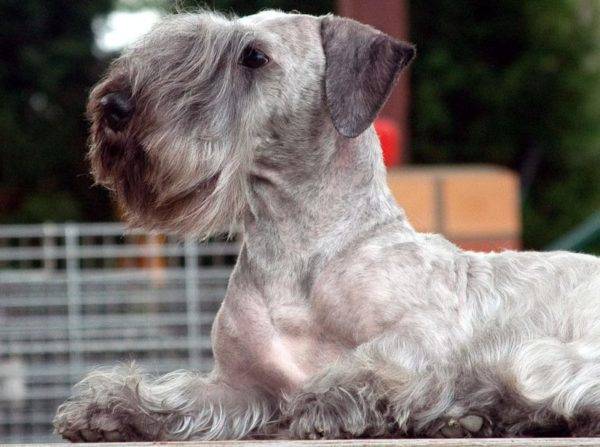
This was the starting point for breeding a new breed – dogs, with a calm character and narrow chest. To work The best representatives of the following breeds were taken: scotch terrier and Selichem Terrier, dandy dinmont blood was also added terriers.
Selection continued for 10 years. And now Gorak, finally, on the exhibition presented the received specimens of the Bohemian Terrier breed – surprisingly hardworking, hardy, good-natured, with suitable physical data. 4 years later in 1963 these dogs were officially recognized, the breed was called the Czech Terrier to emphasize the country of origin.
Later, the Scots came to the territory of America, but wide distribution is still not received. Livestock increase adversely affects breed traits, so terriers regularly pour blood of selichem.
Description of the breed Czech Terrier
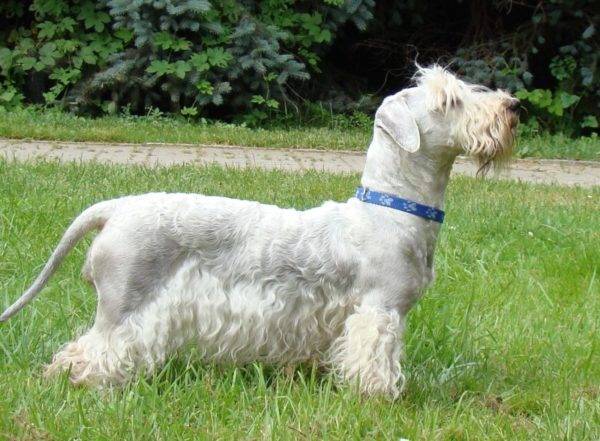
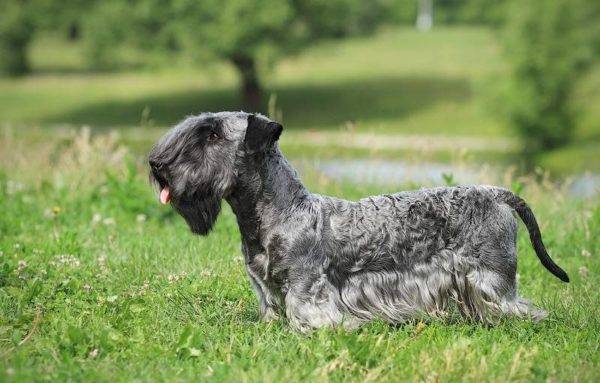
The Bohemian dog belongs to hunting terriers. Possesses rectangular format, developed muscle mass, short, stable limbs and small drooping ears. Ideal male growth is 29 cm, female is 27 cm, a deviation of 2 cm is allowed – up and down. Dogs weigh from 5.9 to 10 kg.
Representatives of the breed move freely, run slowly, but confidently. According to the standard, representatives have the following external view:
- Head shape – elongated dull wedge, ideally length should be 20 cm, with a width of 10 cm. The forehead is flat with a small smooth transition into the bridge of the nose.
- The protuberance of the occiput is palpated, the cheekbones are moderate. Groove available, but poorly marked. In males, the distance between the ears more than bitches.
- The nose is straight, the narrowed muzzle is undesirable. The transition from the forehead to the muzzle is noticeable, but not sharp.
- The lips are thick, well-matched, pigmented in black. color.
- Jaws strong with strong, even teeth forming scissor bite. The standard allows for the absence of two indigenous teeth below.
- The nose is well developed, painted black, regardless from the color of the coat.
- Eyes deep set, medium, with brown or dark brown iris, calm expression, benevolent.
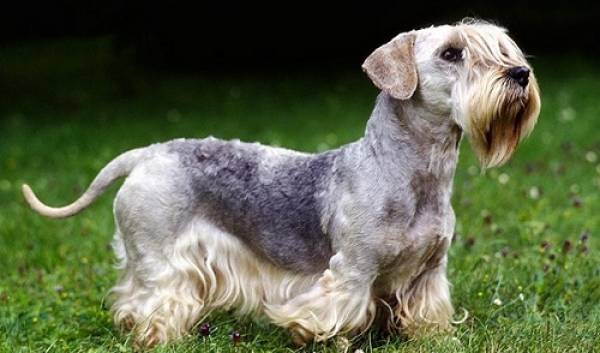
- The ears are small, triangular, cover well auricles.
- The neck is high, well muscled, strong, has smooth bending.
- The body is quite elongated, elongated, well muscled, with slightly pronounced withers, without suspension. Croup beveled well developed. The lumbar region is long, wide, with roundness. The back in the pelvic area is slightly higher than withers.
- Chest with a good volume, deep, cylindrical. The ribs have a smooth bend, the selected abdominal line of the abdomen the area is well filled.
- The tail is set low, ideally considered to be long 19 cm, thick at the base, and tapering towards the tip. When the dog is calm, it goes down or has a slight bend on the end. During active movement it becomes saber-shaped and rises horizontally to the level of the back. If he wraps himself in ring, then this is a vice.
- Limbs front and rear are located parallel, short, with strong bones, moderate angles articulations and well developed hock joints. Shoulders and hips well muscled, elbows slightly loose.
- The legs are arched, fingers tightly assembled, with strong claws and thick pads. The front legs are slightly larger than the hind legs.
Quality and possible color of wool
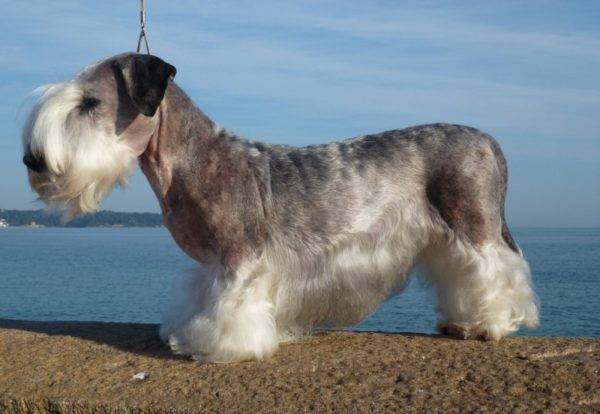
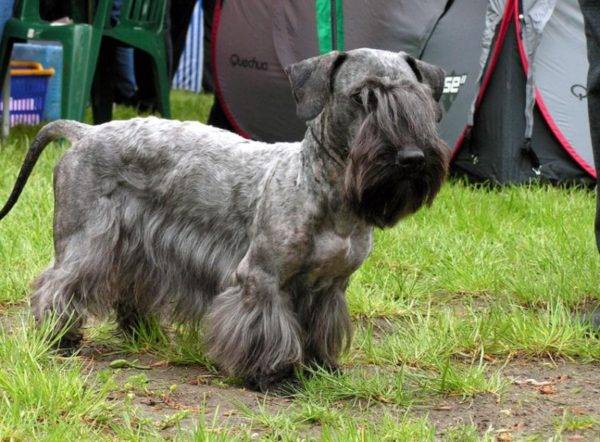
The hair of the Czech Terrier consists of a long outer hair, wavy, silky, with a natural sheen. Undercoat high density, soft. Dogs of this breed are sheared with a special thus, leave elongated hair above the superciliary arches and below torso.
The color of dogs is fully formed by 3 years and older, acquiring the ultimate saturation. The standard highlighted 2 types colors:
- gray – any shade – from coal to platinum, gray with black pigment;
- coffee – brown tone with pigment sand shade.
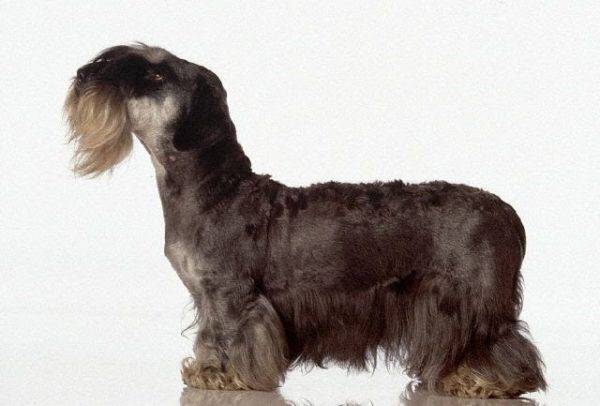
Black hair may appear in the area of the head, beard, cheeks, auricles, limbs and tail. The presence of white, gray, brownish or yellow marks are allowed in the head area, beards, cheeks, neck, sternum and around the anus. Czech terriers can have a collar or tail end in white. But obligatory the condition is the predominance of the primary color.
Character Features
Representatives of this breed are loving, loyal pets, with soft, flexible disposition, which distinguishes them from other terriers. Such a dog is devoid of aggression, he seeks to please the owner and possesses great patience. He is not so willful and independent as other dogs of hunting breeds therefore it is wonderful companion.
You can start a Czech terrier in almost any family, he will find a common language with children, the elderly and even others animals. This little, funny and good-natured dog is practically immediately becomes the universally recognized favorite of the family.
Although the Czech Terrier is a representative of the hunting breed, still more often acts as a companion. His instincts are expressed hunter, he is hardy and enthusiastic. In work shows fearlessness and does not allow fear of even a larger prey.
At home, it’s a calm, relaxed dog, which is easy to train and maintain. Of these pets great watchmen, because they are overly vigilant from nature, but since terriers are not aggressive, attacking the doggie first is not will become. However, due to his sensitivity, he will definitely warn if any suspicious activity will occur.
The Czech Terrier can be taken in a family with children, their softness and friendliness makes doggies and younger family members great company. Dogs of this breed are hunters, which means they need socialization. If you take a dog for a walk from an early age, to acquaint with brothers, raise and educate surrounded by others pets, then the pet will be calm about animals, not considering them as prey. But still rodents are beware of such a neighborhood.
Education and training of terriers from the Czech Republic
Dogs of this breed are designed to bring people joy, such a pet agrees to everything so that its owner is satisfied. Therefore, difficulties in education and training usually do not arise. However, the owner must have patience and restraint, respect your four-legged friend. Puppies of this breeds are quite active and do not always catch, which requires from them the master.
Do not treat your pet rudely, dismissively, apply strength or harsh tone. In this case, the dog will protest, refuses to execute commands. Some more wayward individuals may even bite, outraged by an unfair attitude. Besides Moreover, such a situation can cause psychological trauma to the dog, which will negatively affect the psyche of the animal.
Breeders and owners of Czech terriers claim that the solution behavioral problems in dogs of this breed – not too much complicated and in most cases they are the result lack of exercise or attention deficit. Not allowed Needlessly pamper the doggie, the punishment for training must be be present. Aggressive, dominant behavior should cut short.
Long regular walks and early socialization – that’s what is the basis in shaping the nature of the animal. It should be like you can vaccinate your pet faster so that he can earlier Get to know the world around you. 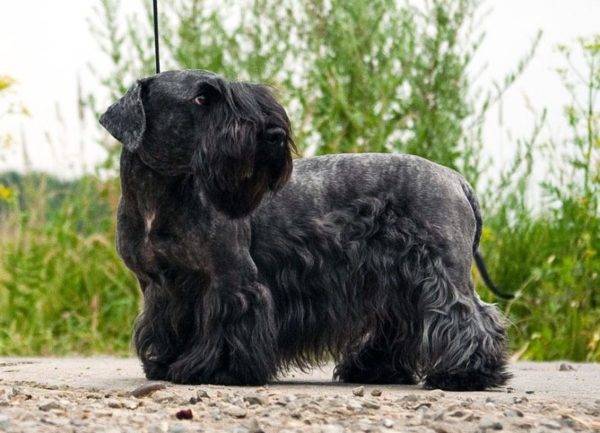
From the very first day, the kid can learn new knowledge – get to know the place, find out your nickname and learn to respond. His it’s easy to learn basic skills that are sure to be useful in later life.
Care
The owner should know the basics of care so that his dog is healthy and cheerful. To do this, you must periodically perform a series of care manipulations:
- Regular brushing. Important with the most the first days to teach the baby to such an event. Then in further with an adult dog there will be no problems. Skirt and beard comb out with a comb with long teeth, for the rest of the woolly cover you can use a massage brush. For a sheared pet enough brushing.
- A haircut. Czech Terriers can be trimmed with 3 months: the puppies are trimmed with a skirt and a beard, trimmed with wool tail, head, chest, back. Can do it independently or seek help from professionals, but cut the dogs of this breed once every 7-8 weeks.
- Bathing pet. They wash the “Czechs” once a month, and by necessity and more often. Use recommended special detergents that soften the coat. On the eve of the exhibition it’s not worth bathing your pet, as his coat will get excessive volume and it will be difficult to fit.
- Dental care. Teeth are a weak point. of this breed, therefore it is recommended to visit a veterinarian regularly for inspections. Experts advise cleaning a doggie 2-3 times a week teeth and give bones or special dentological treats, preventing the formation of plaque and stone.
- Walking. Such a pet is not for the lazy, so how to walk with him you need strictly twice a day and for a long time. Besides it’s not enough just to walk, it must be active pastime, with games, jogging, exercises.
Breed diseases
Czech terriers have wonderful, good health. As the breed exists relatively recently, any specific no genetic diseases have been identified.
But from the Scottish terriers they still passed one thing hereditary disease – “scotti kramp”, accompanied by muscle cramps that develop during intense exercise or with excessive overexcitation of the dog.
To prevent pathology from appearing, you should protect your pet from stressful situations. In addition, the Czechs have this disease diagnosed quite rarely.
Feeding Czech Terriers
A representative of this breed can be fed as natural food, and prepared dry rations. Production feed should be high-quality, balanced and suitable for active dogs, small in size with a long coat. 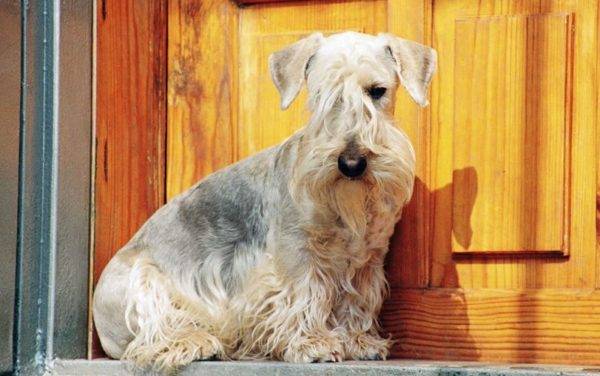
Natural food is considered more suitable for representatives of this breed, but this type of feeding will require more from the owner time and effort – you have to do cooking every day. Important make the menu so that the dog gets enough meat, vegetables and other healthy products. Twice a week the dog is given dairy products, eggs – chicken or quail, sea boiled fish.
The list of prohibited foods is quite wide, you can not give the dog sweets, smoked meats, salted, pickled foods, dishes with spices and seasoning, pastries. Do not feed this handsome snacks from your table, since such food can significantly undermine the health of the pet.
Feed your pet after walking, as otherwise case, the risks of developing intestinal inversion are high. By recommendation a veterinarian when feeding a pet natural food are introduced vitamins and minerals that support all organs and systems in a healthy condition.
Conditions of detention
These small, smart dogs are great for keeping in an apartment or country house. They are pretty neat unpretentious and can behave very disciplined. Czech the terrier is a great companion for walking, jogging, hiking, any activity will bring the pet pleasure.
At home, it should be provided with a separate place, bowls and toys. It is necessary to immediately identify the framework for which the pet is not should go out.
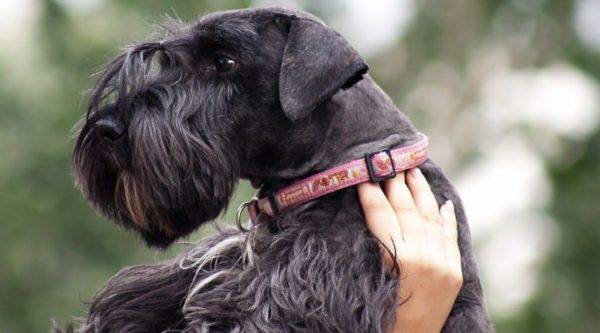
Fotosheshskogo terrier 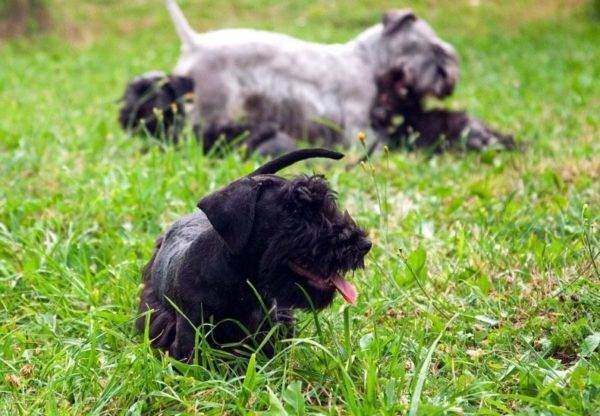
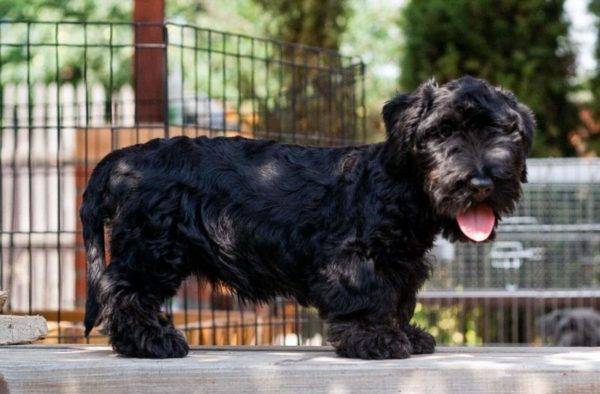
Video about the Czech Terrier
Where to buy a puppy
Getting a Czech Terrier puppy can be troublesome business, in connection with their rarity. If purebred is required pet, then you should not take risks and buy a baby with hands from random sellers. It is likely that it will be pretty cur or mestizo having a czech terrier among relatives.
There are very few nurseries in Russia breeding this breed, so you have to either reserve a puppy in advance and expect when he grows up, or contact foreign nurseries. Before purchasing, it is advisable to familiarize yourself with the standard requirements, find out the features of appearance and temperament.
The breed is relatively inexpensive, and buy a baby with a pedigree You can for 10,000-20000 rubles, but you have to look for it. Cost depends on how titled his parents are and in which degree baby meets the standard.
Czech Terrier – funny short-legged doggie with a lot of good qualities. He is cheerful, fearless, active and friendly. If the family needs such a four-legged friend, then you can safely to acquire a puppy of this breed.