Assessment of breed characteristics
| Adaptability Definition of how easy a dog is. can adapt to changes in life. |  |
| Shedding Level Level and frequency of hair loss in animal. |  |
| Level of tenderness Level and amount of tenderness and affection that the dog gives back in return for attention to itself. |  |
| Need for Exercise Daily Activity Level dogs. |  |
| Social need Required number of dog contacts with other animals as well as people. |  |
| Housing ratio Factor that determines the level of noise and other inconvenience that the dog can deliver to the owners in the ratio the size of the apartment to the size of the dog. |  |
| Grooming Number of bathing, combing, as well as necessary number of professional grooming sessions required the dog. |  |
| Friendliness in an unfamiliar environment society with strangers or in an unfamiliar environment. |  |
| The tendency to bark The tendency to bark and its frequency and volume. |  |
| Health Issues Potential Health Status dogs. |  |
| Territorial tendency of the dog to protect his house, yard or even a car owner. |  |
| Cat friendliness A trend towards cat tolerance and reduced manifestation of hunting instincts. |  |
| Intelligence Dog’s ability to think and solve emerging difficulties (not to be confused with learning!). |  |
| Education and training Level of difficulty in training a dog perform certain actions. |  |
| Friendliness for children Factor determining how much the dog friendly to children, whether she likes to play with them and endure some children’s pranks. |  |
| Game activity The concept is determined by its very name, and, usually found in almost all dogs. |  |
| Observability Dog’s ability to detect presence a stranger in his territory. |  |
| Friendliness for other dogs Dog’s tendency to find common language with other relatives. |  |
Brief description of the breed
Belgian Shepherd Dogs include four types of dogs: lakenua, Groenendael, Tervuren and Malinois. Groenendael is perhaps the most beautiful dog of all four Belgian cattle breeds. She possesses a proud posture, bright black wool of medium length, oblong face and ears. Elegance to this big dog attached to her charming black coat. But not just one This shepherd is distinguished by its elegance! She is very energetic tries to be constantly on the move, so the owner of such a pet have to actively deal with the dog. Such a high activity requires tremendous physical exertion, and therefore simple a walk around the quarter will not help you! Choose a dog of this breed possible only when you are confident in your physical form, and if Are you ready for active exercise: running, riding bike, long walks. Like other dogs, Belgian Shepherd Dog can be easily trained in search and life-saving skills. Belgian Shepherd dog loves to be near their master, always and everywhere to follow him. The animal is very attentively and vigilantly, while quite fun and playful. At proper training your dog will never be shy, timid or self-doubt. This is a great watchman. Dog sizes allow you to engage the animal in the protection of not only his family, but also different objects. belgian shepherd dog needs to be trained and socialized from a very young age. Correct and timely training and training will guarantee that the dog will be able to take in various stressful situations The right, rational decision. And this is very important if the question concerns the protection of people, the protection of objects or rescue operations. Dogs of this breed are quite tolerant of young children, although it is recommended to start a Belgian shepherd in families where older children, not babies. The fact is that these dogs are demanding of others, they want respect for themselves, therefore, small children, because of their age, can offend animal. Do not forget that the dog is a shepherd, therefore, there is a possibility that during games the animal will chase small children, bark at them, which can greatly scare the baby. Such dog behavior should be suppressed, even when it comes to older children! As for the issue cohabitation of a belgian shepherd and cat, then a one-to-one The answer is difficult to give. In view of its genetic tendency, the dog likes to chase small animals, but during his stay in very often belgian shepherd and cat become the best friends. As already noted, training and socialization should start as early as possible. This will allow you to maximize your skills. animal. During training, you need to be firm and perseverance, but not any aggression! Praise rewards and goodies – an essential element of learning, do not forget about If you live in your house, where there is a yard, then it must be protected. This will prevent the unwanted dog from escaping. the boundaries of the yard, as well as the entry of foreign animals into your territory. An electric underground fence will not work. If belgian shepherd decides to leave the yard, then the electric shock will not stop her. By more, such a fence will also not be an obstacle to other people’s animals, who decide to come into your yard! If you bought a Belgian shepherd dog, then take care that the territory of your yard was big enough for the dog to be able to run in circles she does this in a natural environment while grazing! Remember that the dog needs not only active exercises, but also your attention. Use every minute to stay close to the dog!
Photo of the Belgian Shepherd:
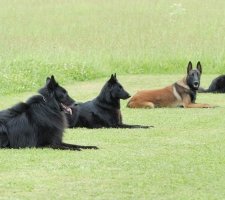
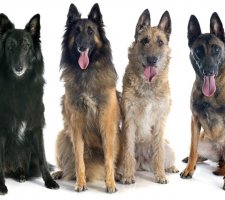
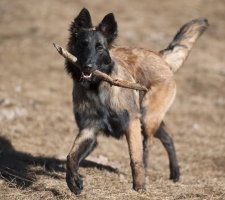
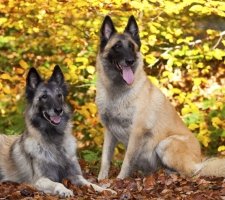
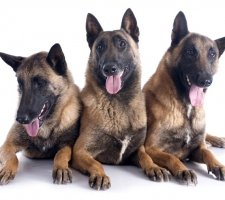
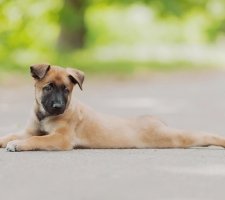
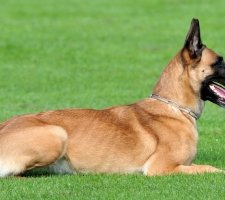
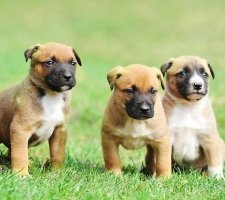
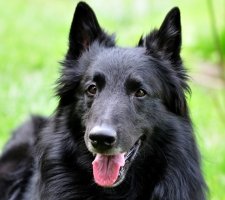 Photo of the Belgian breed dogs shepherd dog |
Origin history
Belgian shepherd is one of four varieties shepherd dogs bred in Belgium at the beginning of the 19th century. To these The four cattle dog breeds include:
- Malinois (fawn-red dog with a black mask);
- Tervuren (dog with fawn-red color, long hair and black mask);
- Lakenua (wire-haired dog of fawn color);
- Belgian Shepherd or Groenendael (dog with long hair black color).
The Belgian Shepherd Club was established in September 1891. Besides everything else, his goal was to study shepherd dogs bred directly in Belgium. First official meeting of club members held on the outskirts of Brussels in November 1891. At the meeting, after much discussion, professor of veterinary medicine Adolf Reul and members the commissions decided that a Belgian shepherd should carry a medium-sized dog with well-set ears triangular in shape and dark brown eyes. In this case, the color of the coat and its length varied. The pure black color of the Belgian shepherd was received thanks to the breeding work of breeder Nicholas Rose, which he spent in his nursery. Print black Belgian the shepherd succeeded in 1893. The shepherd began to be called “Groenendael.” The name was given thanks to the eponymous estate in which she lived first black belgian shepherd. It is believed that all modern Belgian Shepherd Dogs came from this dog. Belgian Shepherd Dogs very quickly gained popularity, especially among the police New York and Paris, where at the beginning of the twentieth century, many dogs of this The breeds were in service. But in Belgium, shepherds helped customs officers and patrolled the border territory.
Belgian Shepherd Character
Belgian Shepherd is a smart, alert and courageous shepherd, a great companion dog that will be fine feel in an active family. Dogs of this breed love to be in motion: run, jump, play, etc. Vigilance of these animals makes them excellent guard dogs. They can even entrust the protection of a child playing on the street. These dogs can to teach you to perform almost any task.
Maintenance and care
Belgian Shepherds require careful grooming, as she molts year round. Wool Combs Every Week 15-30 minutes, but also requires a short daily combing. More intensive care will be required twice a year in active molting period. Warm baths will help shorten the period seasonal molt and reduce the amount of hair falling out. Bathe dogs of this breed as necessary and only if the dog is very dirty or when it feels unpleasant odor. To strengthen dental health and destroy bacteria will help weekly brushing. Among other things, do not forget and about regular clipping of claws.
Training and training
Although the Belgian shepherd can sometimes be stubborn and waywardness, in general, these pets lend themselves well to training. They achieve particular success in obedience and dexterity. They are excellent understand a person by gestures and even facial expressions. Such qualities allow these dogs to understand the trainer almost perfectly. Often dogs of this breed are used as shepherd dogs. belgian shepherd dogs and are well trained, still not worth it to get a representative of this breed to novice dog breeders. These dogs are very cunning and often begin to manipulate people who they don’t know how to behave with a Belgian shepherd. During training is recommended to use rewards in the form of goodies.
Health and Disease
Potential hereditary diseases may occur, but are rare enough. To major health problems relate:
- Elbow dysplasia: a malformation that leads to degeneration of the elbow joint with accompanying limp of the front limbs.
- Epilepsy: refers to a group of clinical diseases that arise as a result of excessive brain stimulation.
- Hip dysplasia: includes developmental abnormalities or degeneration of the hip joint.
- Hypothyroidism: Inadequate Production and Release thyroid hormones triiodothyronine and thyroxine.
- Progressive retinal atrophy: a group of degenerative eye diseases that can lead to permanent blindness on both eyes.
In general, Belgian Shepherd Dogs belong to healthy dog breeds. Them the average life expectancy is about 12-14 years. Such duration is consistent with the average most thoroughbred dogs of a similar size.