Don, Canadian, St. Petersburg sphinxes – the most amazing cat breeds. The owner must track from the very first days the development of their unusual pet – bald cats are prone to obesity. At each time of childhood and youth, the baby needs to be provided appropriate care so that he grows up healthy and obedient adult cat.
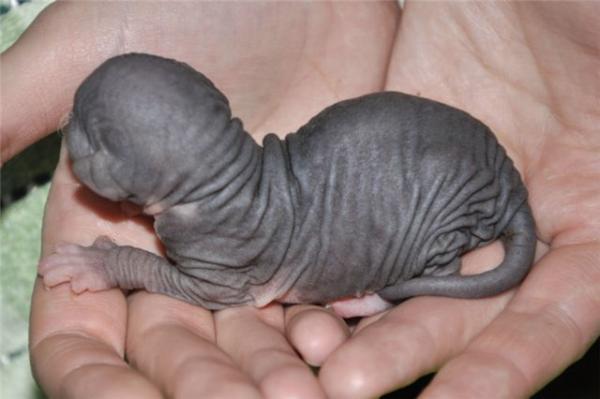
Kitten at birth
Newborn sphinxes weigh 8 0-10 0 g with a body length of 10-12 cm. Like the furry brothers, they are helpless – so far blind and deaf. But already at the age of three days they are able to “get” their own food – squeeze milk from the mother’s nipples. About a month it will be their main food, a source of antibodies for the formation of immunity.
Newborn Hairless Kitten:

2 weeks
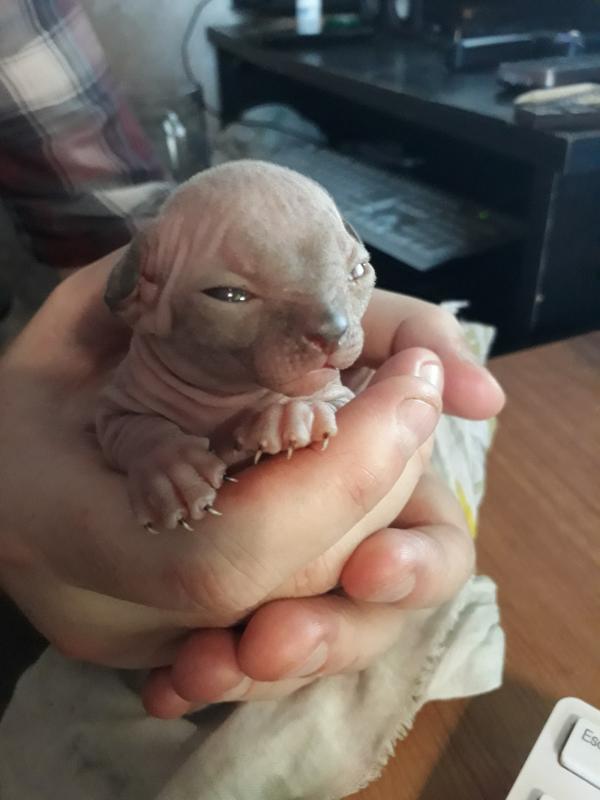
On the 5-eleven th day of life, bald babies gain the opportunity to see, on 6-13 – hear. However, at first they distinguish only background noises, poorly focused eyes.
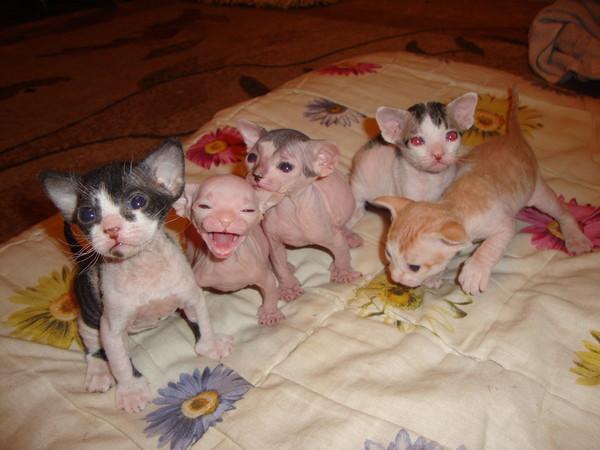
Photo, video of the two-week sphinxes:
1 month
By the end of the first month of life, kittens say goodbye to a funny clumsiness – rushing about the apartment, conquering high obstacles, play tirelessly with each other. They already understand why to move, attack, defend – protect your territory, fight for leadership, get food.
By the 1st month of life, babies develop milk teeth. TO at this time, the owner introduces complementary foods for them:
- The first two days – a teaspoon of feline substitute milk.
- The first week is a teaspoon of baby food.
- Second week – small portions of soft canned food for kittens.
Mother cat usually continues to feed the offspring for up to 2 months. The frequency of lures is 3-5 times a day. It is important that by 6-8 weeks of life kids completely switched to self-nutrition.
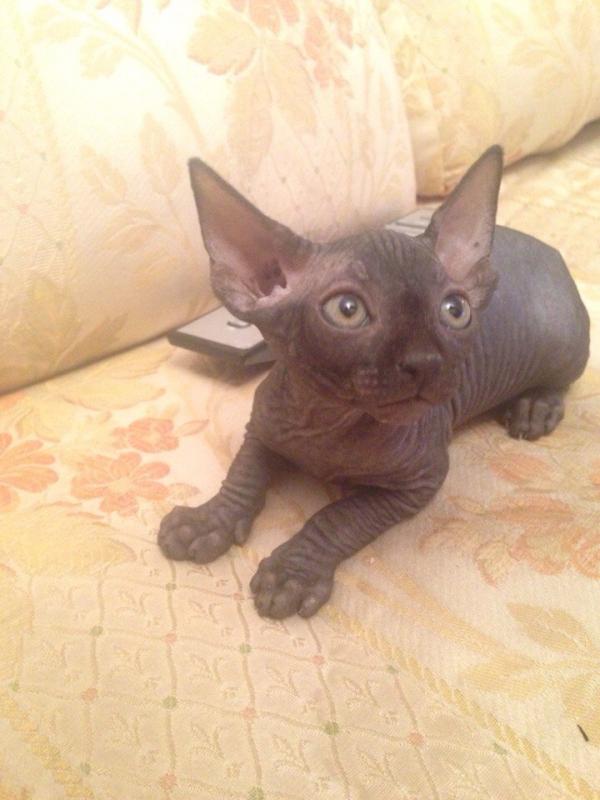
Photo of monthly sphinxes:
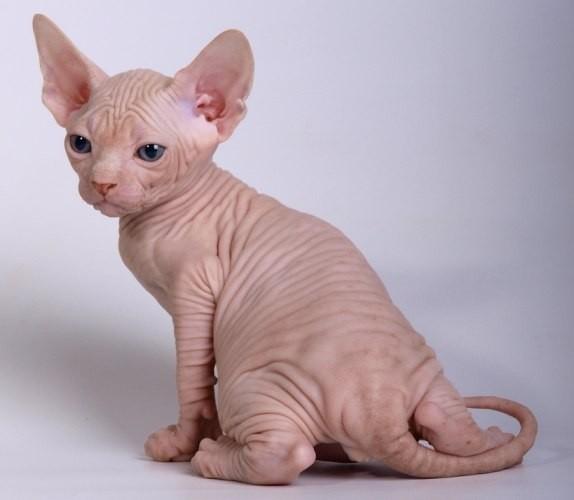
2 months
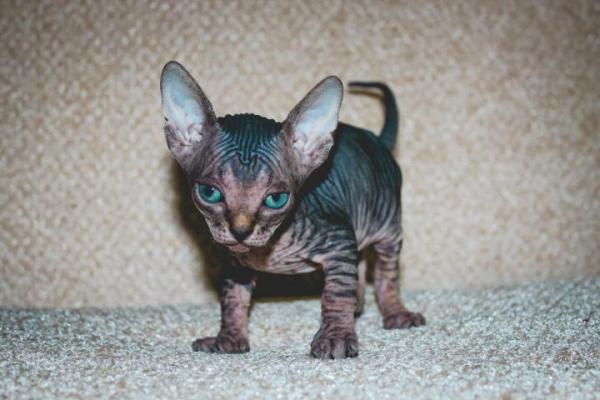
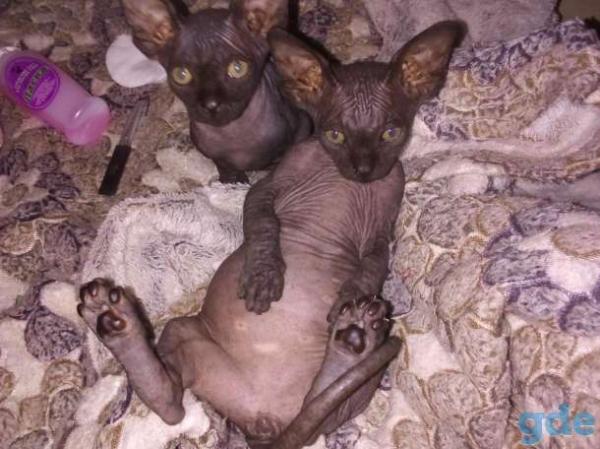
Two-month-old cats are already learning to live without a mother – they don’t worry about about her long absence, they know how to eat on their own and handle the need for a tray. During this period, the sphinxes are the most active and “grunt”. Almost all day is spent in active mobile games. The owner must understand that the kids do not try “salt” him. In the game, they learn to be cats.
For a grown-up kitten you can offer “baby” canned food, chopped pieces of boiled meat, fish, ground beef. In free There should always be a bowl of fresh water available. On the 7th week lives give babies an anthelmintic drug.
Photos, video of Canadian cats in 2 months:
3 months
Up to about 3 months of age in sphinxes of all colors bottomlessly blue eyes. Then the color of the iris gradually changes to constant. In some cases, the process takes a couple of months, in some drags on for a couple of years.
In the third month of the life of the offspring, the cat-mother is completely indifferent to to children. She can shun them, ignore them, even drive them away yourself. Therefore, this age is ideal for finding a new home. However, breaking up with mom, siblings for a little Sphinx – a lot of stress. To survive a difficult period more painlessly, he needs human participation – affection, funny games, conversations in a calm voice.
The owner is trying to form the taste preferences of the kitten “in their benefit, “translates it into convenient food – natural products or finished food. But if the baby’s body responds to food eating disorder, they immediately refuse treats, and the kitten show the veterinarian.
At the 9th week of life, babies are given the first comprehensive vaccination. On the 13th week – repeated.
Three-month “Canadians”:
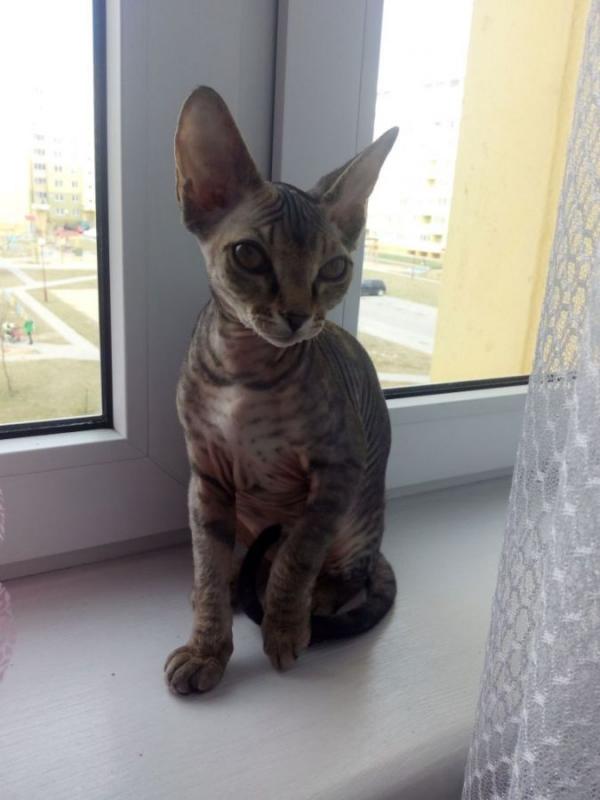
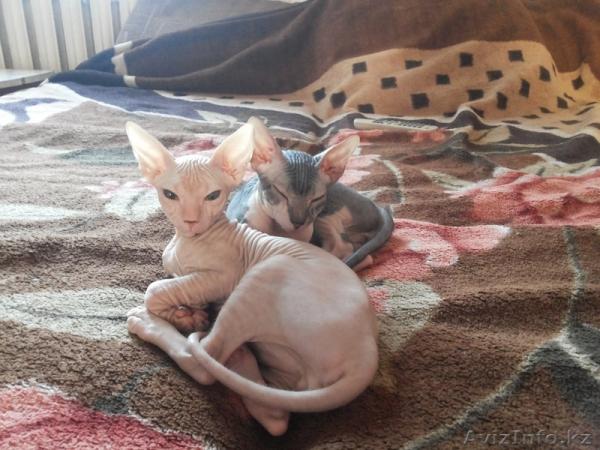
4 months
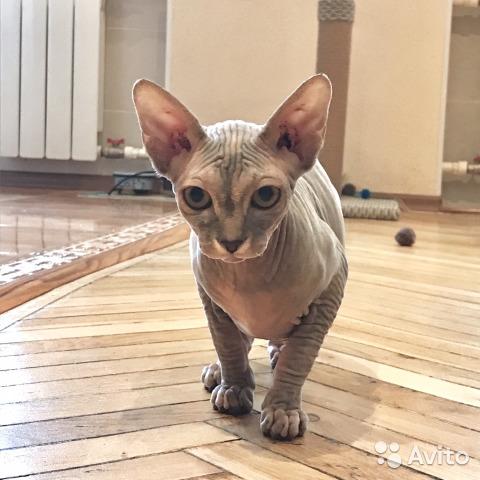
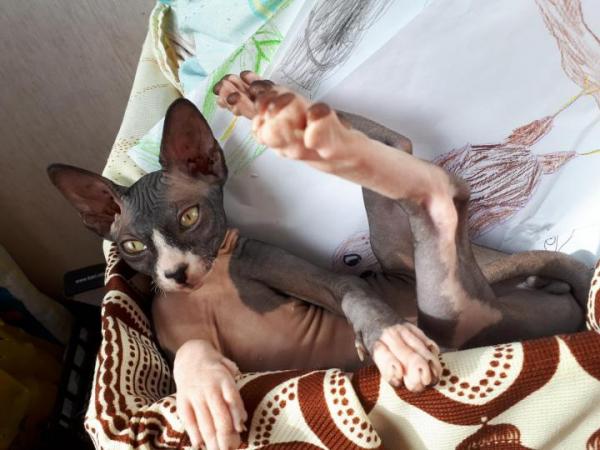
Four-month-old kittens have already fully adapted to the new housework. It’s important for the owner to remember that even such touching kids worth educating – show the boundaries of what is permitted, show your dissatisfaction with their pranks.
At 4 months, sphinxes get used to the necessary care: bathing, cleaning of ears and eyes, clipping of claws. Their taste preferences fully formed.
Canadian Sphinxes at 4 months:
5 months
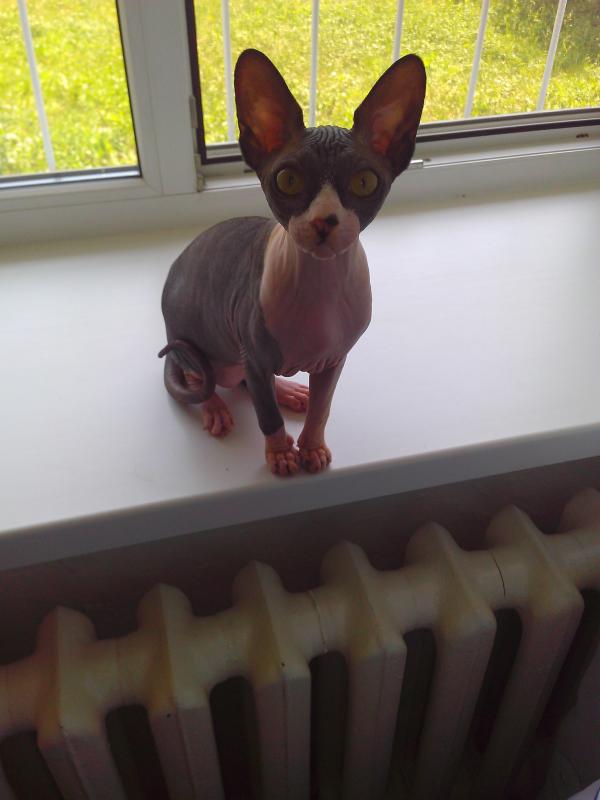
The five-month-old sphinxes are already serious “young men” and “girls.” it calm, raised animals, still finding time for children pranks. They fully trust the owner, his family, know their position in the “flock”.
Five-month-old cats are given the first rabies vaccine. Then vaccination is repeated annually.
Photo “canadian” in 5 months:
6 months
Cats at 6 months old are almost adult. Come in time puberty – they begin to attract the opposite sex. At this time, there is a change in primary teeth for permanent.
This stage is quite complicated – cats begin to mark territory. In kitties, estrus begins. First gentle and tame “bald” become moody and wayward.
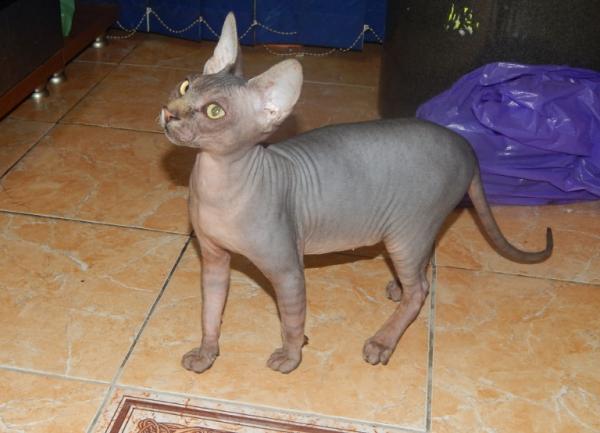
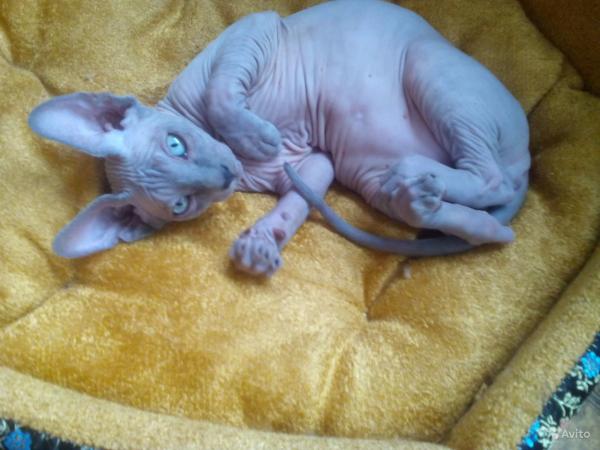
Canadian Sphynxes in half a year:
7-12 months
In the next six months, the sphinxes, if necessary, castration, sterilization. It is time for another vaccination against rabies and feline infections. Animals are transferred to adult food. The frequency of feedings is reduced to 2-3 times.
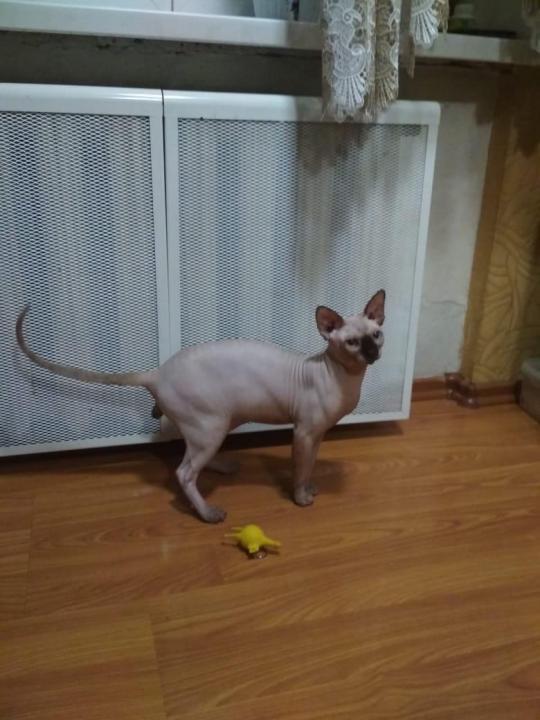
Sphynx cat in 9 months:
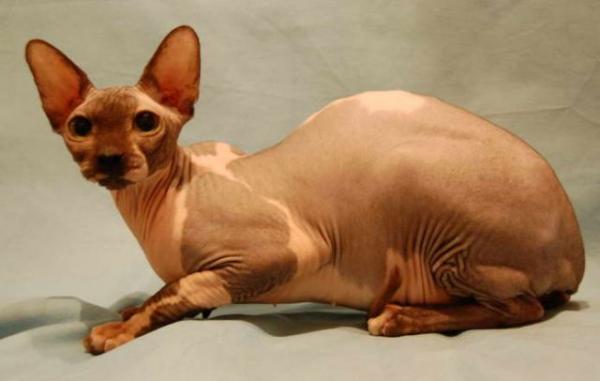
Canadian sphinxes in 1 year:
Development table
Next – the standard indicators of the development of kittens, a table of weights for for months.
| Age (months) | Weight, kg) |
| At birth | 0.08-0.1 |
| 1 | 0.5-0.6 |
| 2 | 1-1,2 |
| 3 | 1.5-1.8 |
| 4 | 2-2.5 |
| 5 | 2.5-3 |
| 6 | 2.5-3.2 |
| 7 | 2.5-3.8 |
| 8 | 2.5-4 |
| 9 | 2.5-4.2 |
| 10 | 2.5-4.3 |
| 11 | 2.5-4.5 |
| 12 | 2,5-5 |
The average weight of an adult sphinx is 2.5-5 kg. Representatives of the breed do not belong to large cats, therefore a large mass for them – not an indicator of health, but obesity.
The owner must remember that the bald cat needs to eat more, than furry brothers. She spends more energy on heating his naked body. The consequence of this is an accelerated metabolism and increased appetite.
To determine the disadvantage, the oversupply of the sphinx mass is easy these characteristics:
- Severe weight loss. Bones and joints are visible through the skin animal. Ribs protrude strongly, fatty is not palpable and muscle.
- Weight deficit. In the animal, the pelvic ribs are visible bones. Adipose tissue – only on the chest.
- Normal weight. The bones are not visible, but they can be felt. At The animal has a small layer of adipose tissue on its tummy.
- Overweight. On the stomach and chest – a thick layer of adipose tissue. At the cat does not see the “waist”. Ribs, vertebral and pelvic bones hard to feel.
- A strong excess of weight. Sphinx becomes rounded, his stomach resembles a bun. The fat layer is pronounced. Touch the bones almost impossible.
With strong deviations up and down is required visit to the veterinarian. The specialist will make an individual for the cat diet, if necessary, prescribe treatment.