Maine Coons are the largest representatives of domestic cats. “Kunyata” develop much faster than their mustachioed brothers rocks. At 2 months, the animal is already striking serious for the “baby” the dimensions. This period is very important for a kitten: it acquires new home, completely switches to self-catering, for the first time vaccinated.
Photo and video
2 month maine coon:
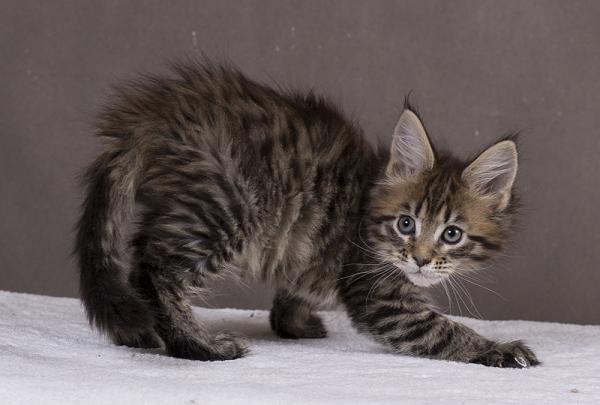
“Kunyonok” in 2 months:
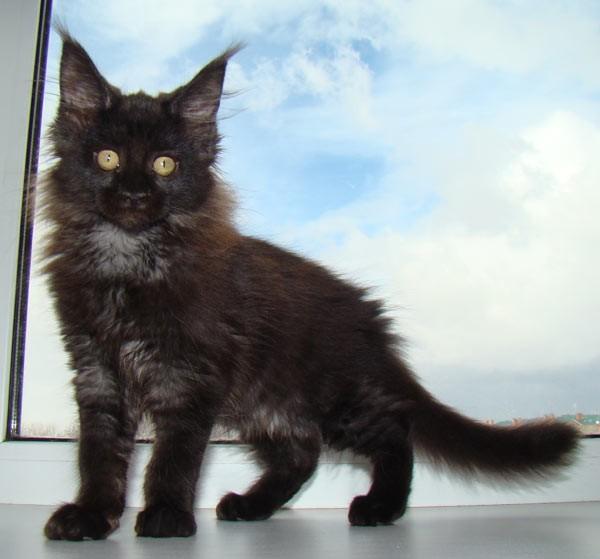
Cream color kid:
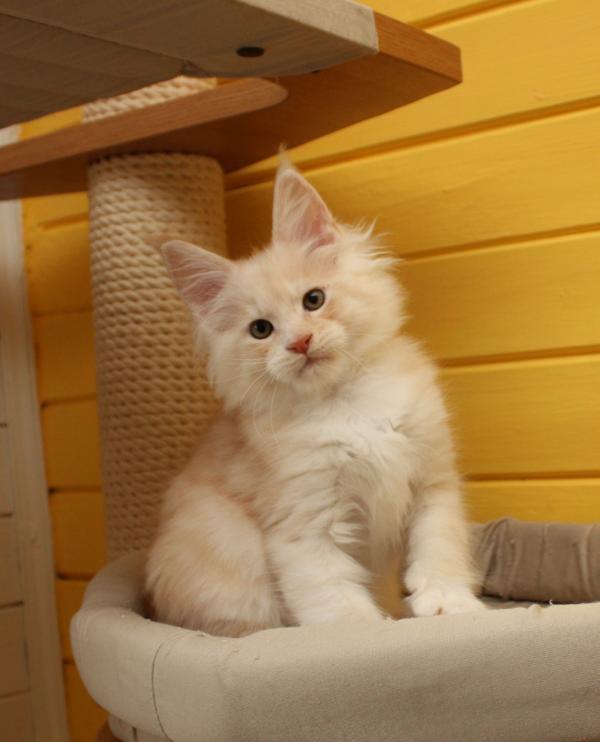
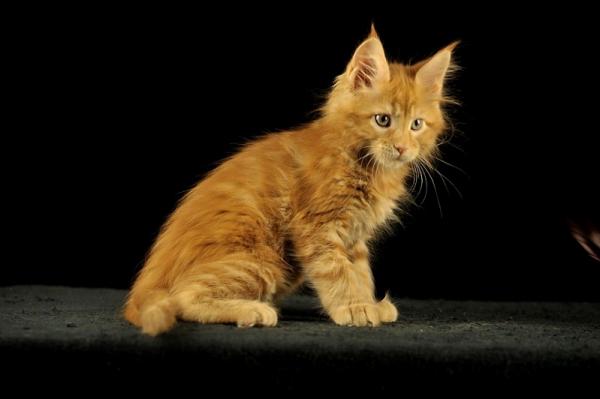
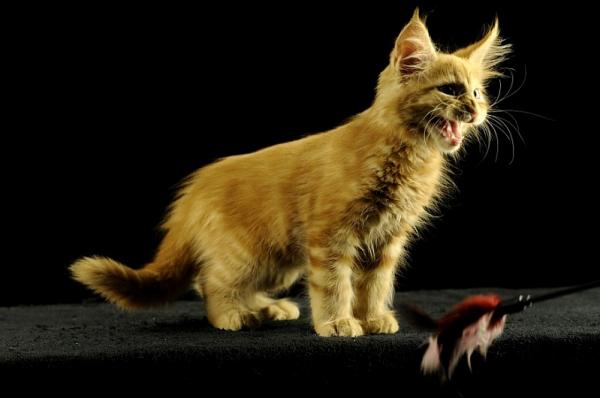
Photo of red maine coon in 2 months:
Black 2-month Maine Coon:
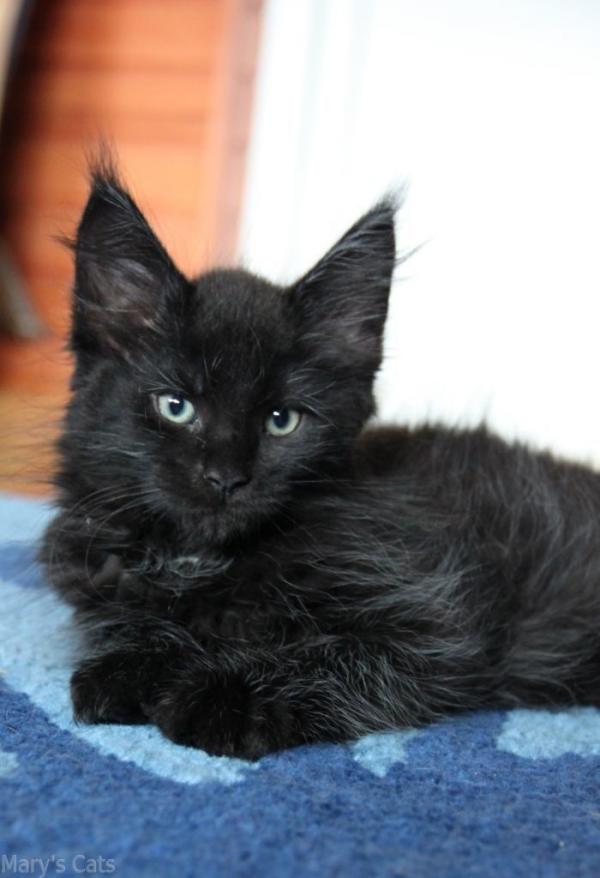
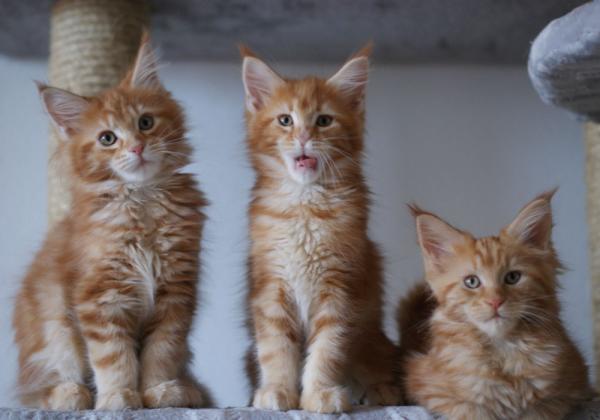
Maine Coon kittens at 2 months look quite large cats:
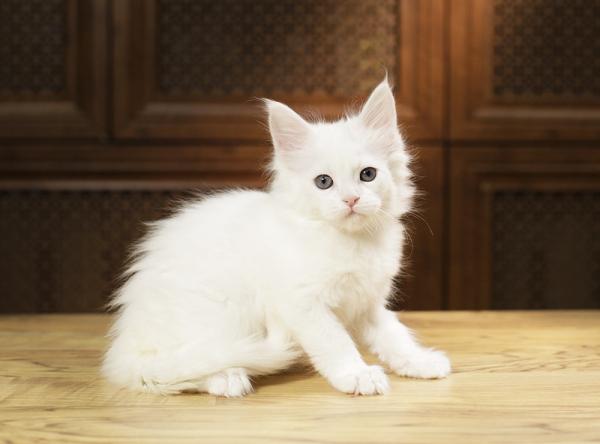
Snow-white “kunyonok” in 2 months:
Kitten sizes
The average weight of a two-month “dumpling”:
- Kitty: 1.1-1.4 kg.
- Seal: 1.2-1.5 kg.
Mass gain by a baby depends on a number of factors:
- Floor. Fur seals develop faster than their sisters.
- The parameters of the mother. The larger the cat, the larger it progeny.
- Nutrition of a pregnant, lactating mother. Balanced, rich vitamins, minerals, nutrients, cat’s diet – the key to the development of healthy and strong offspring.
- Genetics. The development of kittens is influenced not only the state of the cat, but also the general heredity of the ancestors. Broods of one cats from different “husbands” can vary significantly in sizes.
- The number of “thrown” in the litter. The more “children” a cat has, the less of their mass.
- Baby’s condition at birth. If a kitten was born painful, weak, he will gain weight a little slower brothers. But this does not negate the fact that the baby will eventually grow into the largest beast in the litter.
- Feline family conditions. Cat mom and her brood should be in favorable conditions – at a comfortable lighting, in a warm place without drafts, with diffused light.
It is important to protect your mother cat from stress. With great fear fright, prolonged apathy, milk may disappear from her – “kittens” will be left without main power.
Feeding
Two-month-old animals are completely self-powered. At moving to new owners within a week they are offered the usual in the breeder’s house feed. Then smoothly transfer to a constant food, gradually increasing the size of portions with new food.
The easiest diet option is premium kitten food, solid and liquid. The food already contains all the necessary nutrients. substances, vitamin and mineral supplements.
Maine Coons get used to natural food as well. The main thing that she was fresh and of high quality. For food animals are unacceptable:
- Raw chicken, lamb, pork.
- Sweet dairy products – curds, yogurts.
- Fatty milk nutrition – sour cream, whey, cream.
- Bones, Mosles.
- Sausages, canned food for people.
- Egg white (inhibits the action of feline hormones growth).
- Whole milk (the kitten’s body does not digest it).
- Food from the human table – fatty, salty, sweet, spicy, smoked, with dyes and preservatives.
Suitable food for a kitten:
- Raw beef chopped into small pieces.
- Boiled Chicken Breast.
- Raw egg yolk (not more than 2 times a week).
- Cottage cheese – without fruit, sweet additives, non-greasy and non-acid. The cat’s body perfectly assimilates children’s cottage cheese.
- Boiled ocean fish (no more than 2-3 times a month).
- Offal: Hammered chicken necks, stomachs, peeled from the stones.
- Rice, oatmeal, buckwheat porridge, cooked on the water. Her can be mixed for nutrition with canned cats.
- Boiled finely chopped vegetables and fruits (except potatoes). “Kunyata” with pleasure eat carrots, headed and colored cabbage, watermelons, apples. Plant foods should not be salty, pickled, spicy.
- Finely chopped greens – parsley, dill, celery. Can offer baby nettles treated with boiling water.
- Germinated wheat, oats, barley.
If a kitten eats natural food, the following are important to him. vitamin and mineral supplements:
- Vitamins A, H, B. Cats rarely suffer from vitamin C deficiency and E. They don’t need fish oil either – Maine Coons have practically no diagnosed with a lack of vitamin D.
- Brewer’s yeast. Purchased at a regular store. Yeast add to the feed the kitten in such an amount as salt in human food.
- Vitamin complex from a veterinary pharmacy. The drug is prescribed individually by a veterinarian. These are delicious pills that the cat eats herself with pleasure. If the “cunny” refuses to goodies, oily-based vitamins are prescribed to him – their drip into food.
- Salt. Approximately 1% of the total diet.
An example of a menu for the day:
- Meat, fish – 130-150 g.
- Vegetables – 40 g.
- Dairy products – 40 g.
- Porridge on the water – 15 g.
The number of feedings per day is 5-6. Maine Coon Diet meat and dairy products. Free access to the animal must to be fresh purified water. If Maine Coon eats dry food, he needs 3 times more fluid than a cat on natural nutrition.
Care
The “dowry” for Maine Coon is small:
- 2 bowls – for food and water.
- Scarlet point.
- A lounger, a house or a basket for sleeping.
- Tray and filler to it.
- Toys
- Arsenal of combs – with rare and frequent teeth, furminators, brushes with natural pile.
Caring for your animals is easy:
- Daily combing.
- Bathing only as needed, using special shampoo for cats.
- Cleaning the eye and ears with wet hypoallergenic wipes – 1-2 once a week.
- Claw cutting.
In two months, kittens are given the first vaccinations. 10-14 days before this is necessarily deworming.