Thermoregulation in dogs is of great importance. Experimentally found that dogs can withstand temperature up to -40 ° С. But in heat it’s more difficult for an animal, as mechanisms to remove excess heat from the body, they are much less developed. Reduction process body temperature in humans, due to evaporation of the secretion of sweat glands. Do dogs sweat if they have thermoregulation based on completely different principles?
Content
- 1. Physiology of thermoregulation
- 2. The mechanism of heat transfer in dogs
- 2.1. Polypnetic
- 2.2. Contact or gemological
- 3. Techniques for preventing overheating
Physiology of Thermoregulation
One of the features of the canine organism is its high speed. metabolism. It is this characteristic that is responsible for temperature body. In dogs, depending on the size of the body, the temperature is normal varies from 37.5-39.2 ° С in representatives of large breeds, up to 38.5-39.4 ° C – in small ones. Therefore, the risk of overheating in small dogs higher than large. 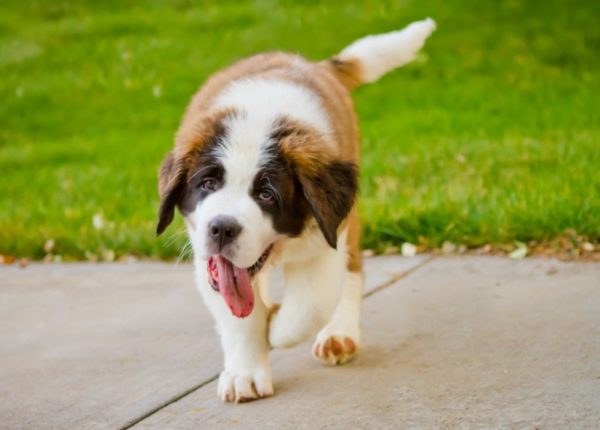
A common belief among dogs that dogs don’t sweat – wrongly. The skin of the dog contains very few sweat glands. The main type of sweat glands in dogs is apocrine. They are available on paw pads, on the tip of the nose mirror. They are larger in diameter, than the main eccrine sweat glands of a person have a different structure, and secreted secret is different from human sweat.
Sweat glands are found on the entire surface of the body – most on the back, less on the chest and sides, and very little on the bottom parts of the body. The myth that dogs do not sweat arose because that sweating is not as significant in thermoregulation in dogs as in person.
Canine perspiration is not regulated by the central nervous system. system, however, responds to local exposure to high temperatures. This mechanism is obviously designed to protect skin from local overheating. General thermoregulation carried out by evaporation of saliva from the tongue and mucous membranes oropharynx, as well as heat transfer with rapid breathing.
A significant portion of endogenous and exogenous heat transported by blood to the respiratory system. Highlight secretion by skin sweat glands is observed only when in intense heat exposure poses a threat damage to the epithelium.
The mechanism of heat transfer in dogs
The dog, covered with a thick fur, does not need an evaporation mechanism at all sweat from the surface of the body. The main heat transfer in dogs carried out through the respiratory system, but partially heat loss occurs on the surface of the body through contact.
Polypnetic
The long tongue of the dog is abundantly penetrated by blood vessels, “bringing” heat. On the tongue, mucous membrane of the palate and cheeks ducts of small salivary glands secreting a fluid secretion open. When breathing, moisture evaporates, taking away heat from the blood. But with breathing air does not fully come into contact with the mucous membranes, but where it comes in contact, it is quickly saturated with water vapor.
For heat transfer, it is necessary that the mass of air passing through airways were significant. In the process of intense breathing is a lot of physical work in which a lot of energy is expended and a lot of heat is released. 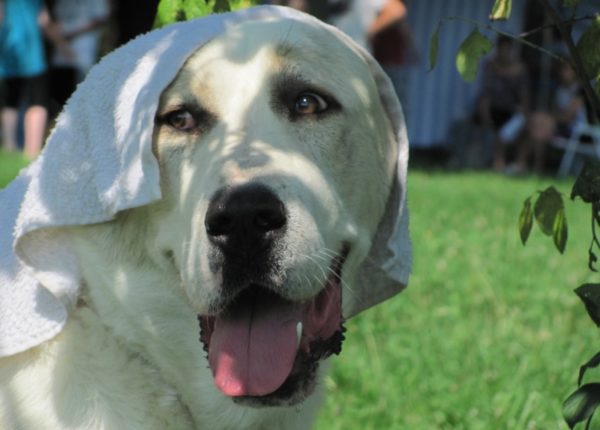
In order to ensure rational air rotation, nature provided a counterflow mechanism – the dog inhales air through his nose, and exhales it through his mouth. In hot climates, evaporation and heat loss increase significantly, but it is not enough to support thermal homeostasis of the dog’s body. Moreover, inhaled hot air is not very capable of absorbing heat from the blood.
In a healthy dog, the tip of the nose is cool and moist, which provided by evaporation of sweat glands and mucous secretion shell. Warm air passing through a winding, folded nasal the passages, plentifully covered with moisture, cools and enters the lungs. On the the boundary of the warm stream from the internal “core” of the body and cool air condensation of water vapor from atmosphere, due to which the mucous membrane does not dry out, and the level evaporation persists with every act of breathing.
In addition, a large supplier of moisture to the nasal cavity is a large nasal gland. A person does not have such a gland, therefore its functions for a long time remained unexplored. Her only purpose is maintaining the dog’s nose moisture, which increases cooling inhaled air flow. In a sense, this gland performs the same function as the sweat glands of a person.
If the ambient temperature is comfortable for the dog, then she breathes through her nose. Measuring the temperature of the inhaled and exhaled through air nose showed that its t = 29 ° С – slightly higher than body temperature animal. And when you exhale air through your mouth, it is + 38 ° C. Moreover, with 1 liter of air, when you exhale with your mouth from the body, it is “carried away” 27.7 calories of heat, which is two times higher than when you exhale through your nose! By redirecting exhaled air, the dog can regulate heat transfer without changing the respiratory rate.
With an increase in ambient temperature, the dog is noted thermal dyspnea, in which the respiratory rate increases approximately 100 times per minute. With such work, it would seem so much heat should be generated that would nullify operation of the counterflow mechanism.
But in the middle of the last century, U. Crawford described the process resonant vibrations in which the respiratory system makes natural frequency oscillations requiring minimal muscle effort. This explains the low heat production during committing intense breathing.
Contact or gemological
Heat transfer during contact exchange occurs from hot blood to cooler air. On the amount of emitted into the atmosphere Heat affects the speed of blood flow and its volume. To regulation vessel diameter affects the central nervous system. Thermal exchange by such a mechanism carried out in places where thermal protection is less – on the stomach, in anal-genital area, on the auricles, on the pads of the paws. With an increase in temperature, vasodilation, blood flow occurs increases, heat transfer increases.
The diameter of blood vessels affects both the level of hormones and hypothalamic activity. Α– are present in the skin and mucous membrane of organs and β-adrenergic receptors sensitive to adrenaline and norepinephrine. When α receptors are activated, the vessels narrow, and heat transfer decreases, and when β-receptors are irritated, the release heat through the skin increases. Thermal stimulation of the hypothalamus in dogs causes increased blood flow, vasodilation and increased heat transfer.
Methods for preventing overheating
The coherent and efficient heat transfer system described above acts no less successfully than “sweating” in humans. However it is not means that at high temperature the dog can be fearless walk or keep out in the sun. 
Under the influence of dry superheated air and direct heating sun rays of wool, especially dark color, in an animal there is not only an increase in respiratory rate, but also deepening, which leads to hyperventilation of the lungs. With blood loses a significant amount of carbon dioxide, its pH shifts to acid side, respiratory alkalosis manifestations are noted:
- deterioration of microcirculation in tissues;
- the occurrence of ventricular and atrial tachycardia;
- the appearance of muscle cramps, tetany;
- mental disorders – anxiety, agitation, aggression;
- electrolyte imbalance.
To prevent the dog from suffering from hyperthermia, it is necessary in hot period to observe the following rules:
- walk in the morning or evening hours;
- Avoid intense physical exertion;
- have a supply of water with you so that you can drink a dog at any time or moisten the coat;
- rinse paw pads, muzzle after cool water walk and wool on the back, give cool fresh water to drink.
In normal condition, the dog is capable of tolerate high temperatures, but dehydration leads to to a rapid increase in body temperature, a decrease in respiratory rate, impaired blood flow, which causes a “failure” of all thermoregulation systems and can lead to the death of the animal.
Evolution very rationally “provided” living organisms mechanisms of thermoregulation, and in dogs – one of the most interesting and effective, given the structural features and physiology of these animals.