Many cats are prone to diseases of the teeth and gums, even from the very early age, so it is important for their owners that they understood what could go wrong and how to deal with it.
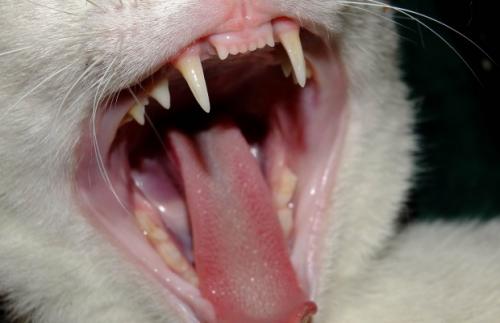
A cat can grow 30 teeth:
- 12 incisors are small teeth in front, six on top and six from below. Cats use these teeth in the wild to drag their prey. In practice, these teeth often fall out early age.
- 4 fangs – to grind and tear prey
- ten premolars – for chewing food
- 4 molars – also used for chewing food.
The most common form of dental disease in cats is plaque and tartar when a dark plaque is observed on the teeth with a layer of tartar. Your veterinarian will be able to remove this plaque under general anesthesia, and will give you recommendations for removal seriously affected teeth. This is a rather complicated problem, which is difficult completely avoided, although many veterinarians advise using a special toothbrush, but in practice very few cats will allow you use it. You can also purchase special additives in drinking water for cats and dogs that prevent tartar formation, but again, most cats refuse to drink water with them. Cats that eat dry food, have fewer problems with plaque and tartar, and if the problem determine in advance, then most likely the affected teeth will be saved.
Gingivitis is another common disease associated with severe plaque and stone when the gums become red, inflamed and sore. If your cat develops gingivitis, the first thing you notice is a very bad smell her out of her mouth. The cat can also drool and begin to experience eating problems. This serious illness can be reversed. reversed, however, this will require thorough cleaning and polishing teeth, and possibly their removal.
Gingivitis can develop in very young kittens aged about five months, although at this age, usually teeth change to indigenous, and this process can take two to three months. You can even see two teeth in one place, but an old tooth, like usually disappears by itself (do not be alarmed if you see a few milk teeth on the floor, this is completely normal). If milk tooth staggers freely, you can sometimes help him fall out, for this just gently press on it and pull. However, if you have any doubts about your teeth kitten, then you should show it to a veterinarian who can prescribe the necessary remedy to facilitate any the discomfort.
There are several other dental diseases which are relatively rare, but may develop in cats:
Periodontitis is a gum disease that visually similar to gingivitis and develops in old cats. Gums around the tooth become slightly recessed, can be infected and in in some cases, secrete pus. The only solution is how the rule is tooth extraction.
Stomatitis is an inflammation of the oral cavity. Wherein the disease appears the same symptoms as with gingivitis, but in much more painful forms and can make the cat refuse from food. Stomatitis is sometimes successfully treated with antibiotics and anti-inflammatory drugs but usually a general one is required anesthesia for cleaning and removing diseased teeth. After treatment also you may need to rinse your mouth with a special liquid to prevent the risk of infection.
Resorption in cats – infection cavities caused by inflammation, which quite often found in cats over five years old. Man has a similar problem. is solved by filling the roots of the tooth and filling, but cats is not practical and infected teeth have to be completely delete. As a rule, even diagnosis of the disease should carried out under general anesthesia, as it can be very painful, but the lack of treatment will ultimately lead to more more painful root infections.
A domestic cat can certainly be kept very well. almost without all her teeth, since she has no need to hunt and earn a living, however, it is important to determine dental diseases and begin their treatment as early as possible. Your vet should check your cat’s teeth condition at the annual survey. However, it is also important that you yourself they checked the cat’s mouth, especially if it’s in old age. But you should not worry too much if your cat gets any dental disease, she is very likely to look much better after 24 hours. And she, most likely, will be very grateful to you for getting rid of her pain and again will be able to enjoy the usual reception food!