Your dog’s general skin and coat are good indicators of her health and well-being. Healthy coat should look smooth and beautiful, but not fragile and rough, but healthy the skin should be clean and supple, but not oily and not flaky. Although the appearance of the coat and skin of your pet affects mainly his health and nutrition, however, external grooming is also designed to keep the dog’s coat and skin clean and beautiful. no matter what type of coat it has.
What kind of coat can dogs have?
Breeding today led to the conclusion of dogs that have many different types of wool. Some breeds have wool, which grows continuously and does not fade. These breeds need regular bath and haircut. Breeds such as huskies and retrievers have thick coat and undercoat serving as an insulating layer. These breeds often go through two strong seasonal molt each year (late spring and late autumn), during which a large part of the undercoat falls out. Many shorthair dog breeds also have some undercoat, so they can molt with low intensity all year round.
How does a dog’s nutrition affect the appearance of its coat and skin?
In order to keep the dog’s skin and coat healthy condition, she needs a balanced diet containing digestible proteins, carbohydrates, fats, minerals and vitamins, and providing the appropriate amount of calories to satisfy the animal’s energy needs.
If nutrients are poorly absorbed, they can create a heavy load on the liver and kidneys, which should Dispose of all non-digestible waste. Diet should match the individual needs of each animal, and should depend on his age and specific health status. A quality and balanced diet designed for a particular animal is usually the key to beautiful and good coat. Dog that has insufficient for meet your needs diet will have a dry and dull hair and possibly will have enhanced molting.
What role does medicine and veterinary care play?
Many stressful dogs molt. most strongly. In addition, diseases, especially chronic ones, can adversely affect the structure and appearance of the coat. Many skin diseases such as allergies or seborrhea can also greatly affect your pet’s coat, and some may even lead to focal hair loss.
If your dog’s coat problems are caused by disease, the general condition of the pet’s coat is often improves dramatically after the disease has been taken under control or completely cured.
What role does regular dog care play in ensuring her healthy coat?
All dogs benefit from regular brushing remove all old hair and dead skin cells, which helps keep the coat free of dirt and external parasites. Dogs with long silky coat require daily cleansing to keep your “coat” clean and prevent any tangling, especially in the armpits, around the ears and in the hind legs. Dogs with short hair also needs regular brushing, but less often.
Daily dog care will also help reduce that number. hair that can be scattered throughout the house. Other The advantage of regular care is reduced quantity wool that the dog can swallow when caring for by myself.
Regardless of your dog’s coat type, you should every day check it for tangles and tufts of tangled hair that are like usually formed in the groin, behind the ears and in the armpits. If you will be periodically check your dog’s coat and skin, then you You can also determine in advance possible lumps, bumps, irritation or swelling on her body.
How often should you bathe and wash your dog?
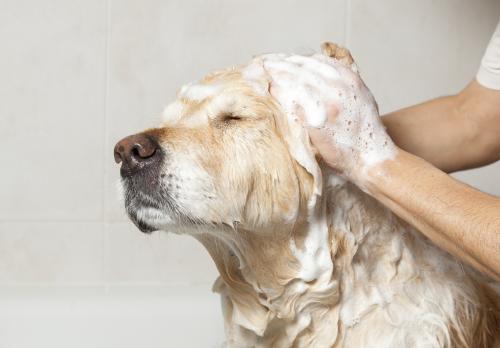
Most dogs don’t need regular bathing, it’s like usually only necessary when their coat becomes dirty or when a “dog smell” appears. Shedding and not dogs with health problems should bathe approximately every six to eight weeks, during their regular departure. Dogs, having an undercoat will get a lot of benefits from bathing in the spring and in the fall, during their seasonal molt.
The frequency of bathing your dog depends on its age, image life, such as wool and undercoat, as well as its health. If you keep a puppy that plays in the yard and occasionally gets dirty yourself, then without a doubt, you can bathe immediately after that. AT similar case if an adult dog ran through puddles or jumped in water, then she may also need to take a bath right after of this. If your dog is allergic, then your veterinarian may prescribe her a regular bath as part of a treatment program – some dogs require a daily swim until the problem will not go away.
When bathing dogs, only shampoo should be used, which was developed specifically for dogs – their skin has different thickness and pH, therefore, even baby shampoos may be too tough for their skin. For a regular swim choice A hypoallergenic shampoo will be most suitable.
If you find that your dog needs frequent bathing, then you should discuss this with your veterinarian who can recommend the use of special shampoo and conditioner, so that your furry friend does not develop skin problems, associated with taking a bath.
Why does the dog have problems with hair and skin in specific time of the year?
Some dogs may suffer from skin irritation associated with low humidity in apartments and houses in the winter. Other dogs that are allergic to pollen may have problems with skin during the summer and spring months.
If you are bathing your dog but have skin or hair problems reappear shortly afterwards, then you must show to her vet. Sometimes skin problems, such as severe dandruff, strong odor, oily coat and rash may be symptoms diseases. In some cases, during diagnosis and examination dogs cannot determine the disease, then in such situations you may be given a referral to a dermatologist.
The main conclusion is that the appearance of your coat Pet – these are the first indicators of possible problems with his health. A healthy animal does not have a strong molt, and its upper layer coat should be free from grease and dandruff. If you Any questions or problems with your dog’s bathing, then consult your veterinarian for advice.