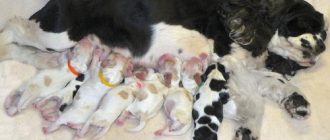
Congratulations, you have become the proud owner of a new puppy, this a cute and funny ball of wool! Now the hardest part begins: how to care for him? If you cared for a dog before, you you might think that you already know everything you need to know, however, care for newborn puppies is slightly different from adult care. You must be prepared for various difficulties to help your a new friend go through the first few weeks of his life.

Here are 5 tips to help both of you deal with. hardships and going this way is fun and healthy.
1. Feeding a newborn puppy
As with newborns, breast milk contains everything what your puppy needs to survive and develop over the first four weeks of life. However, if the puppy’s mom cannot feed him, you have to use dog milk substitute, which was specially designed for newborns. Very important use the right substitute because some others milk substitutes, including cow’s milk, can cause diarrhea. Consult your veterinarian as soon as possible about how feed the newborn puppy properly, as you can cause he is in pain if you do it wrong.
You must provide puppy feeding every few hours in during the first few weeks. After about a month you can start switching to solid foods by adding water and milk to dry granules and mixing them to a state of porridge. Then you can gradually reduce the amount of water and milk, and, approximately after a month (for 7-8 weeks), you can begin to feed the puppy ordinary food, but only when he himself will be able to eat it.
2. Warming
If you do not provide newborn puppies with warmth, they can die quickly enough from the cold. Their mother can provide them warm when just lying next to them, but in the case of her absence, you need to come up with a replacement. Blankets and heating pads are a good option, but, as always, do everything carefully and watch so that the puppies are not burnt and they are not too hot. Try Get specific advice by talking to your veterinarian.
3. Help the puppy go to the toilet
Did you know that newborn puppies cannot walk on your own? Puppies mother to help urinate and defecation, licks their corresponding area after they are eating. If mom is not around, then you yourself must help them in this. You can do this by massaging their anal area with soft cloth soaked in warm water. Your vet may show you how to do it right until your puppy can walk that will occur approximately 3-4 weeks after his birth. Next, you should start to worry about teaching your puppy to the toilet.
4. First visit to the veterinarian
A major part of caring for a newborn puppy is providing his help when he needs her. And, as already mentioned, your a veterinarian can help you learn how to feed and help puppy go to the toilet. There are several signs when you may need immediate help from a specialist. If the puppy coughing, vomiting, crying without stopping, discharge from the nose, he cannot go to the toilet with the help, has diarrhea or just not eating, you should contact your veterinarian as soon as possible.
However, if puppies look healthy, most vets do not need to see them until they are reached six weeks old. At this point you can start to do him first vaccinations and deworming.
5. Education and socialization
You can start to train your puppy in his place to sleep, for example, basket, but it will not bring you much benefit until it reaches age 7 or 8 weeks when he can eat solid food and go to the toilet yourself. Start learning as much as possible in a more friendly atmosphere, offering them treats or toys, when he will go into the basket, and close it there only on a few minutes at a time.
Other types of training and socialization can begin during the first few weeks when you start stroking him and calling to yourself. If you want to tie the puppy to you, you must give him Get used to your smell, voice and touch.
Once the puppy reaches 8 weeks old, a good idea would be introduce him to other people. You need to start puppy socialization gradually and very carefully, as all puppies go through the stage “intense fear.” Any negative experiences during this time. can become very sensitive and memorable. Be careful and keep an eye on the puppy, focusing on his signals.