
Making the final decision to euthanize a pet due to injury or poor health is never easy, even if you know that it will be better for him. Most of us considers his companion animals to be true family members, therefore, this proximity makes the decision to euthanize a pet incredibly difficult even though keeping him alive in some situations would be absolutely wrong.
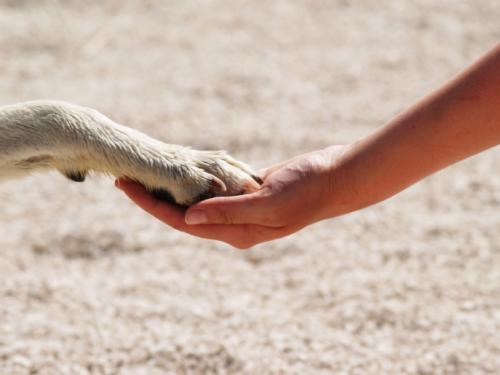
The decision to euthanize cats or dogs must always be made. together with the veterinarian, however, even for the veterinarian it can be rather difficult if the state of health is unclear as well palliative care can lead to uncertain results. Of course, the veterinarian should explain to you all the treatment options and your possible actions, but the final decision is always up to you and your family.
Your pet may suffer from moderate to severe pain, permanent or periodic that cannot be resolved finally. Perhaps the disease that the pet suffers there is no cure, or an accident happened to him case, so that he will no longer have the same quality of life as before. Many see palliative care as promising treatment, however, is not the case; it is used, as a rule, on the final stage of the animal’s life.
Finance and Time Considerations
It’s unfortunate, but it’s true that we all do not have time or financial resources with which you can deal with sudden illness or the consequences of an accident, and as it would be uncomfortable it did not sound, you need to take this into account in your decision. Even you are able to afford to pay for a possibly costly surgery and treatment, your pet may still need constant monitoring and high level of service, after how to get home. You may not be able to handle this simply because that you will not be prepared enough. Therefore important take into account all aspects of the situation – do you know the specifics constant care, and can you handle it? If your cat or the dog will not respond to treatment or they will have a relapse, can you control the situation?
The quality of life
In many situations, surgery or treatment can be quite possible for your pet to extend its life, albeit without full recovery. Similarly, even if complete recovery will be possible, long-term treatment and any related with it, side effects can lead to quality of life and Your pet’s well-being will decrease markedly. In veterinary practice often raises the question of whether to treat or not to treat, especially when chemotherapy, radiotherapy, amputation of limbs or surgery on joints. In all these cases, treatment is possible, but if you take in calculation of cost and potential best and worst end results, the decision to treat may not be obvious at all, or even in many ways not the best.
Do you know your pet, be it a dog, cat or rabbit, better than a vet or anyone else so that only you can to answer difficult questions such as “will the animal cope with limitation of mobility or loss of limbs? “and” will it suffer from treatment so much that his quality of life will become unsuitable? “. Many decisive factors will largely be depend on your pet and his personality.
An animal that is “territorial”, or nervous with others it can be very difficult for people to endure long-term inpatient treatment. Your pet’s cheerfulness and general outlook can have a huge impact on efficiency or inefficiency treatment. In case the animal has constant stress and it will be very nervous, then even the most suitable treatment method may not be successful or successful.
Your pet
If you encounter an unexpected problem as a result accident or illness, or if your pet is just aged, became weak and can not cope with ordinary things also well, as before, then his behavior and reaction to the situation are good indicators with which you can take the best decision. Our pets cannot tell us how much they suffer greatly, how they endure pain or that they are unhappy and not can do for us what they would like – of course, if they If you could do this, then it would be much easier to make a decision. However, you can understand this from your pet’s behavior.
If your pet is still interested in food, I’m glad to see you. see and he is usually comfortable, but depression is not permanent, then it can be quite viable to tolerate pain and possible symptoms of the disease. However, if the animal “surrendered”, it has a constant depression and it has lost passion for life, then treatment can take place with great difficulty, and euthanasia may be the best option when other options are exhausted.
Support and Tips
Make the final decision to euthanize your pet never easy even if you know what it is the only right decision. It is natural that you will upset or even devastated. Sorrow is normal phenomenon, as well as unreasonable guilt for the decision made, and it may take you some time to come to terms with loss of a pet. It may be quite difficult to find understanding people about the feeling of loss, because for many your pet was “just an animal.” However, you can find amateur clubs dogs, cats or other animals in which you can Meet people who have experienced a similar situation.