
On hot summer days, when overheating is likely, it’s natural that many dogs, with or without owners, like to swim and cool in water. Many of us on these days themselves strive to the nearest beach or a river to freshen up and sunbathe. Swimming is great a way for your dog to stay fit, suitable for almost all dogs, as it carries out minimal joint stress.
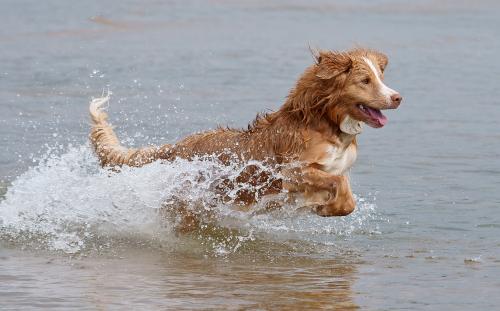
Many dogs love water, and some breeds such as Spaniels, Newfoundlands and retrievers are even hard to pull out of it. Indeed, many dogs are well adapted for swimming, they have webbed feet, double wool, a thick tail as helm, however, not all dogs are swimmers by nature. Some dogs they simply cannot swim because of their size or shape, these are dogs like bulldogs, welsh corgi, greyhounds. Regardless of breed of his dog, the owner must be aware of the potential danger when The dog is playing or having fun in the water.
The first acquaintance with water in puppies should be carried out in a small basin or in a river with a weak current. Acquaintance should be gradual and cautious, so the puppies get used to pretty quickly water and become confident. Do not force them to enter water, this can lead to anxiety in adulthood. At the beginning use toys and goodies, all that your puppy loves, and help him enter the water himself, however, if he looks tired, do not force him to play, but rather praise and drive home.
Different tanks and water pools may have different dangers and risks. Walking to the sea or river is a great option, however, for your own safety and your safety dogs, keep in mind the following circumstances:
- big waves and rapid current
- strong currents
- waterfalls and dams
- weather conditions such as strong winds
- jellyfish and other stinging fish
- pitfalls and sharp reefs that can cut your legs
In addition, if you decide to go on a boat trip together with the dog, you can put on a special vest. is he provide high buoyancy, and also, if necessary, will help get your pet out of the water, as it is equipped with grips. Vests very comfortable for swimming dogs, they help them spend less energy and keep heat longer, i.e. the pet will be able stay much longer in the water.
In addition, always watch your dog and her signals, and if she is tired, be sure to pull her out of the water before it is exhausted. Dogs also often suffer from hypothermia, even if it’s warm outside. Therefore, watch out for signs of severe trembling, frequent shallow breathing and blue or pale gums.
At the end of bathing, when the dog comes out of the water, it is desirable rinse with a little fresh water. This is necessary to remove any salts, algae and other chemicals to minimize the risk of skin irritation.
As a responsible host, your dog’s safety is the main thing that you keep in mind, but also do not forget about yourself, and about other people around you. If your dog gets into troubles, your first reaction is likely to jump and swim behind her, however, think twice before doing this. Many dogs get out of trouble on their own, leaving its owner to wallow in the water. On the beach, you can contact to rescuers or to coast guard who always will advise you and help in most cases.
Finally, remember that a few minutes of planning and patience – this is often all that is needed. If you take the necessary measures precautions, then your walk will remain fun and enjoyable pastime!