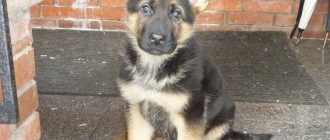
It is widely believed that German shepherds have the only color: black “mantle”, “mask”, reddish bottom. But the breed standard allows three varieties of suit. In addition, there are German areas of unusual colors – white, roan, red, gray, spotted, golden. However, this can only be home favorite – non-standard animal does not participate in exhibitions.
Standard suits
Three genes are responsible for the color of the German shepherd:
- AW is zonary;
- AT – black and tan;
- A is black.
Variations of these genes are possible colors of the dog. The appearance of another Cynologists call the mutation, they recognize the marriage of the breed.
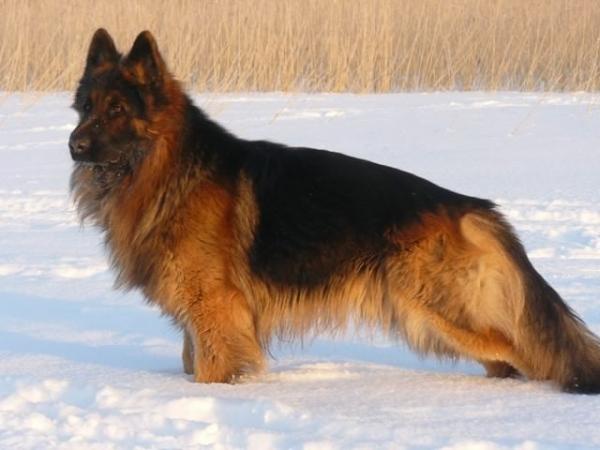
In addition to color, the Germans differ in the type of coat – short or long-haired. It is difficult to establish this characteristic in a puppy: constant hairline length is set later several links.
Black-eyed
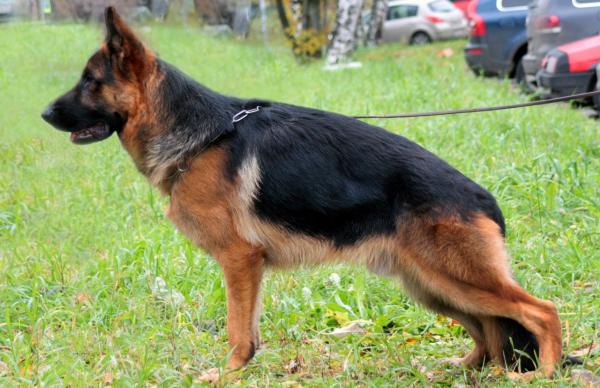
In the photo – German Shepherd black-eyed color:
Black Shepherd German Shepherd puppy:
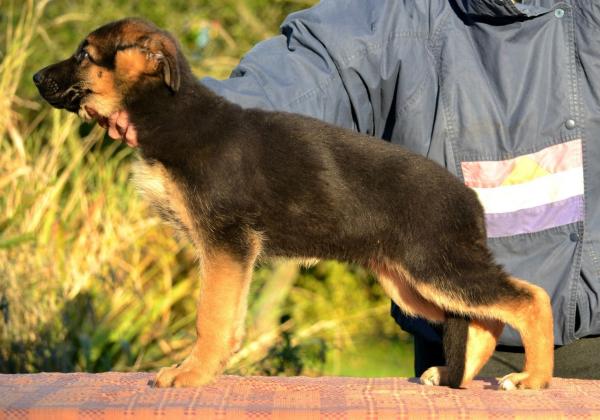
Photo of a long-haired black-headed German shepherd:
The most common color of the “Germans” – found in 90% representatives of the breed. Black suit is:
- V-shaped black “mantle” on the back, turning to the sides, upper part of tail, occiput. Can grab belly and elbows.
- Black “mask” on the face and ears.
- Light bottom (chest, abdomen, paws, inner side of the tail) – tan. This piece may be yellow, chocolate, brown, fawn.
The defect is considered not enough dark “mantle” and “mask”, weakly pronounced “shabrack”. There are no requirements for tanning, however saturated shades are preferred. Puppies of this color are darker adults: as they grow older, the dog will grow gradually lighten up.
Zonar
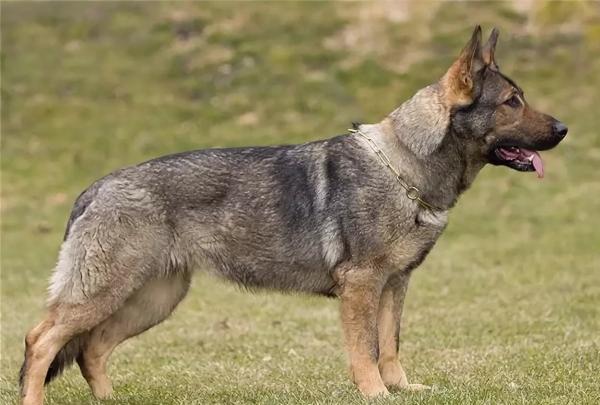
In the photo – German shepherd zonar color:
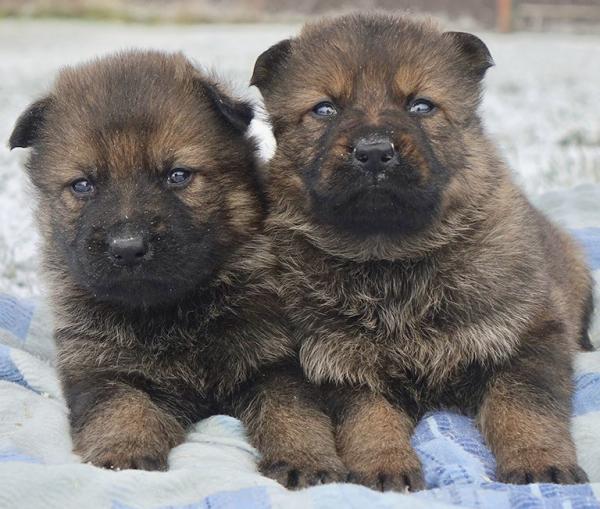
Photos of puppies German shepherd zonar color:
In the photo – a girl-German shepherd zonar color:
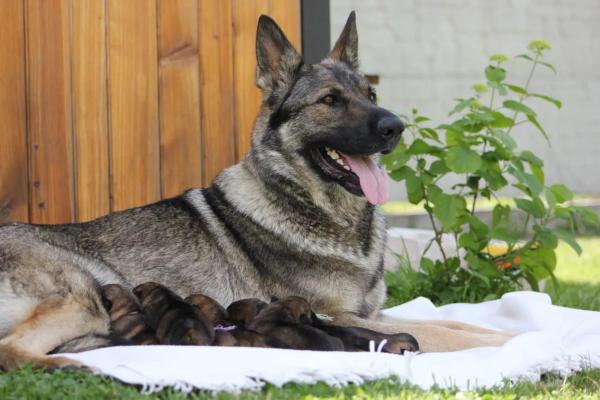
Zoning is quite rare among the Germans: it is found in 5% dogs. The suit is appreciated because of its unusualness: individual hairs the bases are light, then dark, yellow and black at the tip. Zoning is also called:
- agouti;
- “wolfish”;
- Gray;
- gray-haired.
Saturated dark color on the back, upper half of the tail, muzzle. The intensity of the shade weakens on the legs, stomach, chest, sides. By breed standard light interspersed can be any color: from sand to brown. But zoning (color structure) is not must be violated.
The gene of zonar suit is dominant. Breeders consider that when crossing two “Germans” of the Agouti color, either black or black sheepdogs.
The black
Photo of a black German shepherd:
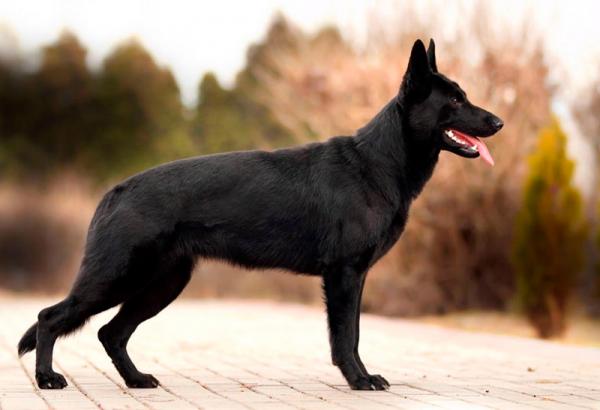
Photo of puppies of black color:
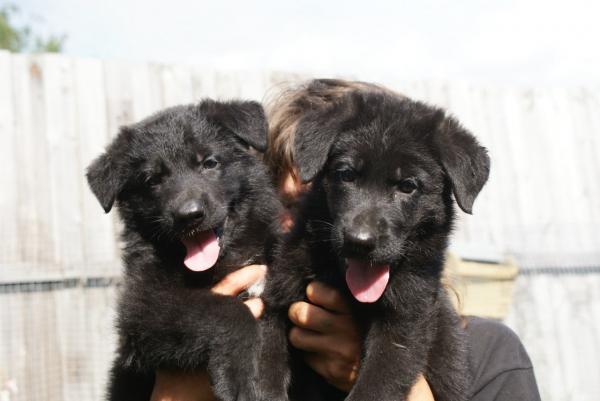
Photo of a black sheepdog:
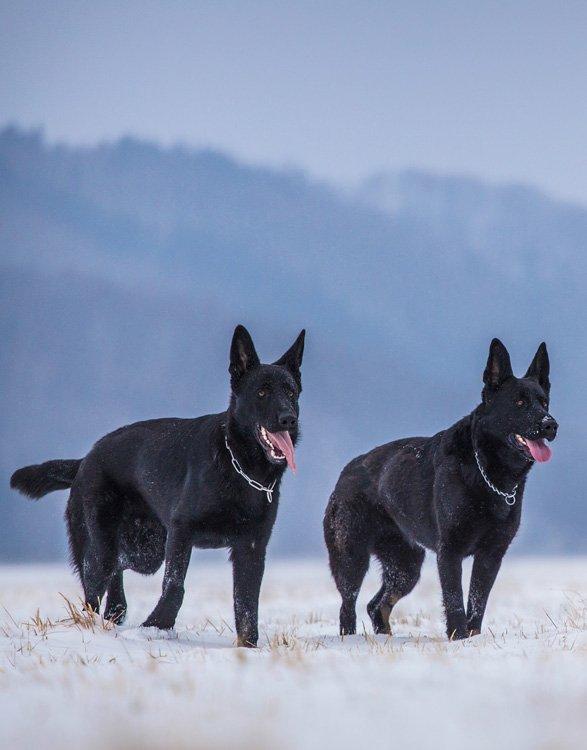
No less valued are the “Germans” with tar black, luxurious a fur coat. By standard, such a suit is the rarest. Occurs in 3-5 % of the breed. Any blotches, scorch marks, specks are considered defects. Nose, eyes, claws should also be in black.
Important feature: black German shepherd puppies, unlike brothers of a different suit, do not change the color of the coat with growing up. Only at In older dogs, separate gray hairs may appear.
Black and tan
In the photo – a German shepherd boy black and tan color:
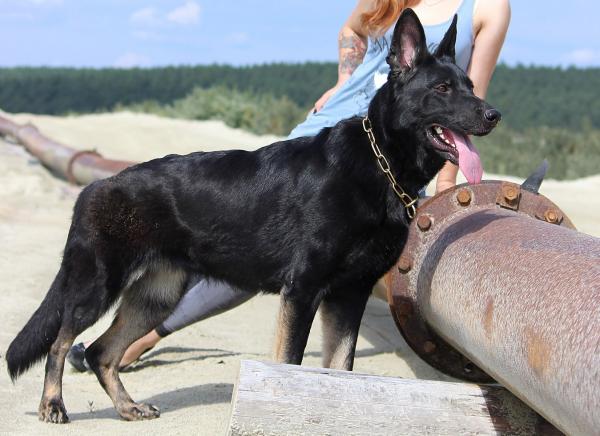
Photo of a pair of German Shepherd dogs black and tan color:
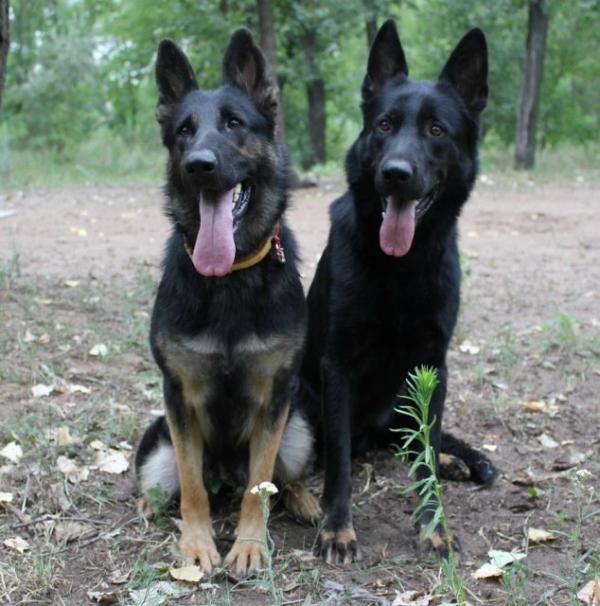
Black and tan puppy:
There is no consensus among dog handlers about this color: Someone considers it separate, someone – a kind of black-eyed, black suit. By standard, the dog is almost all black. Bright inclusions are visible only on the legs, abdomen. Separate allowed tan marks on the chest and muzzle: light cheekbones and eyebrows. Their color varies from sand to deep brown.
Puppies of a black and tan suit lighten with age. Intensity this color decreases from litter to litter.
Custom suits
“Germans” of unusual colors always attract attention, but not allowed to breeding, participating in dog training exhibitions. These are animals of the so-called “pet class” – domestic animals. favorites.
Unusual color, being a mutation, does not affect puppy development, adult dog health. Behavioral the characteristics of such a “German” remain typical of the breed.
Redhead
Photo of a yellow (red) German shepherd color:
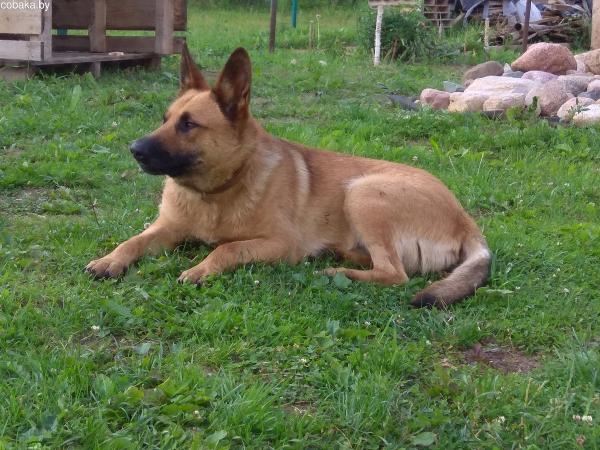
Yellow, red “Germans” are rejected according to breed requirements. But like pets, these dogs of the “sunny” color look impressive. Often confused with it is a red (saturated red) tan or red zoned – such dogs are recognized as canine associations. Yellow German Shepherds, in contrast, have a uniform color, can not boast of a dark “mantle”.
Golden
Photo of a golden shepherd:

The suit differs from the red one in a lighter shade of wool. On the sun as if the fur coat glows, gives off a golden glitter. Face in the animal remains dark, black. Some dog handlers call golden color is a private variety of red.
White
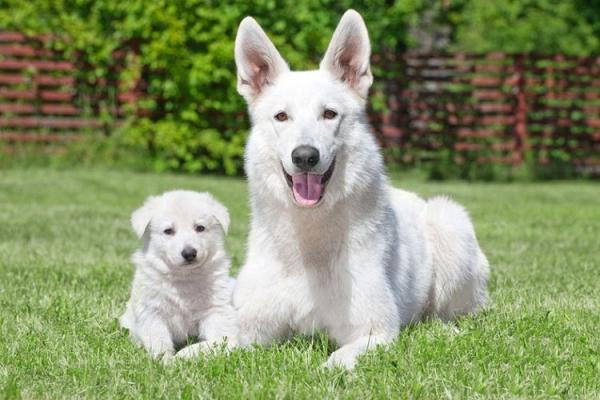
White German Shepherd with puppy:
White puppy:
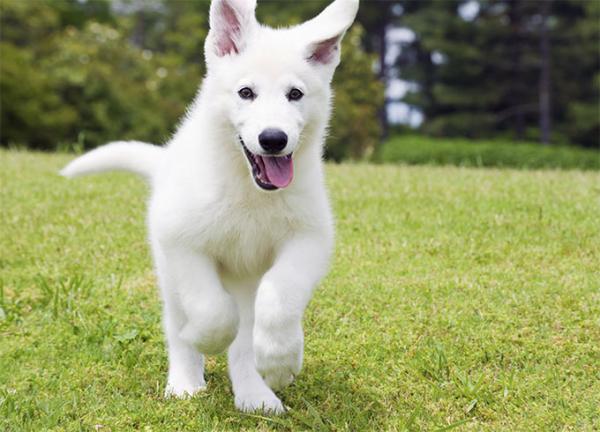
Snow-white German shepherds are not albinos. They have dark eyes lips, nose. The suit is very rare: in case both parents – carriers of recessive genes.
Gray (blue)
Blue German Shepherd:
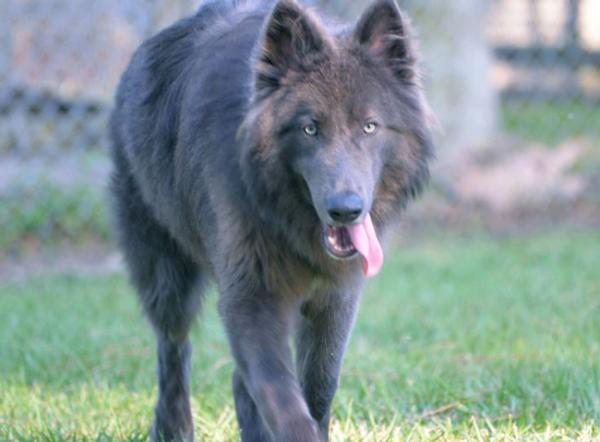
Gray, blue, silver, silver, asphalt – this is not standard for German shepherd suits. Color appears in the result of the recessive gene: it reduces the intensity black to blue, and red to straw, steel. Together with the color of the coat, the shade of the iris can lighten. But to meet a blue-eyed German shepherd is a rarity.
Spotted
Photo of spotted half-breed German Shepherd:
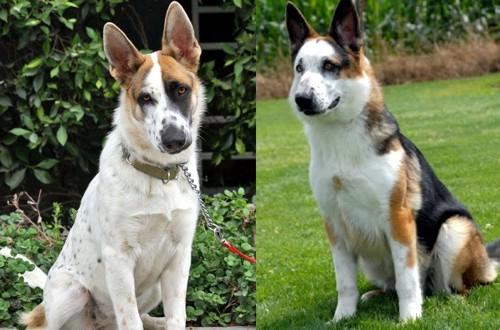
Clear spots on the coat are more common in the Australian Shepherd dogs, rather than for German. This feature is not mutation. Spotted dogs are mestizos of “Germans” with “Australians” or dogs of other breeds, mongrels.
Roan
Roan german shepherd:
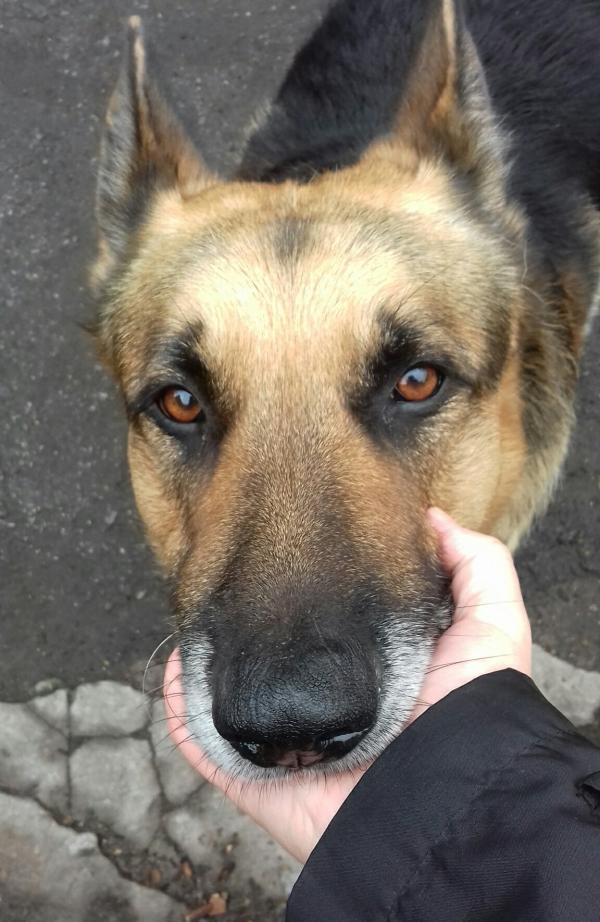
Small – this is not a specific color, but an age-related color change wool. A dog’s face may turn gray during aging Separate white hairs appear on the body. When white hair becomes larger than natural color wool, the suit is called roan.