
What is heart failure?
Heart failure is a term that means the inability of the heart to pump the necessary amount of blood into the body. There are many reasons for developing chronic heart failure (CHF) in dogs. The two most common causes are mitral insufficiency valve (valve between the left atrium and the left ventricle) and dilated cardiomyopathy (DCMP).
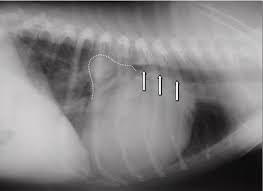
Clinical symptoms may vary depending on whether the dog has left or right cardiac failure. The most common symptoms of chronic heart failure are reduced stamina, coughing and labored breathing.
What is the difference in symptoms?
Right-sided heart failure leads to development venous stagnation. In other words, when the heart contracts and the right the ventricle pushes blood through the lungs to saturate with oxygen, some blood goes back to the right atrium. This blood returns to the systemic circulation and, therefore, it becomes stagnant. Fluid may accumulate in abdominal cavity, touching other organs. The stomach can fill up fluid – a condition called ascites. Fluid also may accumulate in the limbs, causing edema known as peripheral.
In case of left-sided heart failure develops stagnation of blood in the lungs, which leads to a decrease in tissue nutrition oxygen. As a result of stagnation of blood in the lungs, it forms in them edema. It causes coughing and shortness of breath. Left side insufficiency is the most common form of heart failure. Clinical signs such as coughing and fluid buildup in chest, usually caused by left-sided heart insufficiency.
CHF develops mainly due to valve damage hearts?
CHF is most often caused by valvular heart failure. According to statistics, 80% of cases of heart failure are caused by failure mitral valve. However, there are many others reasons. Heart muscle disease (cardiomyopathy), arrhythmia and narrowing some major blood vessels can also lead to development of heart failure. Initially, mitral valve insufficiency leads to left-sided heart failure. If her not treat, then heart failure can progress to both side of the heart.
What clinical symptoms should be expected?
The most common clinical sign of cardiac insufficiency is a persistent cough accompanied by difficulty breathing. This is mainly due to pulmonary edema. Many dogs with heart failure quickly get tired, their endurance decreases, and they practically stop playing and running. Cough will be observed during rest and sleep. The appetite, lips and gums will turn pale bluish. The dog will lose weight and muscle mass due to the effects of heart failure on other systems organism.
Can a dog have a heart attack?
In people, a heart attack usually refers to a heart attack. myocardium. Myocardial infarction refers to cell death in areas of the heart muscle or myocardium. Cell death is usually due to oxygen deficiency caused by obstruction coronary vessels that supply blood to the muscles of the heart. Heart attacks are extremely rare in dogs, but in animals with any unexpected and sudden fatal outcomes.
How is heart failure diagnosed?
As with other heart problems, diagnosis includes myself a few tests:
Auscultation or listening to the heart with A stethoscope is the first step in diagnosing heart disease. With auscultation, noises can be detected in the heart, the nature of which helps determine the exact cause. Through palpation of the pulse is measured by the rhythm and strength of the heartbeat. AND, finally, the lungs are tapped to identify any changes caused by heart failure.
An x-ray is needed to estimate the size and heart shape and for determining the presence of fluid in the lungs.
Blood and urine tests are needed to identify any other disorders in the body. In dogs with heart disease often impaired renal and hepatic function.
Electrocardiogram (ECG) measures electrical activity of the heart and allows you to accurately determine heart rate and rhythm. Using an ECG can be any abnormal rhythms detected.
Ultrasound (echocardiography) is also used for assessment of the shape and size of the heart. Ultrasound can be evaluated the size and thickness of each ventricle directly during reductions.
Is it impossible to start treatment without these tests and diagnostics?
An accurate diagnosis provides much more information by type and the intensity of the necessary treatment. Today there is a wide selection of heart medications that can be used and adapted to treat each specific dog. Without Your veterinarian will not be able to determine the optimal treatment for diagnosis. and can even inadvertently do more harm than good. With proper treatment, many dogs can have a normal life in for many months and years.