
There are many dangerous things that can poison your a dog. Because of their natural curiosity, dogs explore the surrounding world with the help of smell and taste, while they can swallow various household items that may be potentially poisonous. Poisoning accounts for approximately 15 to 20 percent of all emergencies that occur with dogs, so we decided to put together the ten most common things, which can cause poisoning.
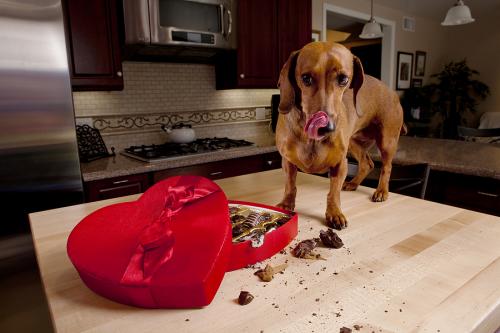
1. Human food
If food is suitable for us, this does not mean that it is safe for dogs. Chocolate contains large amounts of caffeine and theobromine, which dogs do not tolerate very well. This may cause various disorders ranging from gastrointestinal, heart, blood pressure disorders and some others. Other things being equal, dark chocolate is more toxic. Toxic dose calculated using dog weight, type of chocolate and quantity chocolate that the dog swallowed. Be sure to contact vet and tell him this data so that he can tell you what steps to take. It is often recommended to induce vomiting, if the meal has been in the last two hours. With strong poisoning your dog should be hospitalized and lie under dropper. Chocolate is usually the most common. cause poisoning, but there are others.
Grapes and raisins can cause acute renal deficiency macadamia nuts can lead to gastrointestinal upsets, tremors and weaknesses. Avocado can cause vomiting and diarrhea. Sugar-free chewing gum contains xylitol, which can cause dangerously low blood sugar. Signs low blood sugar are weakness, loss of coordination, tremors and cramps. Since human food is generally fatter and sharper dogs that abuse normal human food, usually suffer from gastrointestinal upsets, which in severe cases leads to inflammation of the pancreas. Never do not allow the dog to eat your normal food, and always inform your friends and guests about it!
2. Rodenticides (poisons for rodents)
The mouse and rat bait is designed to be appetizing for them, but unfortunately, for the same reason, a dog can find this bait edible. There are still many similar lures. made on the basis of an anticoagulant that blocks vitamin K and leads to massive internal bleeding and death of any rodent. Dogs experience the same bleeding, but since the dogs are larger, without treatment, death usually occurs after 3-5 days. If the dog has swallowed the poison recently, it is necessary as soon as possible induce vomiting and seek veterinary care. Your the veterinarian will prescribe vitamin K for the dog, and within 2-3 weeks you You will need to monitor her lethargy, weakness and loss of appetite. If you notice any of these symptoms, immediately consult your veterinarian. In exceptional cases, the dog may blood transfusion is required.
However, there are other types of lures. Based baits cholecalciferol increase the level of calcium and phosphorus in dogs in blood, causing kidney damage. The dog will need urgent hospitalization and dropper to lower calcium and phosphorus. there is another poison, bromethalin, which affects the brain. At the dog tremors and convulsions are observed, and, ultimately, death. Out of three types of poisons, this is the most dangerous and difficult to treat. Therefore, if you have any problems with rodents, use rodenticides based on anticoagulant only, as they are the least toxic and easy to treat. Put the bait in in a place where your dog cannot climb and check bait once or twice a day. If the rodent problem is resolved, dispose of the lures properly. In case you identified the traces of the dog on the bait, immediately contact veterinary care.
Do not throw away the poison packaging and, if necessary, bring it with yourself to the vet. With this package, the doctor will be able to determine type of poison and prescribe the appropriate treatment, because, unfortunately, There are times when the doctor prescribes the wrong treatment due to lack of all necessary information.
3. Insecticides (insect repellents)
The most common insecticide that dogs swallow is an anti-cockroach remedy. They contain an attractant, which looks like peanut butter and which attracts dogs. TO fortunately, the insecticides that are used today are practically non-toxic to mammals or their dose in bait very small. However, there is another danger, namely the container poison, as the dog can swallow it whole. Therefore, when the placement of the poison must follow the same rules as in the case of rodenticides.
4. Medical preparations
This category includes various medicines intended for people. Ibuprofen and paracetamol are poisonous to the dog and you should never give them to her. Keep all your pills out reach for the dog. Different bottles and potions may not be available. accessible to children, however, many of them remain accessible to dogs. If possible, take tablets in a closed bathroom. by the door, so that if you accidentally drop the pill, your dog can’t catch it and swallow it. If your dog swallowed tablet or has signs of poisoning, contact immediately vet and give him detailed information about swallowed medicine, so he will determine the next steps that you will need undertake.
5. Veterinary medicines
Many pills that veterinarians prescribe for dogs have taste good, which is why dogs consider them a treat. Important, keep all medicines for your dog in a safe place. If you give your dog a cure, be sure to know the exact dose and schedule of its reception, therefore, before leaving the office vet, be sure to ask him these questions. Never use flea and tick remedies for dogs on your cats, so how do these funds for dogs and cats matter differences.
6. Plants
Plants are a bigger problem for cats than for dogs. However, many puppies and even adult dogs can chew plants, when the stomach bothers them. Toxic plants may be daffodils, oleander, rhododendrons, cyclamen, yew and chrysanthemums. Find out what plants you have in the garden and remove everything from there toxic varieties. If you are not sure whether plants are safe, it is better don’t let the dog go to them.
7. Fertilizers
Another reason to keep your dog away from the garden is fertilizers that smell like dog food. There is a big a variety of fertilizers that contain nitrogen, potassium and phosphorus, as well as a small amount of insecticides and herbicides in as additives. If you use such fertilizers, then do not admit a dog to them, or use fertilizers on an organic basis.
8. Cleaning products
Many cleaning products are poisonous to both humans and dogs. Keep all such funds locked and consider the use of natural and organic cleaners. If a your dog swallows bleach or cleaner, DO NOT call vomiting. Contact your veterinarian and tell him the name the amount and approximate amount your dog ate, he will tell you all the necessary next steps.
9. Heavy metals
As a rule, the most dangerous metals for dogs are zinc and lead, and the cause of poisoning is the ingestion of small metal items such as coins. A sign of such poisoning will be gastrointestinal upset and anemia. Best treatment in In this case, it’s prevention, so keep your little thing in out of reach of your dog.
10. Various chemicals
Antifreeze is very sweet and attracts many dogs. After eating even a small amount of antifreeze dog become very drunk. However, after a few hours the dog will become sober and quite normal, however after a few days, she will definitely have kidney failure. Toxic the component in antifreeze is ethylene glycol. Against him there is an antidote, but it must be used immediately after use antifreeze so if you suspect a dog on it use, immediately contact your veterinarian. Much less toxic antifreeze based on propylene glycol, therefore Opportunities buy it. In addition to antifreeze, there are many other chemicals that are dangerous to everyone pets. These are substances such as paints, solvents for paints, chemicals for pools. If the product is marked as “poisonous”, then keep in mind that it is toxic to animals, and keep such products out of reach.
Be prudent and prepare for an emergency first aid kit for your dog. In addition to fixed assets, which should be in the medicine cabinet, do not forget to put a 3% peroxide solution in it hydrogen and a small syringe with which you can induce vomiting in the dog. Also do not forget to add to it saline to flush eyes if necessary animal. And of course, always keep your number handy veterinarian and emergency room.
And remember that prevention is the best treatment!