Classification
Species: Russian muskrat
Family: Mole
Order: Shrew
Class: Mammals
Type: Chordates
Subtype: Vertebrates
Dimensions: body length: 18-22 cm and tail about the same length; body weight: up to 500 g
Life Expectancy: 4 years in nature, up to 5 years in captivity
The desman is one of the strangest and most mysterious species of animals, endangered.
Modern photos of this animal in nature may be the last, if you do not take efforts to maintain an amazing view.
Find a high-quality photo of a desman, and even more so see it in the natural habitat is getting harder.
This amazing and very strange animal is rapidly dying. Whether our descendants will see him in nature is a big question.
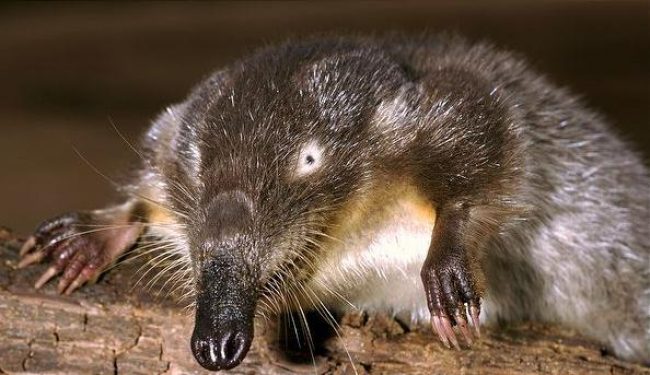
Looking at the photo, it seems that from the face of this animal never positive comes off and an eternal smile
Content
- 1 Habitat
- 2 Characteristic
- 3 Appearance
- 4 Key Features
- 5 Nutrition
- 6 Reproduction
- 7 Human Relations
Habitat
A muskrat, she’s a crest or just a Russian muskrat – endemic species, that is, living in a narrow territory.
For the most part in Russia (the Ural, Don and Dnieper river basins, in the upper Volga), but also in some parts of the former USSR – in Kazakhstan and Ukraine.
An animal, like otters Ibra, leads a semi-aquatic lifestyle, preferring enclosed bodies of water.
Important! There is another kind of animal – Pyrenean muskrat, common in Spain, Portugal and Southwest France. She is about one and a half times smaller than Russian muskrat and has a noticeably rounded tail.
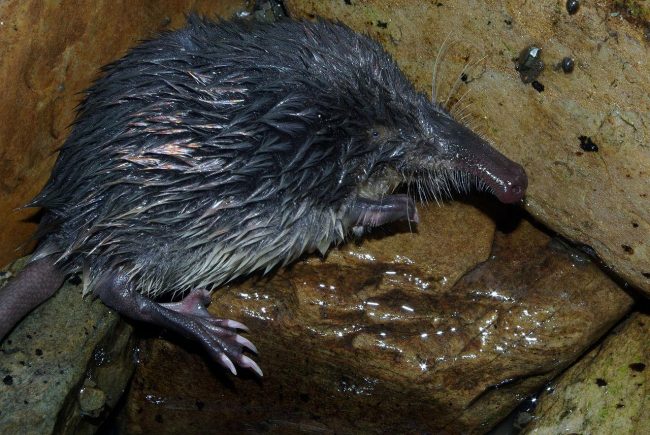
Here is the Pyrenees fellow of the Russian waterfowl shrews
The first description of a strange mammal was made in the second half of the 18th century. Since 1986, the desman is listed in Red a book.
The size of the small mammal continues to decline. Presumably today the population of Russian Khokhuli is up to 35 thousand individuals.
Complicating the calculation is the fact that in some areas take into account the number of animals ceased.
The main cause of extinction is anthropogenic human activities. This led to:
- water pollution;
- deforestation and water abstraction for agricultural irrigation land;
- nets fishing and some other factors.
Interesting! The desman is depicted in 1 ruble silver coin from the Red series book”.
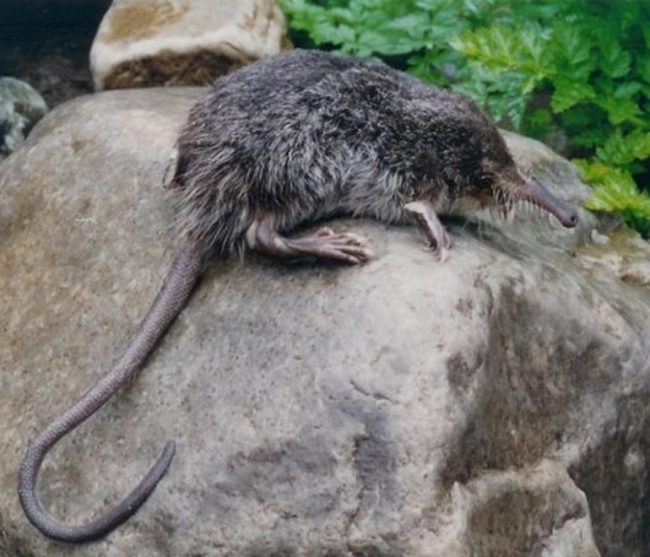
Desman species now threatened with extinction
Characteristic
The muskrat is a relic animal. That is, it refers to species, which have not changed over a long period of evolution.
Description of the appearance of modern waterfowl is nothing different from his distant ancestors. Presumably exists on Earth for 30 million years and was previously settled on territories of almost all of Europe.
That is, it is literally – a contemporary of mammoths, than it is possible explain the strange and funny appearance of the animal: it’s like not from this era. On this basis, the desman is close to echidna or the ancient lizard of the hatteria, which has survived to this day.
The desman live in minks in one exit opening under water. The length of one hole reaches three meters and it is located above water level.
Inside, there are usually several extensions. In winter time More than 10 animals can live in one mink. In summer they live in pairs families, some alone.
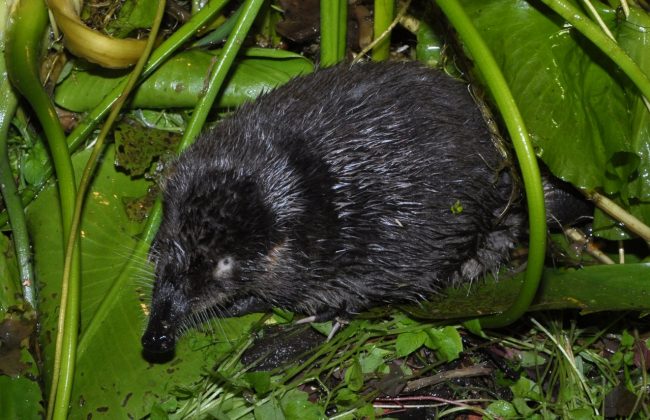
This is a land mammal, but only formally: half life this baby spends in water. Stealth and stealth these are the main principles of life of this inhabitant of rivers and their banks
It’s funny that despite such a “communal” winter residence, each of the neighbors has its own burrow of a temporary type. All of them connected by underwater passages 25-30 meters long.
In any case, with the onset of flood, the mink floods water, and animals are saved either in temporary burrows on flooded areas of the coast, or climb the branches of trees, standing in the water.
Interesting! The desman is sometimes called “blind submariner “that perfectly describes the lifestyle of this animal. Therefore, it is so difficult to find a good photo of Khokhuli: she constantly hiding either underground or under water.
Appearance
You can’t call this animal cute, but quite cute. His often called the funniest Russian animals.
Here are the main features of a small mammal that you can feel free to call a water mole:
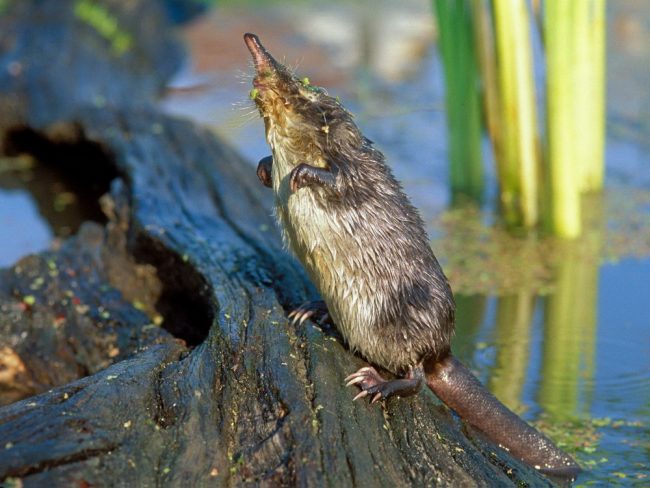
- The nose is in the shape of a trunk.
- Vibrissae (antennae) are very long.
- The tail is massive, covered with horny scales and throughout changes its shape several times – it contracts or thickens (in thickening located odorous glands).
- The desman moves on short paws, with the hind feet Significantly larger and wider than the front.
- Between the fingers to the claws there are membranes that help desman swim.
- The fur is thick and fluffy, reliably oiled.
The last point is especially important, because you have to swim in winter time.
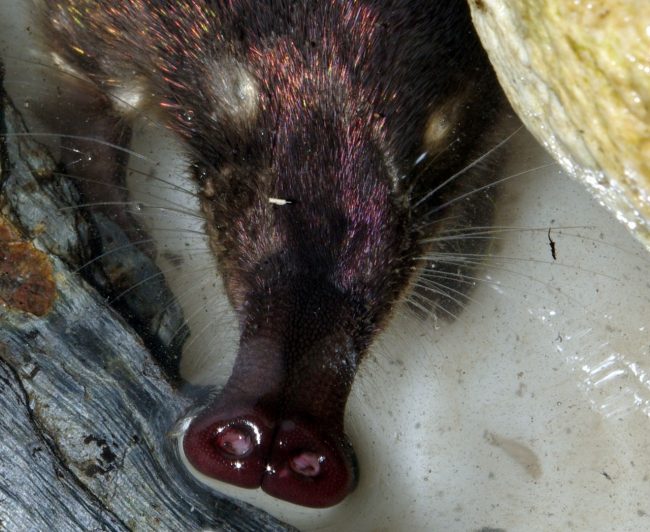
The nose, more like a trunk, plays a more significant role than small eyes that see almost nothing
Key Features
This inhabitant of rivers and coastal areas is extremely secretive. Despite the fact that he often lives near people, to see him as his own eyes hard.
It is generally impossible to make a description of observations from the outside. From under the water the river hunter is shown only to dial in lungs of air and dive again.
At this point, you can track its movement through the bubbles air, now and then arising on the water surface.
In the photo, the desman looks like a blind animal. Almost like that is, because her eyes are a vestige, and their size is extremely small
Despite almost total blindness, Ukrainians are well versed in space thanks to the excellent sense of touch and smell, and the hunter she is chic.
True, he is only good under water, because on land, alas, the long-tailed swimming mole looks extremely awkward and almost helpless.
Therefore, it comes out of the water only when absolutely necessary. By there are too many predators above the water and the earth, therefore underwater lifestyle is also a guarantee of its long duration.
Interesting animal fur. In its structure, it differs from everything that modern mammals have. In the photo this is not to consider, but the hairs expand to the end, and on the roots, on the contrary, narrowed.
Such a fur completely does not let air through. For this reason in it parasites are often settled – beetle hoppers using oxygen available in fur for life under water.
It was because of the fur that the species was once put on the brink of extinction – He was valued even more than the fox fur.
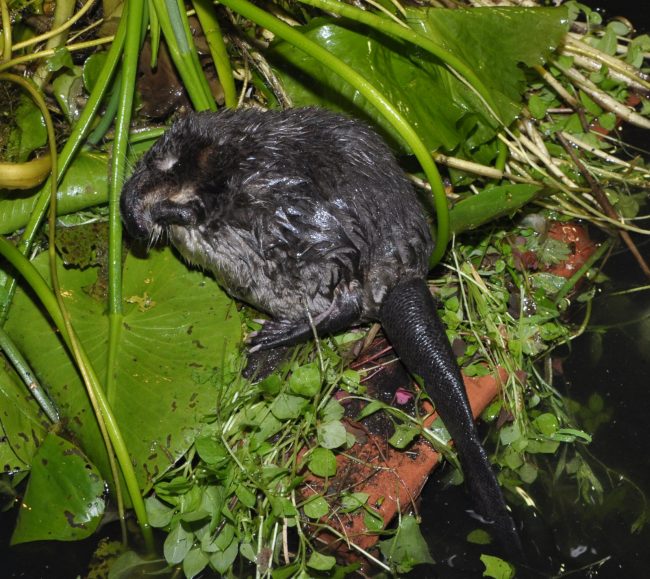
In fact, the fur only seems wet from the side – it’s only a thin film of water under which it is dry and warm
Unlike many other mammals, this underwater inhabitant does not hibernate in winter: activity remains the same level.
Moreover, in the winter months, work on growing a new generation of cubs, which. by the way repeated in the summer.
Interesting! The name “Khokhul” comes from the obsolete verb “to swoop”, that is, to “stink.” It’s connected with the smell of musk secreted by the scaly tail of a desman.
Food
The desman eats a lot – up to a volume equal to own weight per day! The animal is an excellent hunter, despite natural blindness.
Long vibrissa mustache is the main source of coming from outside signals about the outside world and about the movement of potential production in number.
The species is positioned as an insectivorous, but in practice diet much richer. In summer, Khokhul eats leeches, river insects, gastropods
In winter, manages to catch small fish and partially switches to plant diet.
This furry hunter carefully studies to find food. the bottom of the pond with its amazing nose and digs up silt paws. Prey is brought to a hole or a safe place where hunting is replaced a meal.
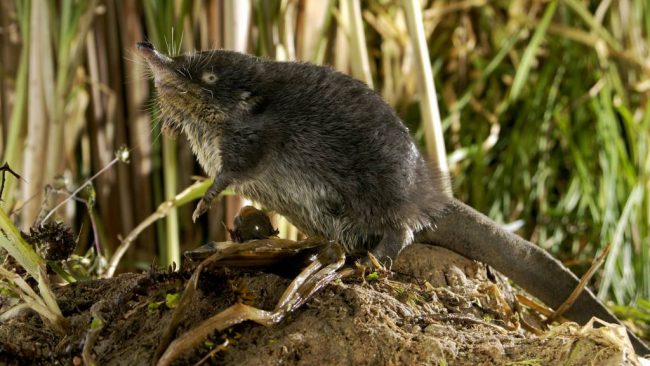
A good prey is a river mussel. But it’s just easy snack
Water moles themselves often fall prey to larger predators: ferrets, foxes and ermines, as well as birds like a kite, golden eagle or moor.
The list of dangerous enemies of a small waterfowl is great. but the greatest danger is not in predators, but in animals such as muskrat or mink.
They drive out desman from their natural habitat.
Breeding
The mating season at the desman begins during the spring floods.
Mature individuals (about 11 months old) create pairs as once in a while when they leave flooded minks.
These days the silence on the riverbanks is broken loud the chirping of males and the melodious sounds that females make. Hard battles between males are frequent.
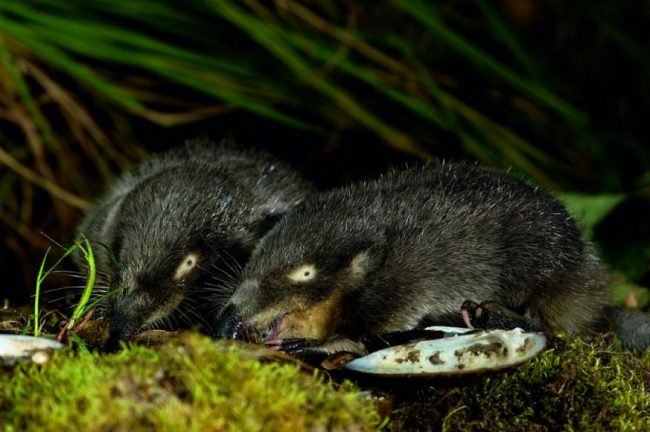
Vapors form at the time of universal disaster – flooding habitual dwellings
Pregnancy lasts about 50 days. One female gives birth to no more than 5 cubs. It happens at all alone.
Kids are deprived of hair, in addition they are blind and completely helpless. They need protection, for which the mother makes a nest of bottom plants.
Cubs weigh about 3 g and grow in very low conditions. temperature and incredible humidity. The muskrat breeds in May-June and November-December.
Males remain nearby with a brood. After 4 months, babies become adults and completely independent.
Interesting! In danger, the female may transport cubs to another mink on their own back.
Relationship with man
As already mentioned, the main human contribution to this species lies in its destruction. Once Khokhul was fishing view.
The reason was the musk secreted by the glands on the tail. a mammal. Until the XVII century, this factor remained the only one thanks to which the animal was mercilessly exterminated.
Later, valuable fur was added to it, which received more more important than beaver hair. From 1920 to 1940 acted ban on the extraction of animals.
This allowed to increase the population. From 1940 to 1957 continued and then again banned. Now catch a crest could only be for the purpose of resettlement.
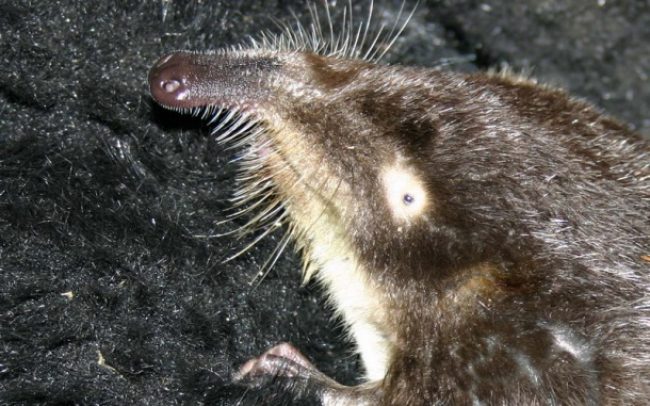
Man became the main culprit for the disappearance of this relict species, and today zoologists make great efforts for its sake conservation
A lot of work has been done in this direction. The desman were settled in territories where they had never been before. Were created nature reserves and sanctuaries.
Today, work to preserve a rare relict species goes on.
Most endemic in Russia is found in areas:
- Kursk region;
- Smolensk;
- Bryansk;
- Tambov;
- Ivanovo;
- Kostroma;
- Yaroslavl;
- Vladimir regions.
The maximum number of individuals (about two thousand) lives on territory of the Kurgan region. In Siberia, the number of species in recent years has fallen to critical levels.
There are no specific data on the content of muskrat in domestic conditions.
This is not difficult to understand from the description of the mammal’s lifestyle: you need a lot of food, a special microclimate, a place where you can dig a large hole or trench, as well as a pond.
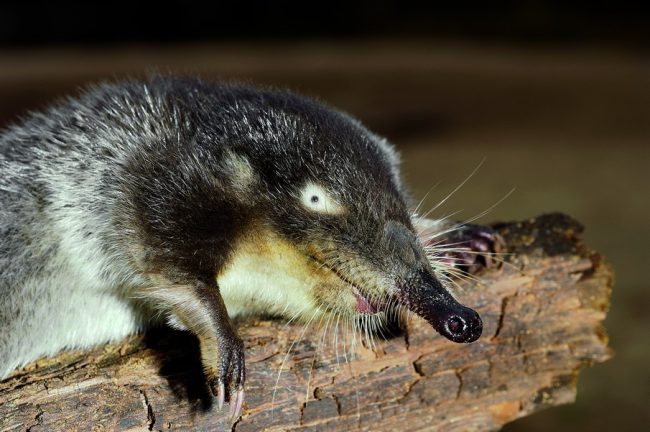
Such a photo is a rarity. Blame a secretive lifestyle and a low probability of meeting a representative of this species in nature
But in captivity, the animal is still bred – such an experience is in zoological parks.
The average age of animals is also increased there compared to brothers living in the wild for an average of one year.
Thus, there is no talk about any home content can. Except for the presence of all necessary conditions, but It is impossible to do this in a city apartment.
Today, scientists have placed a great responsibility: the task of conservation of desman in natural habitats.
If you do not make all possible efforts, then after 50 years about In this funny mole swimming, children will learn only from documentaries and those few photos that you can found on the web.
Vykhuhol: The most unusual river dweller
The desman is one of the strangest and most mysterious species of animals, endangered. Modern photos of this animal in nature may be the last, if you do not take efforts to preserving an amazing look.