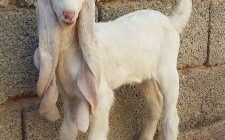
Mouflons are one of the oldest herbivore artiodactyls, from which came the domestic sheep. The unusual structure of the horns, warm and durable fur has long made them the object of hunting, desired, but not always a legally acquired trophy. Today some species of wild sheep are on the verge of extinction and listed in the Red Book. Improve the situation, save the gene pool conservation measures help these rare animals maintenance in reserves and reserves. Also in this sense deserves attention and is becoming more promising breeding work with them in specialized farms.
Content
- 1 What mouflons look like
- 2 Habitats and species of wild sheep
- 3 Lifestyle
- 3.1 What these animals eat
- 3.2 Features of their behavior
- 3.3 Diseases
- 4 Reproduction
- 5 Life expectancy
- 6 Content at home
- 6.1 Aviary requirements
- 6.2 Breeding
- 6.3 Maintenance of mountain sheep in the utility area
What mouflons look like
Wild rams are harmoniously composed medium-sized animals. Sexual dimorphism is pronounced in them. Height at withers in adults males is 80–83 cm, with more miniature females – about 70 see. The main external difference is the presence of male horns. They are pretty cool set relative to the longitudinal axis of the skull, most often bent by a homonymous type (cochlear, spiral twisted), facing straight and forward, parallel to the sides head (sometimes forward and slightly inward). External horns length the bend can reach 75–80 cm with a girth at the base of 20–25 cm. Due to such a massive decoration, males are 20–25 kg heavier females that are either hornless or have small horns and on average weigh 35 kg.
The main external features of these animals are very noteworthy:
- Compact body with a concave back line in the front and deep breasts.
- The head with a straight profile of the front part is proportional to the size body and set on a medium-sized neck.
- Long limbs with hooves on the front pair of about 35 mm, and on the back – about 40 mm.
- A relatively small tail, approximately 10 cm.
- The coat is formed by a hard texture outer hair and softer but densely packed undercoat. Some individuals wool forms characteristic voluminous vertical on the chest frill rollers. The overall shade of the coat is different in summer and winter seasons, while varying from light buffy-brown to deep dark gray nuances. Withers zones the shoulder blades and base of the tail are usually darker, and the abdomen, hips and the back of the croup is lighter. The color of the undercoat is always fawn beige. Contrasts with coat color very dark, almost black stripe running along the spine from neck to хвостика.
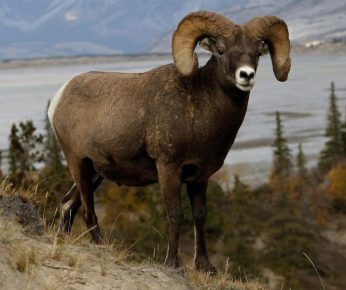
Эти животные — прародители домашних овец
Habitats and species of wild sheep
Depending on origin and habitat There are two types of them: European and Asian (arkal or Ustyurt).
Places of origin of representatives of the European species – islands of the Mediterranean. Being originally endemic to Sardinia and Sicily, wild sheep have recently undergone artificial resettlement in Cyprus and the mountainous coasts of the European south. IN Russian European variety is found only in the Crimea, where was acclimatized more than a hundred years ago.
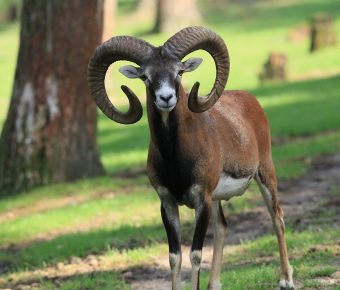
Anatolian, Corsican, Sicilian individuals after transportation and acclimatization adapted to the southern latitudes of Russia
More common are arkals. The territory of their habitat is Kazakhstan, southern regions of Turkmenistan and Tajikistan, Transcaucasia, northwest mountain systems of Hindustan, Balochistan, Iran, Afghanistan.
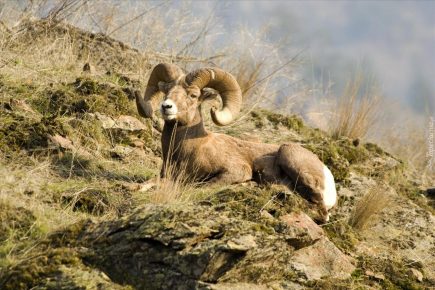
Ustyurt type of sight due to the scorching sun hardy European
In addition to distribution areas, the differences between European mountain the ram and its larger Asian congener are practically nonexistent. The favorite habitats of wild sheep are mountainous landscapes with calm relief of rounded peaks, plateaus and gentle slopes with rich vegetation. On steep rocky slopes, animals they feel insecure, and on the dangerous edges of the gorges they become completely helpless. In the summer they live in shaded areas alpine meadows. In winter, animals prefer to be on warmed up by the sun at the foot of mountainous slopes and take refuge from bad weather in canyons sheltered from the wind.
Lifestyle
Under natural conditions, individual herds of these artiodactyls, numbering up to one hundred individuals are adult communities females with year-old lambs and young growth. Sexually mature males join them only during the mating period, and in the rest of the time they live apart. In the habitats of wild sheep lead a sedentary lifestyle, adhering to permanent grazing places, watering and rest. In transitions, animals use the same paths – well-marked trodden paths.
Seasonal migrations are rare in them: only in dry years animals roam in search of enough food and water. Moving to a higher mountain range with its juicy feed observed in the summer.
Wild sheep show the greatest activity with dusk: before sunset, they go out to the meadows, often far from the places of daytime shelters, and graze the whole night with short rest breaks. With the dawn they heading for their shelters in gorges of rocks or in the shade of spreading the crowns of the trees, where they constantly lay down – quite deep (about 1.5 m) pits with a well-sealed for thermal insulation upside down.
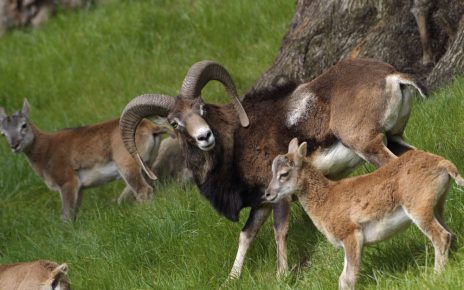
The vast majority in the herd are females and young
What do these animals eat?
Wild rams are herbivorous. Depending on the season, their main food sources are changing.
- Spring-summer diet of mountain sheep make up forbs, characteristic for a specific habitat, young shoots shrubs, foliage of trees.
- In autumn, the “menu” is supplemented by acorns, mushrooms, berries, fruit carrion.
- These artiodactyls are not adapted from under the snow cover. get food, so in winter they graze during daylight hours and eat what is within reach: shoots coniferous trees, moss, lichens, dried grass.
They are able to satisfy the need for drinking even very salty water, if not fresh.
Features of their behavior
Mountain sheep are cautious animals, it is not easy to get to them closer than 300 meters: well-developed sense of smell, hearing, vision allow animals to quickly respond to potential dangers. Sensing a threat, they make loud noises, like sharp whistling.
The ability to run fast, overcome a height of up to 2 meters, jumping from 10-meter ledges allows wild sheep to escape enemy attacks. The animal’s rapid jump is very effective: the head is thrown back, the front and hind limbs are closed, landing occurs on legs wide apart. Even the lambs in in case of danger, they do not hide, but prefer to flee. The exception is males who lose their usual vigilance in mating season, because of which they often become a victim of a hunter or predatory beast. However, these animals are quite curious: running away from pursuer, they can suddenly stop and turn around, as if showing a semblance of interest in what is happening.
Disease
In conditions with sufficient food supply and comfortable for Wild sheep are habitat resistant to disease. Often damage the health of animals and become the causes of their death helminthic infestations, dividing into several types:
- Fascioliasis – acute or chronic inflammation of the liver, bile passages caused by infection with trematodes, Fasciola vulgaris (Fasciola hepatica) or giant fasciola (Fasciola gigantica). Intensive infection with larvae occurs in summer, at watering holes and pastures located in low, damp areas. In patients animals lack of appetite, weakness, apathy. At lactating sheep milk becomes liquid, suckling lambs bad saturated, quickly lag behind the herd. Acute form of fascioliasis leads to quick death with hepatitis, in chronic disease, animals eventually die from exhaustion.
- Moniesiosis most often affects young animals under the age of one and a half years old. The representative of tape helminths causes the disease Moniezia expansa, a parasite in the small intestine. Intoxication delays the development of the animal, reduces it resistance to harmful factors, increases the risk secondary infections and diseases. With intense infection moniesia can form tangles in the place of localization leads to obstruction, inversion and rupture of the intestine.
- The causative agent of echinococcosis, which is often infected by these animals, – bubble form of tape helminth Echinococcus granulosus. Developing in the tissues of the liver and lungs, echinococcus mechanically affects the cellular elements of organs that leads to their atrophy and functional impairment: disorders digestion, shortness of breath, coughing. Consequence of extensive echinococcal infestation is the death of an animal.
To a lesser extent, mountain sheep are susceptible to infectious diseases. Of these, the danger to animals is mainly bradzot – acute intoxication of the body gram-positive anaerobic bacillus Clostridium septicum leading to lethal the outcome.
Poor (incorrect) erasure of the horny substance hooves when they take an arched shape, twist or bend up, leading to pathological changes in the joints limbs. The causes of this phenomenon are most often habitat. wild sheep in areas with soft and moist soil, and inherited endocrine diseases. Individuals with similar anomalies lose their mobility and starve to death or become easy prey for predators.
Breeding
Wild sheep reach puberty at the age of one and a half years. However, if females are able to fertilize in the second year of life, then males enter into marriage not earlier than in three to four years of age.
The rutting period lasts from October to December. At this time the females are divided into small – 10-15 individuals – herds in which 2–3 adult competing males are present. Pushing the favors of the chosen ones, they arrange real tournaments: having previously dispersed to a fairly large one, up to 20 meters, distance, “suitors” are rapidly approaching and powerfully striking the bases of the horns. Cases of fatal wounds and injuries inflicted in fights are unknown, but the fight is long, to complete exhaustion of rivals.
The expulsion of the vanquished at the end of battles does not occur, and in less strong coatings of females, except dominant males. Polygamous unions (harems) these animals after Mating does not create: having completed their mission, the males leave the herd, live alone and do not participate in custody of offspring.
Pregnancy of females lasts about five months. Mass lambing usually occurs in early April. A sheep brings one or two lambs: three or four babies in one litter is a rarity. Already later two hours after birth, newborns are able to become on the legs and follow the mother. First four weeks of the lambs feed exclusively on breast milk, and finally Having strengthened, they switch to pasture.
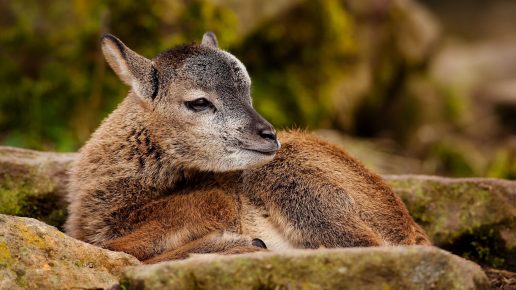
As a rule, such babies are born 1-2, rarely when more
average life expectancy
In their natural environment, they live on average no longer than 8 years. This the term is extended to 10-15 years in the absence of enemies – lynxes, steppe wolves, wolverines, as well as when kept in zoos, hunting farms, nature reserves, where for animals favorable conditions are emerging. There are cases when captive breeding with the possibility of obtaining veterinary care and ensure proper care mountain sheep survived to 19 years.
Home Content
Recently, breeding of wild sheep on farms and in private households. Keeping animals in open-air cages conditions sets the main goal of hybridization with domestic sheep for improving their economic and useful qualities: offspring characterized by high vitality, good growth rates, resistance to major diseases.
Requirement for Aviaries
When designing enclosures, the main functional schemes of animal life:
- food;
- lack of stress factors (proximity of predators, adverse climatic conditions);
- the ability to move;
- the presence of an appropriate species group;
- prospects for livestock reproduction.
The aviary infrastructure is set taking into account the landscape, relief terrain, pasture availability and should include the following essential elements:
- special facilities for feeding animals and holding veterinary activities;
- integrated feed sites;
- hay feeders;
- salt licks;
- reservoirs or facilities to ensure uninterrupted supply water;
- weather shelters.
The soil on which mouflon enclosures are built should be dry and rocky.
When installing fences use barbed wire unacceptable.
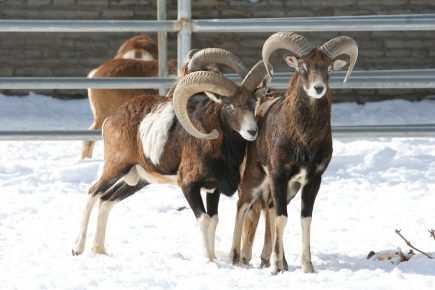
Corsican mouflons can also be kept at home conditions
Breeding
The high density of these animals in aviaries significantly reduces the material costs of farm owners households and at the same time negatively affects the pace reproduction. For successful breeding of mouflons the optimal rate of population density is 15 adults per 1 hectare of aviary area. Wherein the tribal group should consist of three females capable of giving offspring, and one male, ready for reproduction.
When breeding wild sheep in captivity, modern livestock grazing systems. At the same time should take into account the specifics of animal nutrition in the natural environment and take care of the cultivation of crops that form the main feed base.
Aviary specialists recommend grazing mouflon in areas where the average grass height is 5–7 cm (in the beginning and end of the lactation period in females, when the need for feed reduced, a decrease in this indicator is allowed). Besides, it is necessary regularly, every spring to level the soil of the main pastures, to conduct its analysis for the presence of trace elements, not allow mass distribution of vector weeds parasitic diseases. In the winter diet of these animals include hay, grain and vegetable mixtures, compound feed for sheep.
Properly organized enclosure space, execution basic norms for keeping and feeding ruminants, timely preventive and therapeutic veterinary measures increase the efficiency and profitability of wild sheep breeding in farms.
Maintenance of mountain sheep on a utility plot
In the twentieth century, mountain sheep became a constant subject of hunting, and their numbers began to decline sharply. But saving the species on time became interested, and as a result, their habitat became protected, reserves were created.
Now many farms are trying to accustom them to the aviary way of life. These are mostly captive-born animals, adapted for living at home. Breed them not amount to labor for an experienced femer, and the population of these artiodactyls only increase.