Classification
View: Arctic fox (Alopex lagopus)
Family: Canids
Subfamily: Wolf
Order: Predatory
Class: Mammals
Type: Chordates
Subtype: Vertebrates
Kingdom: Animals
Sizes: Body length 50-75 see, body weight – 6 – 10 kg.
Life span: in wildlife 7-8 years, in captivity 15 – 20 years.
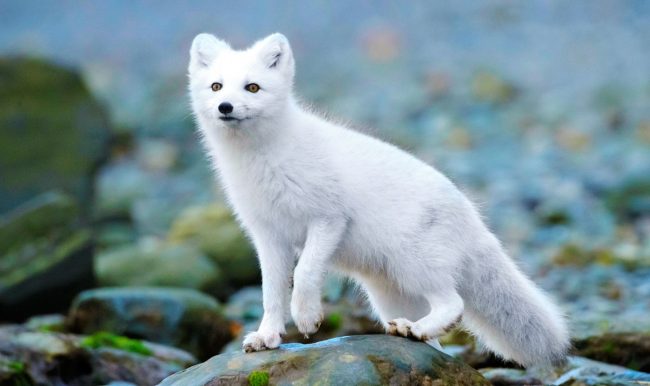
Arctic fox is a small predatory animal that lives in the polar regions. the planet. Outwardly, the animal looks like a fox, but its muzzle shorter, squat body, and ears barely protrude from under winter wool.
This is one of the most frost-resistant animals on Earth. Warm fur, which is present in representatives of the species even on the pillows paws, allows the animal not to freeze in the cold to -60 degrees.
Content
- 1 Habitat
- 2 Characteristic
- 3 Appearance
- 4 Key Features
- 5 Nutrition
- 6 Reproduction
- 7 Parenting
- 8 Contents
- 9 Relations with people
Habitat
The arctic fox prefers to live in cold places where its fur coat serves. reliable camouflage and protection.
Representatives of the species can be found in the Arctic and subarctic regions of the planet.
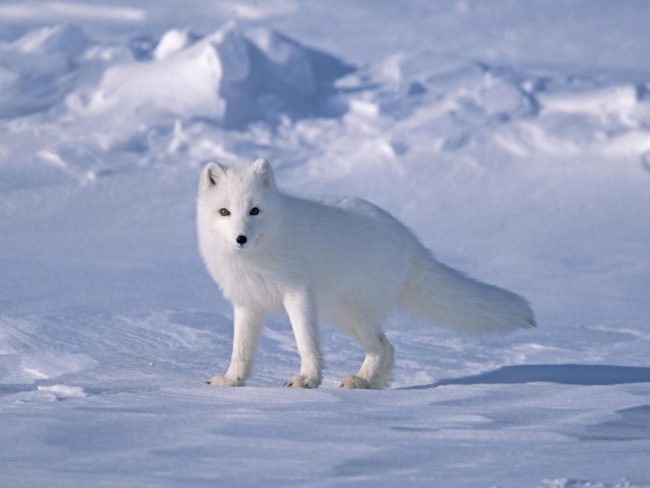
Thanks to the thick fur, the animal easily survives in extreme weather conditions
The arctic fox cannot remain all the time in the same place.
When in winter it becomes tight with food, he goes to areas where You can meet small rodents that serve him as food.
During the transitions, the animal is able to wander far to the south.
Important! Arctic fox life is constant movement in cold zones in search of food.
There is an animal in the tundra and forest-tundra. As a home representatives of the species use earthen holes that they dig near the ponds.
Such abodes are a whole maze with many exits. However, the Arctic fox does not always use underground constructions.
In winter, the animal sometimes sleeps, completely buried in a snowdrift. Improvised housing can reliably protect the animal from cold weather.
Characteristic
Arctic foxes are called white fox because of their strong resemblance to the red inhabitant of the forests of the middle zone:
- Representatives of the species are very similar to foxes in size. Body length the animal is 50-70 cm, and the tail length is 25-30 cm.
- The fox’s family life is foxes. In winter, representatives of the species prefer to stay alone, rarely forming small groups to search for food. With the onset of heat, animals are sent to search for couples and raise offspring together.
- Arctic fox is a small animal whose weight can reach 9 kg
- Like the fox, the basis of the diet of the fox are small rodents.
- The red cheat is able to reliably merge with the forest, which protects her from enemies. For the arctic fox protection is snow, become one whole with which the animal allows snow-white or bluish coat.
Unlike the fox, the arctic fox chooses a harsh habitat Arctic areas where survival is much more difficult.
However, representatives of the species adapted to extreme climatic conditions and feel comfortable in them.
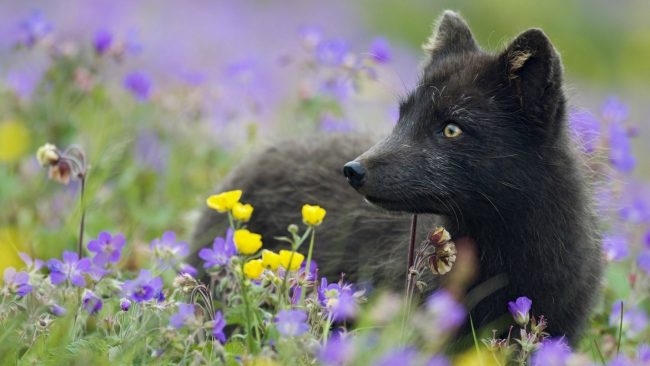
Black arctic fox, no less beautiful than white
It is interesting! Unlike foxes, arctic fox is able to change the color of a fur coat depending on time of the year.
Despite the excellent disguise, the Arctic fox can become prey. large predator.
The main natural enemies of the species are polar bears who do not mind eating a fragile animal, incapable fight back the giant.
Appearance
In winter, the animal has a thick snow-white coat, which allows to withstand low temperatures and merge with snow.
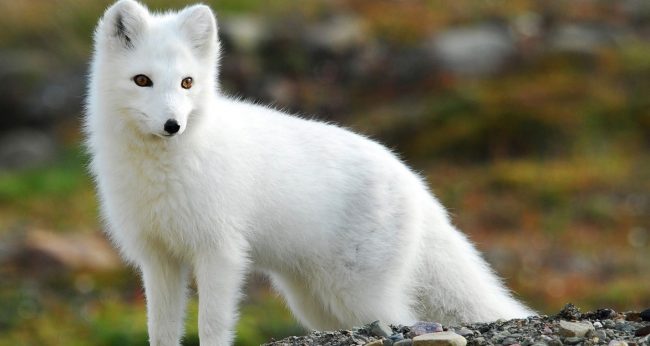
With the onset of spring or summer, the animal’s hairline is strongly thins, which allows him to maintain a heat balance and warm period of the year. Paws, back and tail acquire light brown
A stopped fox can be mistaken for a small melting snowdrift, which fits perfectly into the overall landscape.
In some representatives of the species, in the winter the coat acquires bluish tint, and darkens in summer.
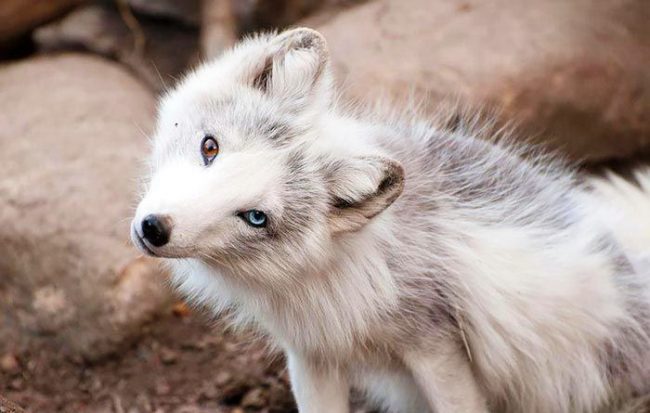
Depending on the type and period of life, the animal may have different coloring
It is interesting! Summer fur representatives of the species becomes dirty brown on top and yellowish from below. In winter, the hairline of most individuals brightens and turns snowy white. Only blue foxes coat in the cold the season has a dark color, and its shade may vary from tan to light blue.
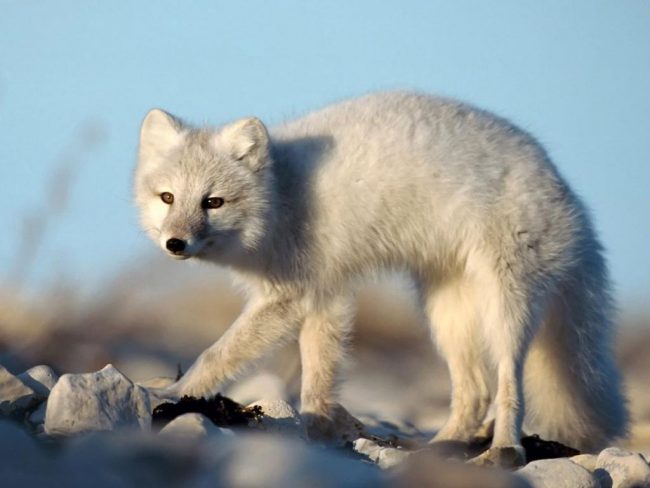
The arctic fox quickly grows up and begins to get food independently
The color of the fox varies greatly with age. People gave the name each period of life of the representatives of the species. Distinguish:
- Nornikov – little puppies. The coat in babies is short and has grayish-brown color.
- Krestovikov – young animals aged 2 to 4 months, who have already left the hole. Their coat becomes soft and the color along the back and neck changes to smoky. Zverkov in this period lives are called crosses because of the dark strip on the back, which when viewed from above, it resembles a cross.
- Sinyakov – grown animals that are still far from adult condition. In this period, representatives of the species begin lighten up. The bruise undercoat is darker than the main coat and has bluish or smoky hue.
- Nedopeskov – representatives of the species that have not yet reached full growth. In this period of life, representatives of the species have a white with a grayish tint coat.
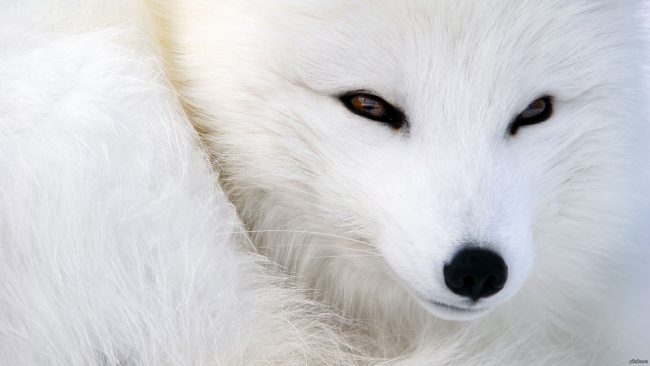
It’s difficult to distinguish a hidden fox from a snowdrift
It is interesting! Externally, the Arctic fox more like a small dog than a classic fox. Many people dream of sheltering this predator in their apartment. but it should be remembered that an animal raised in the wild, unsuitable for home maintenance.
Key Features
Due to the extreme conditions in which the beast lives, its image life is significantly different from the way foxes live.
The following features that are inherent in representatives of the form:
- As a home, the Arctic fox uses deep burrows. If a It’s not possible to dig the abode independently, the animal can settle in a small natural cave. When the animal haunted, he can bury deep in the snow and wait a threat.
- Arctic foxes are forced to lead a nomadic lifestyle. This is necessary because constant need to seek food. In harsh conditions, comfortable for the animal, other animals have to tight. For this reason, representatives of the species are forced to run many kilometers to find food.
- Arctic foxes have characteristic sounds for communicating with each other. They are change the cry depending on the distance. It may be loud howling, and just a high pitched sound. Often animals in this way warn relatives about a possible danger.
- The white fox is capable of speeds up to 48km / h.
- The foxes have almost no enemies. They can only be attacked by polar bears, wolves and owls. The main threat is man.
- Arctic foxes have very warm fur. Compact body helps the animal does not freeze in severe frosts. The animal has wool even paw pads. This allows the view representative to move around. snow without fear to catch feet and hunts even in snowdrifts.
- Arctic fox is the only beast in the canine family, which changes color depending on the season. is he incredibly beautiful, has a magnificent fur coat, for which he enjoys popular with hunters as the main commercial animal. Fur Arctic fox is valued even more than ferret fur.
- The fluffy tail not only protects the animal from the cold, but also helps him maintain balance.
- Sheds a white fox 2 times a year.
The black arctic fox is an omnivore. He eats meat rodents, birds, hares. Representatives of the species are able to eat even berries.
In winter, when it becomes difficult to eat, the animal doesn’t even refuse to eat carrion left over from wolf hunting and polar bears.
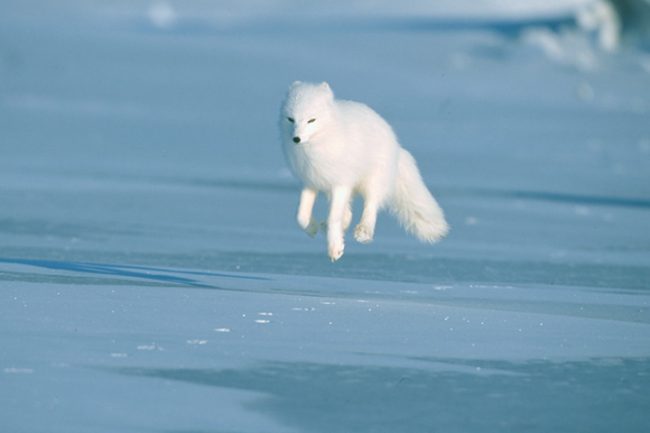
Arctic fox is able to smell prey even under the thickness of snow
It is interesting! Arctic foxes are smart animals. Harsh Arctic conditions taught them that food should stock up for the future. If the hunt was successful, the beast has eaten, and the food is still left, he digs a hole in the snow, which acts as freezer. There the animal carries the remaining food and bury it a layer of snow. This allows you to keep food fresh.
Food
Black arctic fox can eat any food as food. The basis for feeding the animal are small rodents, lemmings, and birds.
The animal eats fish with pleasure, which was thrown at high tide Coast.
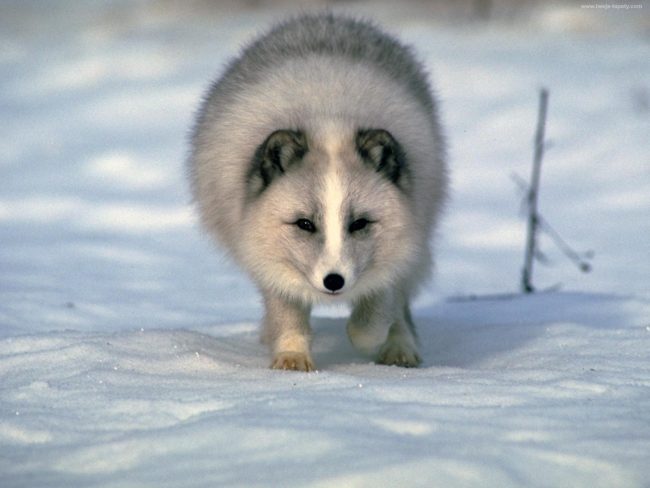
The plump fox presented in the photo above resembles a gray cloudy and looks very comical
Do not disdain the animal and carrion. Representatives follow the whites bears, eating after them the remains of seal meat.
However, such a neighborhood is fraught with consequences. If white the bear cannot get food, the animal will be prey, which cannot compete with a giant predator.
The “white fox” can devastate human traps. In summer, a representative of the species tries to stock up excess food on in the winter.
It is well known that Arctic foxes living in coastal areas, with enjoy eating the eggs of the birds and the little chicks themselves left unattended by parents.
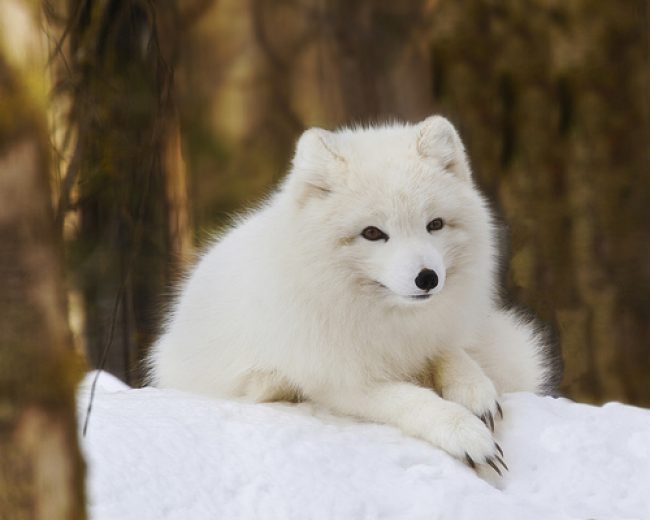
Arctic fox seems very pleased with the hunt.
Breeding
During the breeding season, the white fox meets with others representatives of the species and creates a married couple.
When the long polar day comes, the animals begin courtship games.
On coastal slopes or sand hills that are covered vegetation, representatives of the species arrange special burrows for brood.
These are complex structures with a whole maze of moves and many exits. Such underground dwellings animals can exploit dozens of years. Usually there is a pond near a hole.

The kid seems to be calling his mom
The race with animals starts in early March and ends in April Representatives of the species are monogamous, although there are cases polygamy.
The female is taken care of by 1-2 males. If there is enough food for everyone and animals do not need anything, the race runs amicably, and most females become mothers.
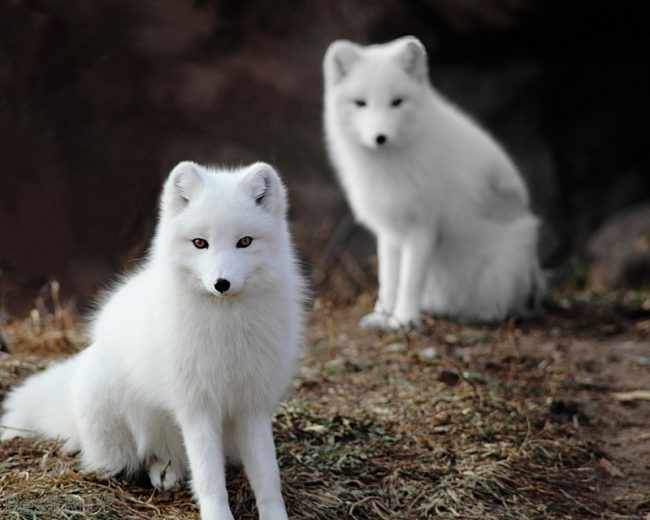
Only in the summer, Arctic foxes meet with other representatives of the species and form families
Puberty in foxes occurs at 10 months. Pregnancy lasts about 52 days.
The female begins to prepare a new hole 1-2 weeks before the appearance kids to the light. Puppies are mainly born in May-June.
It is interesting! Arctic foxes are very prolific. A female can have up to 20 puppies, but they will survive significantly less. The average brood size ranges from 5 to 11.
Offspring
Newborn puppies open their eyes on the 9th day. Cubs grow very fast. By the age of six months they already reach the size of the parents.
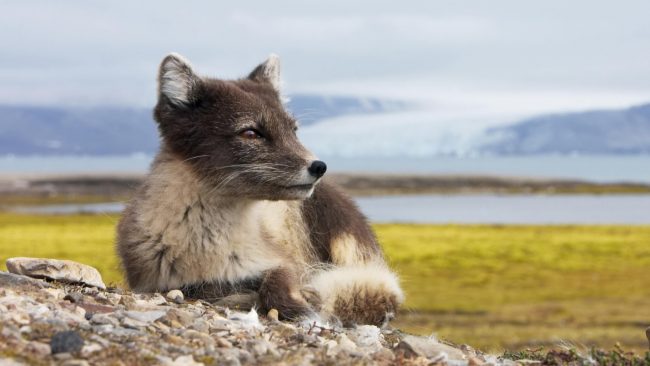
Kids grow up very quickly and leave the parent hole
In the summer, the Arctic fox family consists of 2-6 individuals and occupies vast area of habitat. A married couple and their little ones can belong to a plot of up to 30 square meters. km
Representatives of the species can go for food as much as 10 km. Females often raise several adoptions, and in one burrow can live in several families.
The number of animals in some populations reaches 40 young individuals. There are 10-20% more males in the family than females.
Content
If a person is going to breed representatives species, great attention must be paid to the conditions of detention.
The animals are placed in cages that are made from galvanized steel. This greatly simplifies the care of animals.
The dimensions of the structure are:
- Length not less than 3 m;
- Width not less than 1 m;
- Height – about 1 m.
The construction can not be put on bare ground. Home in which the arctic fox will be placed, it should stand on its legs.
Note! In the cells contain animals that are grown to produce fur. but Arctic fox can be just a friend. If the baby was born and raised in in captivity, he will be able to live in an apartment or on a personal plot human as an ordinary dog.
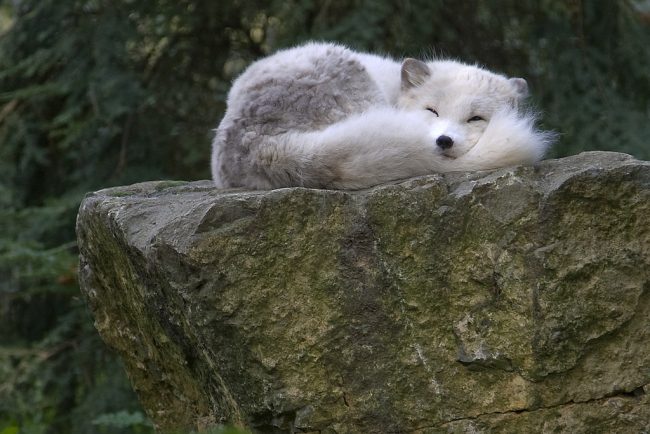
Arctic fox is able to become a true friend. Raised in captivity, he will behave like an ordinary dog
Young animals can be placed in a cage in pairs, but for an adult it’s better not to plant individuals of the neighbor, but also to leave the animal alone also impossible.
Over time, he can become shy, and his appetite will deteriorate. Arrange the cells so that the representatives of the species constantly felt the presence of brothers.
Relationship with people
In the tundra, the Arctic fox is a common predator and the main object fishing. Because of the valuable skin, the animal has long been tried to breed in captivity.
Now there are whole farms for breeding Arctic foxes. Can the animal live and as a pet.
Arctic foxes are easy to tame if you pick up a puppy from a hole as a puppy. He almost Don’t run wild with age. An animal can eat as products with human tables (without adding salt and smoked meats), and ordinary dry dog food.
The fox is trained in basic commands and accustoming to the place as well as dog training.
However, it’s worth remembering that the animal is wild in nature, therefore, do not wait for significant results and complete obedience.
Combing a pet’s hair is a very important aspect of grooming. Since the Arctic fox sheds so much, it is necessary to comb out its host.
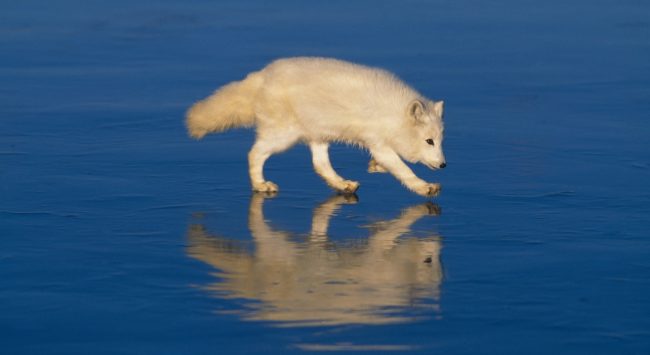
In winter, the fox is difficult to find food. In some countries, people feed the representatives of the species
On the Commander Islands, where foxes are especially guarded, some individuals arrange brood holes directly under the buildings, and matured animals fearlessly take food from human hands.
In places where feeding of foxes and animals is regularly carried out get used to gather at a certain time of day about feeders.
Arctic fox: White fox climbing the Arctic Circle
Arctic fox is a small predator with a thick, beautiful woolly and able to survive at extremely low temperatures. For humans, representatives of the species are sources of fur and devotees friends who can become an exemplary pet and live in one apartment with a person.