The Immaculate Conception is not at all a miracle of nature. Although its conception hard to name. The ability of the body to reproduce without participation of the opposite sex is called parthenogenesis and quite often found in nature. Incredible, but true: many species of living organisms asexual, these include plants and even some animals. Today we have prepared a list of the 10 brightest representatives of flora and fauna that can reproduce asexually by the way.
Content
- 1 Immaculate Conception of a Honeybee
- 2 Daphnia
- 3 goblin spider
- 4 Snail melting
- 5 Marble Cancer
- 6 Mexican Whiptail Lizard
- 7 Pond Frog
- 8 Komodo lizard
- 9 turkeys
- 10 zebra shark
Immaculate Conception of a Honey Bee
In total, about 20 thousand species of honey bees are known, but only one of them has the ability to reproduce without the participation of an individual male. Honey bee (Apis mellifera capensis) lives in South Africa and the breeding process of this species is called telithokia (a form of parthenogenesis in which only females).
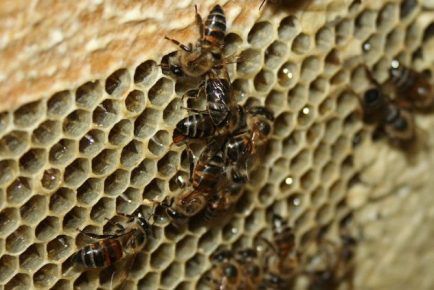
Bees breed through parthenogenesis
Only a part of individuals of this species of bees are capable of this method. breeding, but because of this, these insects support the required number of homozygous individuals, each of which is not is an exact copy of the parent. Most bees start actively multiply when new workers are needed or it’s time to choose the uterus.
Daphnia
The most common water flea species, Daphnia pulex, lives in waters of the Americas, Australia, Europe and has bright distinctive features. This is the so-called standard, this species, the first genome appeared. In addition, daphnia multiplies through a process known as cyclic parthenogenesis, in which reproduction may be involving individuals of the opposite sex or without him.

Daphnia is also called water flea
Daphnia observations show that Daphnia pulex It multiplies only with a suitable state of water. She can start look for an individual of the opposite sex for breeding, but if not manages to find, then this is not critical. When the time comes to continue genus, daphnia lays eggs from which only female hatch individuals. And although the genetic code remains the same, it allows more females to spread their gene pool and increase the population of water fleas.
Goblin spider
If your nightmares are not colorful enough then know there are spiders that can reproduce without participation the opposite sex. Lock the doors and buy a flamethrower, family onopid spiders, also known as goblin spiders, include 1300 species, the population of which ranges from 1 to 3 million individuals. Parthenogenesis ability has been identified only in some species, among them is the species Triaeris stenaspis, which originally appeared in Iran, from where it spread throughout Europe. The size of these spiders barely reaches 2 mm, they do not pose a threat to humans if of course he will notice them. Men were not discovered by scientists, therefore, it is generally accepted that they reproduce only asexually by the way.
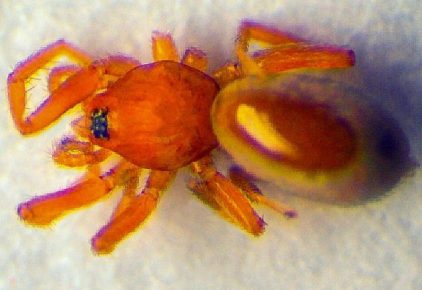
These spiders are very tiny, their size is only 1-3 mm
Females of this species of spiders reproduce in the same way as honey bees by telithokia. They lay diploid eggs, from which new females hatch. Each subsequent generations there is a decrease in the ability to procreate, but this species continues to adhere to telithokia, creating diversity genomes.
Snail melania
If you have ever had an aquarium, then you are probably familiar with a small snail, Tarebia granifera, which is called melania. it freshwater snail, it first appeared in Southeast Asia, but over time, its relatives spread throughout the world. This kind most often can be found in the warm waters of Hawaii, Cuba, the Dominican Republic, South Africa, the USA and the Caribbean.
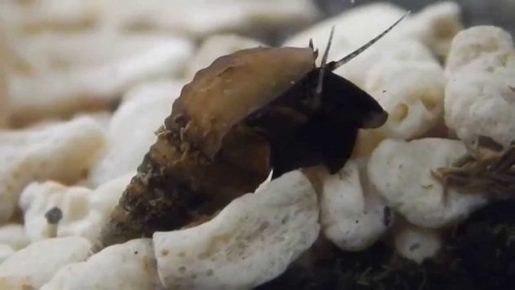
A population of these snails under favorable conditions may increase exponentially
These snails breed in two ways: parthenogenesis and egg production, with the latter method, the embryo remains in the body mother until he is ready to hatch from an egg. In fact the snail reproduces itself, its clone appears, which is already in will soon be able to breed. Melania can very fast breed in a favorable environment, you can bring them out in a short time a large population in an ordinary aquarium, therefore belong to a predatory species. This species has male specimens. sex, but their genitals rarely function, and this allows you to do the assumption that parthenogenesis is the main method of reproduction for melania.
Marble Cancer
Perhaps the ability to self-propagate is not the most interesting fact about marble crayfish. Much more remarkable is the fact that these cancers appeared only in the late 90s of the XX century as a result unidirectional mutation in the parent species. These tiny living the creatures look pretty enough and they even get turned on like pets. But here lovers of such pets faced a problem: they are capable of self-propagation and from one cancer, you will be able to get a hundred very soon.

30 years ago, this type of crayfish did not exist at all.
One female can lay several hundred eggs at the same time, therefore, those who decide to have such cancer at home in the aquarium, they soon discover replenishment. Thanks to such ability to reproduce exponentially, crayfish quickly spread around the world, and in Madagascar even a dangerous environment: millions of crayfish endangered the lives of others the inhabitants of the fauna.
Mexican Whip-Tailed Lizard
Of the known to science one and a half thousand species of living organisms, able to reproduce through parthenogenesis, most account for on plants, insects, arthropods. Reproductive ability without the need for fertilization is rare in vertebrates, but still a small group of reptiles has this ability. The most interesting example of a Mexican whip-tailed lizard is there are no males at all. This species was obtained by crossing two other species where males were: striped Arizona whip-tailed lizard and tiger whip-tailed lizard.
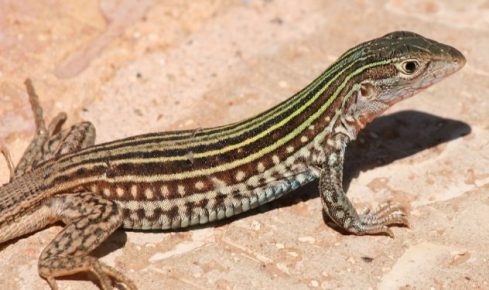
There are no males in this lizard population.
The mixing of these species of reptiles does not allow to form a healthy, viable male, but that doesn’t interfere mexican whip-tailed lizard continue the genus and form their own kinds. The female of this lizard can postpone until summer 4 eggs that need 2 months to hatch and replenish population.
Pond frog
Pond, she is also an edible frog (Pelophylax esculentus) widespread in Europe. It was originally bred in France, to eat properly cooked legs of this frogs are divine in taste. This species of frogs breeds through hybridogenesis, which is similar to parthenogenesis. Female the individual produces hybridogenic hybrids that exclude one a pair of parental genes to form a new generation, half of the genome is transmitted clonally, and the second half is sexually transmitted by the way.

This is how the famous frog legs look like before they fall on the kitchen
Thanks to this method of reproduction, it turns out that part genetic material comes from the father. It can not be called pure parthenogenesis. Each subsequent generation mother’s DNA and father’s hybrid genome are present. Next generation will be able to produce males, but their DNA will be a clone DNA of the mother, combined with the DNA of the father. A strange way of reproduction, but you can eat frog legs.
Komodo monitor lizard
Komodo lizards impress with their size and similarities with the long extinct dinosaurs. These are the largest known lizards, they can grow up to 3 meters in length and weigh up to 70 kg. These lizards prey on large animals such as deer and pigs, and eat the likelihood that, if necessary, they can attack a person. To cope with large animals, they are helped by poison, which affects victim through a bite. Until 2005, no one had supposed that these animals are able to reproduce through parthenogenesis, while in The female zoo in a London zoo did not lay an egg after after being in isolation for more than two years. Originally it was suggested that these animals could store sperm before the moment you need it, but a genetic test showed that no additional genetic material found It was.
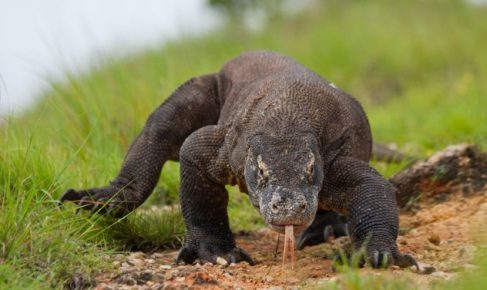
Looking at this representative of reptiles you might think that not all dinosaurs became extinct
The same thing happened with other monitor lizards who lived in captivity. Surprisingly, some of the hatched individuals were male, which is atypical when reproducing asexually. it happens because their chromosome system, which is responsible for sex determination is different from the same mammalian system. When a female chest lizard is isolated (for example on island or in the terrarium), then it can produce male an individual to “meet” with her. Parthenogenesis ability helps this species maintain population, although genetic diversity is declining.
Turkeys
It’s unlikely that you’re thinking about the biological abilities of a turkey, when cook the turkey. But these birds can breed when help parthenogenesis, if there is no male nearby. Surprisingly if females living in isolation from males will hear them presence, then they will multiply faster through parthenogenesis than if they were in complete isolation. Homemade birds are more prone to parthenogenesis than wild birds.
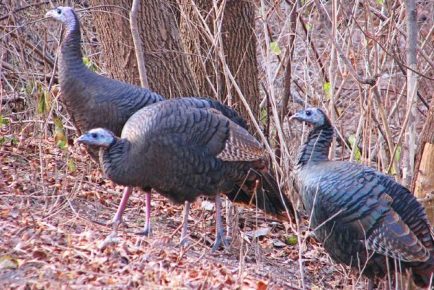
Surprisingly, it turns out turkeys to continue the genus turkeys are not are needed
If the egg appeared as a result of parthenogenesis, then from it the male will necessarily hatch, and he will be an absolute genetic clone of the mother, the only difference is gender. Farmers took this fact note and use this ability of this bird to get a more fleshy population.
Zebra shark
It may seem that the more complex the body, the less the likelihood that he will be able to reproduce asexually. Not this way scientists have long discovered that zebra sharks can breed when help parthenogenesis.
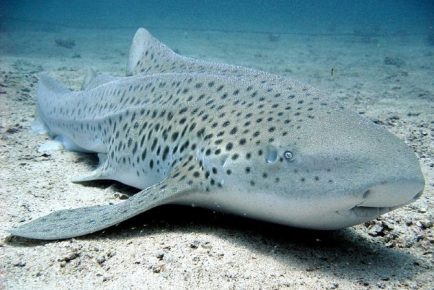
Zebra shark can breed asexually
Shark Leoni lived in the aquarium for quite some time and male there were no individuals near her. A few years later she laid an egg, from which three cubs hatched. After this incident, more several zebra sharks gave birth to a new generation in the absence males. Studies also found that quite often sexually transmitted offspring have everything equally, the mother’s genetic code remains.
The animal world is amazing and diverse, who would have thought that miracles like parthenogenesis occur in it. Most it is surprising that this method of reproduction is not only available simple organisms, but also animals of a higher organization.